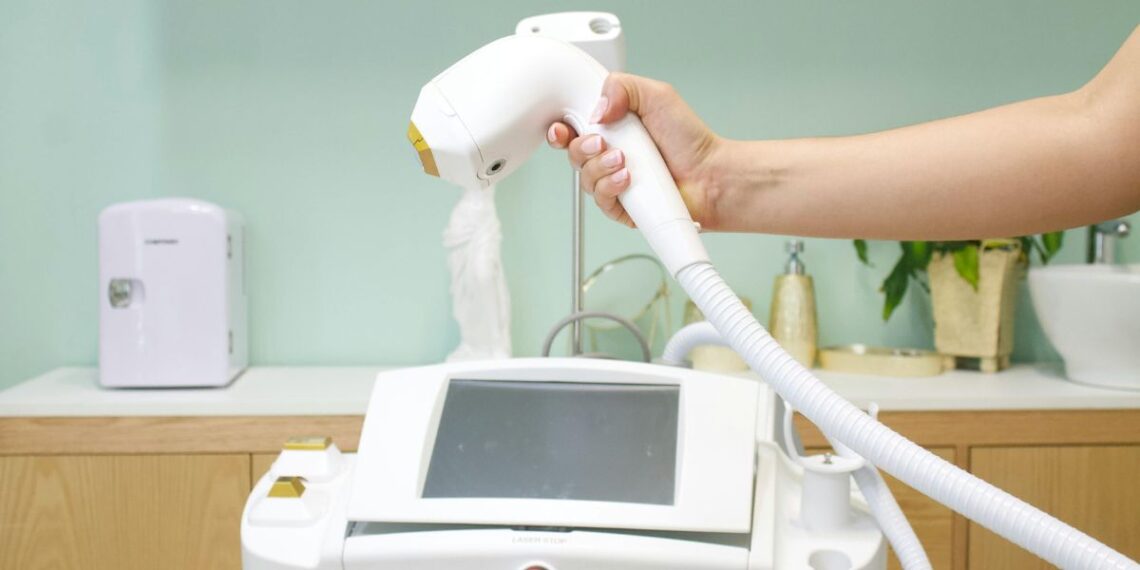
Laser cleaning is becoming an increasingly interesting technology for industries where precision, surface quality, and contamination control matter. The medical industry is one such field. Medical instruments, implants, manufacturing equipment, and other components often require extremely careful cleaning without damaging the underlying material.
Unlike conventional methods that may rely on chemicals, abrasive materials, or mechanical contact, laser cleaning uses a controlled beam of light to remove unwanted material from a surface. When correctly configured, the process can target contaminants while minimizing the effect on the substrate.
For medical manufacturers and specialized cleaning operations, this creates opportunities for more precise surface preparation and contamination removal.
What Is Laser Cleaning?
Laser cleaning is a non-contact surface treatment process that uses concentrated laser energy to remove unwanted substances from an object.
Depending on the laser system and material, the beam can interact with contaminants such as:
- Oxides
- Surface residues
- Coatings
- Adhesive remains
- Oil and grease
- Dirt and other deposits
The laser energy is absorbed differently by the contaminant and the underlying material. With suitable settings, the unwanted layer can be removed while the base surface remains largely unaffected.
This level of control is one reason laser cleaning is being explored for sensitive industrial and medical applications.
Why Is Cleaning Important in Medical Manufacturing?
Medical equipment and components have much stricter cleanliness requirements than many ordinary industrial products.
A surgical instrument, implant, or medical device can contain microscopic residues from manufacturing, handling, oxidation, coatings, or other processing stages. If these materials are not properly managed, they can affect the quality, performance, or subsequent processing of the component.
Cleaning can also be important before processes such as:
- Surface coating
- Welding
- Bonding
- Inspection
- Sterilization
- Assembly
For this reason, manufacturers continuously look for cleaning processes that are accurate, repeatable, and compatible with delicate materials.
Major Applications of Laser Cleaning in the Medical Industry
Laser cleaning is not limited to one specific medical application. Its precision makes it potentially useful across several stages of medical-device production and maintenance.
Cleaning Surgical Instruments
Surgical instruments require careful cleaning and maintenance.
Laser systems can be used in specialized applications to remove certain surface contaminants and residues from metal instruments without physical scrubbing. Their non-contact nature can be valuable when working around detailed or difficult-to-access areas.
However, laser cleaning should not automatically be considered a replacement for validated hospital sterilization procedures. Medical facilities must follow applicable cleaning, disinfection, sterilization, and manufacturer requirements.
Cleaning Medical Implants
Implants require extremely controlled surfaces because their condition can influence subsequent processing and biological interaction.
Laser-based processes can remove selected surface contaminants and unwanted layers from implant materials. Laser processing is also being investigated for modifying implant surfaces and controlling their microstructure.
For manufacturers, the ability to precisely process a surface without mechanically touching it can be particularly useful.
Removing Coatings From Medical Components
Some medical components are manufactured with temporary or permanent coatings.
When a coating needs to be removed, conventional mechanical methods can potentially scratch or alter the underlying material.
A properly controlled laser can selectively remove certain coatings from targeted areas. This makes laser technology useful for rework, inspection, surface preparation, and specialized manufacturing processes.
Removing Adhesive Residues
Adhesives are used in many medical devices and manufacturing processes. Residues left behind after assembly or component separation can create problems during subsequent processing.
Laser cleaning can provide a contactless method for removing selected adhesive residues from surfaces. Its precision is particularly relevant when the component underneath is delicate or difficult to clean mechanically.
Surface Preparation Before Coating or Bonding
A clean surface is often essential before applying another material.
Oil, oxidation, dust, and other residues can interfere with bonding or coating adhesion. Laser cleaning can prepare selected surfaces by removing unwanted contamination before the next manufacturing stage.
This can help create a more consistent surface for subsequent processing.
Benefits of Laser Cleaning for Medical Applications
The technology offers several characteristics that make it attractive for precision applications.
High Precision
Laser parameters can be adjusted to control how much energy reaches the target. This allows operators to focus cleaning on specific areas rather than treating an entire component unnecessarily.
Non-Contact Processing
Laser cleaning does not require a physical brush, scraper, or abrasive medium to touch the surface.
That can be beneficial when working with complex geometries or components where mechanical contact could cause unwanted wear.
Reduced Chemical Use
Traditional cleaning processes may involve solvents or other chemical agents. Laser cleaning can reduce dependence on some chemical cleaning processes, although the overall cleaning and safety system still needs to be selected according to the application.
Consistent Processing
Automated laser systems can provide repeatable processing parameters. This can be valuable in manufacturing environments where consistency between batches is important.
Access to Complex Areas
Laser beams can potentially reach certain areas that are difficult to access with conventional tools, particularly when combined with appropriate optical systems and automation.
Laser Cleaning vs. Traditional Cleaning Methods
Traditional cleaning remains widely used because different contaminants and medical applications require different approaches.
Laser cleaning differs mainly in how material is removed.
| Feature | Laser Cleaning | Traditional Methods |
|---|---|---|
| Physical contact | Generally non-contact | Often involves contact |
| Chemicals | May reduce chemical dependence | Some methods use chemicals |
| Precision | Highly controllable | Depends on technique |
| Abrasive action | No abrasive media required | Some methods are abrasive |
| Automation | Highly suitable | Varies |
| Complex surfaces | Potentially useful | Depends on equipment |
Laser cleaning is therefore not necessarily a universal replacement. Instead, it can be another specialized option for situations where precision and controlled material removal are important.
Safety and Regulatory Considerations
Medical applications require considerably more care than ordinary industrial cleaning.
A laser system must be operated in an appropriately controlled environment, with suitable protection against laser exposure and airborne material produced during processing.
More importantly, cleaning medical equipment is not simply about making a surface look clean. Healthcare organizations and manufacturers must follow validated procedures and applicable regulatory requirements.
The FDA, CDC, OSHA, and device manufacturers can all play important roles depending on the specific application and setting. Proper cleaning, disinfection, and sterilization procedures should therefore never be replaced with an unvalidated process.
Limitations to Consider
Despite its advantages, laser cleaning is not suitable for every medical cleaning task.
The initial cost of specialized equipment can be significant. Operators also need appropriate training, and laser systems require controlled working conditions.
The process can additionally generate fumes or particles when material is removed. Proper extraction and safety measures are therefore important.
Another consideration is material compatibility. Laser parameters that work well for one material may not be suitable for another. Testing and process validation are essential before using laser cleaning in a critical medical application.
The Future of Laser Cleaning in Healthcare
As medical devices become more sophisticated and manufacturing tolerances become tighter, precision surface treatment is likely to remain important.
Laser technology can support this trend by offering controlled, repeatable, and non-contact processing.
Future applications may involve greater automation, robotics, inline inspection, and more precise control of laser parameters. Laser processing is already being explored across biomedical manufacturing and surface modification, demonstrating that its potential extends well beyond basic cleaning.
Final Thoughts
The applications of laser cleaning technology in the medical industry extend across specialized areas such as surgical instruments, medical implants, coatings, adhesive residues, and surface preparation.
Its main advantages are precision, non-contact operation, controllability, and the potential to reduce dependence on some traditional cleaning materials. At the same time, it is important to understand that laser cleaning is a specialized technology rather than a universal replacement for established medical cleaning and sterilization methods.
When the correct laser system, parameters, safety controls, and validation procedures are used, the technology can become a valuable part of modern medical manufacturing and precision surface treatment.
Read also: Why Is Everyone Searching Incfidelibus? Meaning, Origin & The Truth Behind It