City travel can involve traffic, stop signs, hills, uneven roads, crowded bike lanes, and limited storage. The right electric bike can make daily transportation more comfortable while reducing the effort required during longer commutes or climbs.
However, not every model is equally suited to urban riding. A bike designed for off-road use may be unnecessary for smooth streets, while a lightweight city model may not be appropriate for rough paths or heavy cargo.
When choosing an electric bike for city riding, focus on comfort, range, braking, visibility, storage, motor assistance, and the practical conditions of your regular route.
What Makes a Good City Electric Bike?
A commuter e bike should be easy to control, comfortable for repeated use, and practical to store and maintain. Important features include:
- Comfortable riding position
- Reliable brakes
- Suitable tire design
- Adequate battery capacity
- Useful pedal assistance
- Integrated lights or reflectors
- Adjustable seat and handlebars
- Secure frame and components
- Practical carrying capacity
The best commuter ebike is not necessarily the fastest model. For daily travel, predictable handling and dependable operation may be more valuable than maximum speed.
Consider Your Daily Route
Start by examining the journey you plan to make. Ask yourself:
- How many miles will I ride each day?
- Is the route flat or hilly?
- Are roads smooth or uneven?
- Will I ride in traffic?
- Do I need to carry a laptop, groceries, or work equipment?
- Can I charge the battery at home or work?
- Where will I store the bike?
A lightweight commuter bike may be ideal for a short, flat journey. A longer route with hills may require a larger battery, stronger motor assistance, or a more upright and comfortable frame.
Battery Range for City Commuting
City routes often include frequent stops and starts. Acceleration from intersections can use more energy than maintaining a steady speed on an open road.
When reviewing an electric bike for commuting, consider:
- Battery capacity
- Estimated range
- Charging time
- Removable battery design
- Availability of a replacement battery
- Your daily distance
- Weather and temperature
Choose enough capacity to complete your typical route with a reserve. If you travel 10 miles each way, a bike advertised for exactly 20 miles may not provide enough practical margin when the route includes hills, headwinds, cold weather, or additional cargo.
A lightweight commuter ebike may use less energy because it carries less overall weight, but range still depends on the motor, battery, rider, road, and assistance level.
Comfort and Riding Position
Commuting is often more enjoyable when the bike supports a comfortable posture. An upright position can provide a broad view of traffic and surroundings, while an adjustable handlebar and seat can help riders find a suitable fit.
Look for:
- A comfortable saddle
- Appropriate frame size
- Adjustable seat height
- Handlebar reach that does not strain the back
- Easy access to brakes and controls
- A step-through frame, if preferred
A lightweight step through electric bike may be convenient for riders who want easier mounting and dismounting. Step-through ebikes can also be useful when wearing work clothing or carrying bags, although frame strength and weight capacity should still be reviewed.
Tires for City Streets
City surfaces are not always smooth. Potholes, road debris, drainage channels, broken pavement, and uneven sidewalks can affect the ride.
When comparing commuter models, review:
- Tire width
- Tread pattern
- Puncture protection
- Recommended tire pressure
- Wheel size
- Replacement tire availability
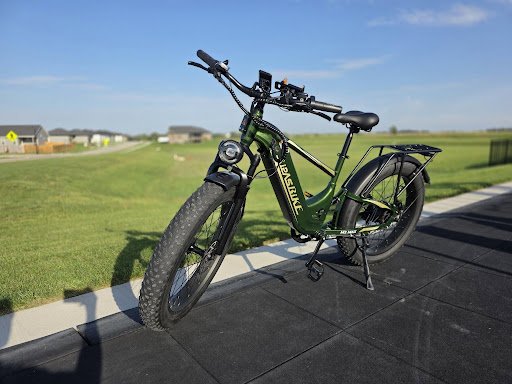
A fat tire electric bike may provide additional comfort and stability on rough surfaces, but wider tires can also add weight and rolling resistance. For a mostly paved route, a moderate tire design may provide a practical balance.
Check tire pressure regularly. Incorrect pressure can affect steering, comfort, braking, and energy use.
Braking and Visibility
Urban riders need to be visible and able to stop predictably. Check whether the bike includes suitable brakes, lights, reflectors, and a bell or warning device.
Before buying, consider:
- Front and rear braking
- Brake lever placement
- Headlight visibility
- Rear light or reflector
- Reflective side details
- Bell or horn
- Brake-light function, if included
Always follow local rules for electric bicycles and lighting equipment. Wear visible clothing in low-light conditions and use extra caution at intersections.
Motor Assistance and Throttle Options
Different riders prefer different control systems. Pedal assist provides motor support while the rider pedals, while a throttle can provide motor power through a control mechanism where legally permitted.
A best pedal assist electric bike should provide smooth, predictable assistance that does not feel abrupt in traffic. Multiple assistance levels can help riders adjust power to match the route.
An electric bike with throttle may be useful for certain starts or situations, but availability and legal requirements vary by location. Confirm the rules in your area before choosing a model based on throttle operation.
Storage and Practical Commuting Features
A city bike should fit into your daily routine. Consider how you will secure and store it at home, work, or public locations.
Practical features may include:
- Rear rack compatibility
- Front basket or carrying options
- Fenders
- Kickstand
- Integrated lights
- Locking points
- Removable battery
- Folding capability
A folding ebike can be helpful when storage is limited or when part of the journey involves public transport. However, check the folded dimensions and total weight before relying on it for a daily commute.
Safety in Urban Traffic
An electric bike for city riding requires the same attention to traffic conditions as any other bicycle. Before commuting, practice:
- Starting and stopping
- Signaling turns
- Braking smoothly
- Looking over your shoulder
- Riding around parked vehicles
- Navigating intersections
- Maintaining a safe following distance
Avoid riding at a speed that exceeds your visibility or ability to stop. Watch for opening car doors, pedestrians, turning vehicles, road debris, and changes in pavement.
Use a helmet that fits correctly and follow applicable cycling and electric-bike laws.
Maintenance for Commuter E-Bikes
Daily commuting can expose an electric bike to rain, dust, road salt, and frequent braking. A basic maintenance routine should include:
- Checking tire pressure
- Testing the brakes
- Inspecting lights
- Cleaning the drivetrain
- Checking the charging port
- Inspecting cables and connectors
- Securing racks, baskets, and accessories
- Charging according to the manufacturer’s instructions
If the bike is exposed to rain, dry it appropriately and avoid directing high-pressure water at the battery, display, motor, or electrical connectors.
Riders comparing electric bikes can review the available models and specifications at AIPAS Bike. The most suitable option will depend on the rider’s distance, terrain, storage needs, comfort preferences, and local requirements.
How to Choose Between Different Commuter Styles
Lightweight commuter bike
A lightweight commuter bike may be easier to carry, maneuver, and store. It can suit riders with short-to-medium routes and limited storage space.
Folding electric bike
A folding electric bike may be suitable for apartments, offices, vehicle transport, or multimodal commuting. Review folded size and carrying weight carefully.
Fat tire ebike
A fat tire ebike may provide added stability and cushioning on uneven surfaces. It may be less compact and heavier than a traditional city model.
Step-through ebike
A step-through ebike can make mounting and dismounting easier. It may appeal to riders who value accessibility and an upright riding position.
Frequently Asked Questions
What is the best electric bike for city riding?
The best electric bike for city riding should fit your distance, terrain, storage, comfort, and carrying needs. Reliable brakes, appropriate tires, useful battery range, and good visibility are especially important.
Is a lightweight electric bike better for commuting?
A lightweight electric bike can be easier to carry and store, but the lightest model is not always the best choice. Make sure it still offers suitable range, comfort, braking, and rider capacity.
Are step-through ebikes good for city riding?
Step-through ebikes can be practical for city riding because they make mounting and dismounting easier. Review the frame specifications, rider capacity, and riding position before choosing.
How much range does a commuter e-bike need?
The required range depends on your round-trip distance, terrain, riding mode, rider weight, and weather. Choose a bike with enough capacity to complete the journey while retaining a reasonable reserve.
Can I use a fat tire electric bike for commuting?
Yes, a fat tire electric bike can be used for commuting if it is suitable for the route and complies with local rules. Consider its weight, rolling resistance, storage requirements, and tire replacement costs.
Final Thoughts
Choosing an electric bike for city riding starts with your real daily routine. Consider the route, distance, road surface, storage space, weather, cargo, and traffic conditions before comparing models.
The best commuter e bike is one that feels comfortable, provides enough practical range, offers reliable control, and fits naturally into your day. Compare the specifications carefully, follow local requirements, and choose features that improve usefulness rather than simply adding complexity.