Disclaimer: This article is for general information only and is not medical advice. It does not diagnose, treat, or recommend any product for any person. Do not stop, start, or replace a prescribed medicine because of anything you read here. If you have heart disease, high blood pressure, high cholesterol, kidney disease, or you take regular medication, talk to a qualified clinician or pharmacist before considering any supplement. If you have chest pain, breathlessness, or other urgent symptoms, seek urgent medical care.
Provascin is a confusing name, and that confusion is the most important thing to understand before reading any review of it. It is not one single standardized product with one fixed formula, one maker, and one set of results that every buyer can expect. Instead, the name circulates for different supplement listings and rebrands by region and retailer, and formulas vary from listing to listing. That is why reviews and personal stories about Provascin are inconsistent, and why a claim that sounds confident on one site can be contradicted by a different listing somewhere else.
This article explains what the name usually means, how cholesterol and blood pressure claims are typically framed, what evidence does not prove, and how to read a label with care. It also covers general interaction risks, red flags, and the everyday heart health habits that have a far stronger evidence base than any single supplement name. No efficacy claim is made here, no dose is recommended, and no product is presented as a treatment.
If you are searching for Provascin because you are worried about your heart, cholesterol, or blood pressure, the safest starting point is not a shopping page. It is a conversation with your own clinician, with your recent test results and your current medicines in front of you. The rest of this article will help you ask better questions in that conversation, and help you spot listings that should not be trusted.
What Does the Name Provascin Usually Mean?
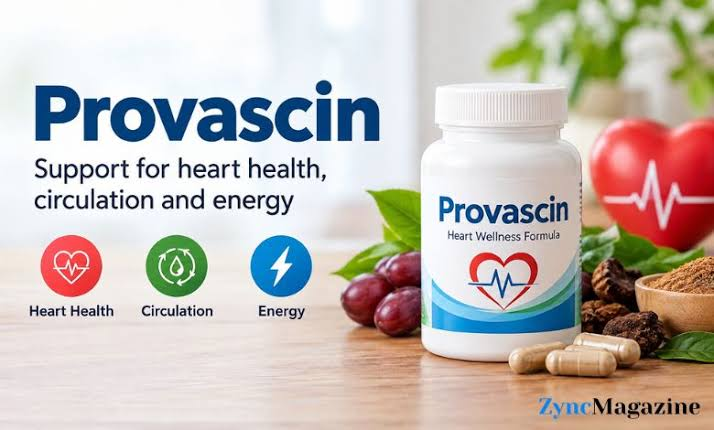
In most online listings, Provascin is presented as a heart health supplement, sold in capsule form, and marketed around cholesterol and circulation support. That framing is common, but it is not a guarantee. Because the name is not tied to one regulated, standardized product in the listings reviewed for this article, different sellers can use the same name, or a very similar name, for products with different ingredients, different strengths per serving, and different label claims.
That variation matters more than brand loyalty or review stars. Two people who both say they tried Provascin may have taken quite different products. One listing may emphasize plant sterols and omega 3s, while another may emphasize herbal extracts or a different blend entirely. Without the exact Supplement Facts panel from the exact bottle in hand, comparing their experiences is like comparing two different recipes that happen to share a title.
Why one name covers different products
Supplement names are often reused, reformulated, or rebranded. A name can be picked up by a new seller, changed slightly for a new market, or attached to an older formula that has since been altered. Retailers may also create their own listings with incomplete or copied descriptions, which adds to the confusion. Region matters too: a product sold under one name in one country may appear under a close variant elsewhere, with a different label to meet local rules.
For readers, the practical lesson is simple. Do not judge Provascin as if it were a single medicine with a single leaflet. Judge the specific bottle, from the specific seller, with the specific label you can read. If a review does not show that label, or does not name the exact seller and version, treat its claims as weak evidence at best.
The supplement framing
Most Provascin listings found in general web coverage use supplement language. They talk about supporting heart health, supporting healthy cholesterol levels already in a normal range, or supporting circulation, rather than claiming to cure disease. That softer language is common in supplement marketing, and it is important not to misread it. Support language is not the same as proof that a product lowers cholesterol, lowers blood pressure, or prevents a heart attack.
Supplement regulation also differs from medicine regulation in many countries. A supplement does not need to prove, before sale, that it treats a disease, in the way a prescription medicine must. That does not mean every supplement is unsafe or useless. It does mean that a product being on sale is not proof that it works, and that marketing words should not be mistaken for clinical proof.
The prescription description conflict
There is a sharper conflict that readers must notice. Some sources describe Provascin as a vasodilator prescription for hypertension, angina, or heart failure. That description conflicts directly with the supplement framing described above. A vasodilator prescription medicine and an over the counter supplement are different kinds of product, with different rules, different risks, and different medical supervision.
This article does not resolve that conflict by choosing one description and hiding the other. It flags it, because it is a safety issue. A reader who assumes a supplement is the same as a prescription medicine, or who assumes a prescription description applies to a supplement bottle they bought online, could make a dangerous mistake. Never assume a supplement equals a prescription medicine. Never stop a prescribed blood pressure or heart medicine and replace it with a supplement. If a listing uses prescription style language for a supplement, or if a source mixes the two framings without explanation, treat that as a red flag and seek advice from a clinician or pharmacist before taking any further step.
One Concrete Example, With Its Limits Stated
To make the variation concrete, consider one example that appears in older coverage. Purica Provascin is described as a heart health supplement, sold as 120 capsules, and listed at 32.95 dollars in one older Viva Magazine store roundup. That example is useful because it shows a real, named version with a capsule count and a past listed price. It is also limited in important ways, and those limits must be stated plainly.
First, that price is from an older roundup and must not be presented as a current price. Prices change, sellers change, and older listings may no longer be live. Second, one named version does not define every product called Provascin. Purica Provascin is one example, not the standard for the whole name. Third, a capsule count alone says nothing about what is inside each capsule, or whether that formula is suitable for any individual.
Readers should use this example as a warning against generalizing. If a review says Provascin costs a certain amount, or contains a certain ingredient, ask which version, which seller, and which date. If those details are missing, the review is not describing a product you can safely compare with the bottle in front of you.
Why older prices and listings mislead
Older roundups, store pages, and reviews often stay online long after a product has changed. Search engines can surface a price from years ago next to a current seller page, and readers may assume the two belong together. They may not. Formulas can change without a name change, sellers can change without a notice on an old review, and a product can be discontinued while old pages still describe it as available.
For that reason, this article gives no current price, no buy link, and no seller recommendation for Provascin. Any current price should come from the live label and seller page you are actually considering, checked on the day, and even then price alone is a poor guide to quality or safety.
What Is in Some Listings?
Because formulas vary, no single ingredient list can be presented as the Provascin formula. Some listings mention ingredients such as coenzyme Q10, L-carnitine, alpha-lipoic acid, Chaga mushroom, grape seed polyphenols, green tea extract, plant sterols, omega 3s, red yeast rice, or berberine. That list is a summary of what appears across different listings, not a claim that any one bottle contains all of those ingredients, or that any one ingredient is present in a useful amount.
The honest way to read such a list is as a menu of possibilities. One bottle might contain a few of these ingredients. Another might contain different ones. A third might contain similar names but in different forms or amounts per serving. Only the Supplement Facts panel on the bottle you hold tells you what that bottle actually contains.
Ingredients that vary by listing
Each ingredient family mentioned in listings comes with its own cautions, and none of them should be read as proof of benefit for Provascin as a whole. Coenzyme Q10 and L-carnitine are often marketed around energy and heart muscle support. Alpha-lipoic acid is often marketed as an antioxidant. Chaga mushroom, grape seed polyphenols, and green tea extract are often marketed around antioxidant activity. Plant sterols are often discussed in relation to cholesterol absorption. Omega 3s are widely discussed in heart health research in general, but that general research does not prove that a specific mixed supplement lowers risk for a specific person.
Two ingredients on that list deserve extra caution in general terms. Red yeast rice can contain compounds similar to statin medicines, which raises interaction and safety questions, especially for people already on cholesterol medicine. Berberine can interact with medicines and affect blood sugar and other pathways, and it is not suitable for everyone. These points are not a claim that every Provascin listing contains these ingredients. They are a reason to read the label carefully and to ask a clinician or pharmacist if either name appears on a bottle you are considering.
Why the Supplement Facts panel matters more than the front label
The front of a bottle is marketing. The Supplement Facts panel is the label. That panel should list each ingredient, the amount per serving, the serving size, and other ingredients such as fillers, binders, or capsule materials. It should also list allergen information and the maker or distributor details. If a product page shows only a marketing summary and hides the full panel, that is a reason to pause.
Readers should also check for a lot number, an expiry date, and storage instructions. A missing expiry date, a damaged seal, or a label that differs from the seller page are all reasons not to use the product and to contact the seller or a pharmacist for advice. A genuine product should be traceable to a maker who can be contacted, not to an anonymous storefront with no address or customer service route.
How Cholesterol and Blood Pressure Claims Are Typically Framed
Marketing for heart supplements often uses careful but suggestive language. It may say a product supports healthy cholesterol, helps maintain blood pressure already in a normal range, supports circulation, or supports overall heart health. Those phrases sound reassuring, but they are broad, and they do not mean the product has been shown to treat high cholesterol or high blood pressure.
It helps to separate three different kinds of statement. A general wellness claim says a product supports normal function. A structure or function claim says an ingredient plays a role in the body. A disease claim says a product treats, prevents, or cures a disease. Supplements are not supposed to make disease claims without medicine approval, but marketing often blurs the line with testimonials, before and after stories, and implied promises. Readers should be alert to that blurring.
Cholesterol claims in plain terms
Cholesterol claims for supplements often rest on ingredient level research, not on trials of the finished mixed product. For example, plant sterols have been studied in relation to cholesterol absorption, and omega 3s have been studied in wider heart research. That does not prove that a mixed bottle containing those ingredients, in the amounts on that bottle, will lower your cholesterol by a meaningful amount. Dose per serving, form, combination with other ingredients, diet, and your own baseline levels all matter, and a marketing page rarely addresses all of them.
Personal stories about cholesterol are even weaker evidence. A person who starts a supplement and later sees a better test result may also have changed diet, activity, weight, smoking, alcohol, or medicines at the same time. Without a controlled comparison, it is not possible to know what caused the change. That is why clinicians rely on repeated lab tests and overall risk assessment, not on single testimonials.
Blood pressure claims in plain terms
Blood pressure claims follow a similar pattern. Some ingredients are discussed in general research around blood vessel function or circulation, but that discussion is not proof that a specific supplement will lower blood pressure safely for a person with hypertension. Blood pressure also varies through the day, with stress, sleep, caffeine, salt, activity, and measurement technique, so a single home reading after starting a supplement proves very little.
More importantly, blood pressure treatment is a safety critical area. Uncontrolled high blood pressure raises risk over time, often without symptoms, and stopping or delaying proven treatment to try a supplement can be harmful. Anyone with high readings, or with a diagnosis of hypertension, should discuss any supplement with their clinician before use, and should keep taking prescribed treatment unless a clinician advises a change.
What evidence does not prove
A useful summary is to list what common forms of evidence do not prove, so readers are not misled by confident marketing:
- A long ingredient list does not prove the product works, or that the amounts are useful.
- Traditional use of an herb or mushroom does not prove safety or benefit in a modern mixed capsule.
- A single small study of one ingredient does not prove a mixed product works for everyone.
- Testimonials and star ratings do not prove benefit, and they can be faked or selected.
- Being natural does not mean being safe, especially alongside prescription medicines.
- Being sold online does not mean a product has been checked for purity, strength, or contaminants.
- A money back guarantee does not prove benefit, and it does not remove interaction risks.
That list does not mean supplements can never help anyone. It means the burden of proof for a specific bottle, for a specific person, is higher than a sales page usually meets, and that a clinician’s advice, based on your history and tests, matters more than a general claim.
Label Checklist: What to Check Before You Consider Any Bottle
Use this checklist on the actual bottle, not on a summary page. If you cannot see the full label before buying, that alone is a reason to be cautious. A trustworthy seller should make the full Supplement Facts panel, the maker details, and the safety warnings easy to read before purchase.
| Check this | What to look for, and why it matters |
|---|---|
| Full ingredient list | Every active and other ingredient, with amount per serving, not just a marketing summary |
| Serving size | How many capsules make one serving, so you can compare listings fairly |
| Maker and contact details | A named maker or distributor with a contact route, not an anonymous storefront |
| Third party testing | Whether an independent lab checks identity, purity, and contaminants, and whether results are available |
| Allergen information | Common allergens, including fish, soy, gluten, dairy, or shellfish derived ingredients, if relevant |
| Warnings | Warnings for pregnancy, breastfeeding, surgery, or use with medicines, if present |
| Expiry and lot number | A clear expiry date and lot number, so a batch can be traced if there is a recall |
| Seal and storage | An intact seal on arrival, and clear storage instructions on the label |
Third party testing deserves a special note. Many supplement brands claim testing, but the value depends on who tested what. A general claim of lab tested, without a named lab, a test scope, or a certificate, is weak. Stronger transparency means a named testing programme, a scope that covers identity and contaminants, and results that a buyer can actually request or view. Even then, testing proves quality control for that batch, not that the product will benefit you.
Manufacturer transparency and red flags on the label
Transparency is more than a clean website. A maker should be willing to say where the product is made, who to contact with a problem, and what to do if you have an adverse reaction. Vague claims such as doctor approved, clinically proven, or pharmaceutical grade, without a named study, a named doctor, or a named standard, should be treated as marketing, not evidence.
Also watch for labels that hide ingredients behind proprietary blends with no amounts for individual ingredients. A blend total tells you very little about how much of each ingredient you are actually getting. If a key ingredient you care about is hidden in a blend, you cannot compare that product with research, and you cannot judge interaction risk properly.
Read also: ImportPellet: Brazil Wood Pellet Import Guide and Name Explained
Interactions and Safety Risks in General Terms
Supplements can interact with medicines, with other supplements, and with health conditions. That risk is general, but it is especially relevant for heart related products, because many readers considering Provascin may already take blood pressure medicine, cholesterol medicine, blood thinning medicine, diabetes medicine, or other regular treatment. This section describes risks in general terms only. It is not a personal risk assessment, and it does not replace advice from your clinician or pharmacist.
Interaction risk does not require a large dose, and it does not always cause immediate symptoms. Some interactions change how much of a medicine is absorbed, how fast it is cleared, or how strongly it acts. Others add to a medicine’s effect, for example by further affecting blood pressure, blood clotting, or blood sugar, which can increase the chance of side effects. Still others reduce a medicine’s effect, which can leave a condition less controlled than it appears.
Blood pressure, cholesterol, and blood thinning medicines
People on blood pressure medicines should be especially careful with any supplement marketed for circulation or blood pressure support. An added effect, even a small one, could in theory push blood pressure lower than intended, or could mask the need for proper dose adjustment by a clinician. People on cholesterol medicines, including statins, should be careful with ingredients such as red yeast rice, which can contain statin like compounds, and with any ingredient that affects liver pathways used by those medicines.
Blood thinning medicines, including anticoagulants and antiplatelet medicines, raise a further concern. Several herbal and plant ingredients marketed for circulation can affect clotting or platelet function in general research, and combining them with blood thinning treatment without advice can increase bleeding risk. This is also relevant before surgery or dental procedures, where a clinician may need to know every supplement you take, not only your prescribed medicines. Always tell your clinician, pharmacist, dentist, and surgeon about supplements, even if a product is sold as natural.
Who must talk to a clinician first
Some groups should not consider a heart supplement without direct clinician advice. This list is not exhaustive, but it covers the highest caution groups:
- Anyone who is pregnant or breastfeeding.
- Anyone with heart disease, heart failure, angina, or a history of heart attack or stroke.
- Anyone with high blood pressure or high cholesterol, whether treated or untreated.
- Anyone with kidney disease, liver disease, or diabetes.
- Anyone taking blood pressure, cholesterol, blood thinning, diabetes, or heart rhythm medicines.
- Anyone scheduled for surgery, or recovering from surgery.
- Anyone with allergies to ingredients commonly found in supplements, including fish, soy, or herbal extracts.
- Anyone who has had an allergic reaction or side effect from a supplement before.
If you fall into any of these groups, bring the exact bottle label to your appointment or pharmacy visit. A clinician cannot judge a product from its name alone, because, as this article stresses, the name Provascin does not define one formula. The label is the only basis for a useful discussion.
Red Flags: When to Walk Away
Not every listing is dishonest, but some patterns should prompt you to stop and reconsider. These red flags apply to Provascin listings and to heart supplements in general. One red flag alone may be a warning, and several together are a strong reason to walk away.
- Cure claims: promises to cure heart disease, reverse blocked arteries, or replace prescribed treatment.
- Guaranteed results: promises that everyone will see lower cholesterol or blood pressure, or that results are certain.
- Hidden seller: no maker name, no address, no contact route, or only a temporary online storefront.
- No label: no full Supplement Facts panel before purchase, or a panel that differs from the bottle received.
- Fake urgency: countdown timers, claims of limited stock that never ends, or pressure to buy several bottles at once.
- Fake endorsements: celebrity or doctor endorsements with no verifiable source, or testimonials that cannot be checked.
- Secret formula: proprietary blend totals with no individual amounts, or ingredients listed only by vague names.
- Miracle language: words such as miracle, breakthrough, or secret that doctors do not want you to know.
- Free trial traps: trials that convert to repeat billing without clear consent and cancellation terms.
If you have already bought a product that shows these signs, do not assume it is safe to finish the bottle. Keep the bottle and label, note the seller and order details, and ask a pharmacist or clinician for advice. If you have symptoms you think may be linked to a supplement, seek medical advice promptly and report the reaction through your local reporting route if one is available.
Lifestyle Basics That Actually Support Heart Health
It is easy to focus on a single capsule and miss the habits that have the strongest evidence for heart health. No supplement replaces these basics, and clinicians usually start here because the effects, while not dramatic overnight, are consistent across large groups of people. These points are general information, not a personal prescription, and any major change to diet, activity, or medicines should be discussed with your clinician.
The basics are not glamorous, but they are practical. A diet rich in vegetables, fruits, whole grains, legumes, nuts, and oily fish, with less processed meat, sugary drinks, excess salt, and excess alcohol, supports heart health for most people. Regular physical activity, built up gradually and matched to your health, helps blood pressure, cholesterol, weight, mood, and sleep. Not smoking, or quitting smoking, is one of the most powerful heart health steps available. Good sleep, stress management, and keeping up with prescribed treatment and check ups complete the picture.
- Eat mostly whole foods, with plenty of vegetables and fibre rich foods.
- Move regularly, in ways you enjoy and can sustain, and build up slowly if you are inactive.
- Do not smoke, and seek support to quit if you smoke.
- Limit alcohol and excess salt, in line with your clinician’s advice.
- Keep regular check ups, blood pressure checks, and cholesterol tests as advised.
- Take prescribed medicines as directed, and ask your clinician before adding any supplement.
- Track your readings and symptoms, and bring that record to appointments.
These habits also help explain why supplement stories can mislead. A person who starts walking daily, improves diet, quits smoking, and starts a supplement at the same time may credit the supplement, when the combined lifestyle changes did most of the work. That does not make lifestyle change less valuable. It makes it more important to keep the focus on proven habits, rather than on a single product name.
Frequently Asked Questions
These answers use the same cautious approach as the rest of this article. Where evidence is limited or listings vary, the answer says so, rather than giving a confident claim that the evidence cannot support.
What is Provascin?
Provascin is a name used for different heart health supplement listings and rebrands, not one single standardized product. Formulas vary by seller, region, and version, so the name alone does not tell you what is in a specific bottle. Always read the Supplement Facts panel on the exact bottle you are considering.
Is Provascin a prescription medicine?
Most listings present Provascin as a supplement, but some sources describe Provascin as a vasodilator prescription for hypertension, angina, or heart failure. Those two framings conflict, and this article flags that conflict rather than resolving it. Do not assume a supplement equals a prescription medicine, and do not replace prescribed treatment with a supplement.
Does Provascin lower cholesterol or blood pressure?
No reliable claim can be made here that Provascin, as a name, lowers cholesterol or blood pressure for any individual. Some ingredients that appear in some listings have been studied in general research, but that does not prove that a specific mixed bottle, in its labelled amounts, will produce a benefit for you. If you have high cholesterol or high blood pressure, discuss proven treatment and monitoring with your clinician.
What ingredients are in Provascin?
Ingredients vary by listing. Some listings mention coenzyme Q10, L-carnitine, alpha-lipoic acid, Chaga mushroom, grape seed polyphenols, green tea extract, plant sterols, omega 3s, red yeast rice, or berberine, but no single bottle necessarily contains all of them. The only reliable ingredient list is the Supplement Facts panel on the bottle in front of you.
Is Provascin safe with blood pressure or blood thinning medicines?
Safety cannot be judged from the name alone, and interaction risk is a real general concern for heart supplements, especially alongside blood pressure, cholesterol, and blood thinning medicines. Do not combine a supplement with those medicines without advice from your clinician or pharmacist, and always tell them about every supplement you take.
Who should avoid Provascin without clinician advice?
People who are pregnant or breastfeeding, people with heart, kidney, or liver disease, people with diabetes, people on regular heart or blood thinning medicines, and people scheduled for surgery should talk to a clinician first. If you have any doubt about safety, do not start a supplement until you have had that conversation.
What should I check on a Provascin label?
Check the full ingredient list with amounts per serving, the serving size, the maker and contact details, third party testing information, allergen warnings, expiry date, and lot number. Be wary of labels that hide amounts in proprietary blends, make cure claims, or come from a seller with no traceable contact details.
What should I do instead of relying on a supplement?
Focus on the basics that support heart health: a balanced diet, regular activity, not smoking, limiting alcohol and excess salt, good sleep, and regular check ups. Keep taking prescribed medicines as directed, track your readings, and use supplement questions as a reason to talk to your clinician, not as a reason to delay proven care.
Conclusion
Provascin is best understood as a warning about names, not as a single answer to heart health. The name covers different listings, with different formulas, and with a conflicting description that sometimes sounds like a supplement and sometimes sounds like a prescription medicine. That variation alone is reason to slow down, read the exact label, and ask a clinician before making any decision.
The broader lesson is simpler. Heart health is built over time through diet, activity, not smoking, sleep, regular checks, and proven treatment when it is needed. A capsule with a reassuring name cannot replace that work, and it can add interaction risks if it is taken alongside medicines without advice. Reviews, testimonials, and older prices do not change that basic picture.
Read also: Scarlett McDonald: The Private Daughter of Michael McDonald and Amy Holland
Reminder: This article is informational only and is not medical advice. Do not stop or replace prescribed medicine because of anything you read here. If you have heart disease, high blood pressure, high cholesterol, or you take regular medication, talk to a qualified clinician or pharmacist first, and seek urgent care for chest pain, breathlessness, or other urgent symptoms.