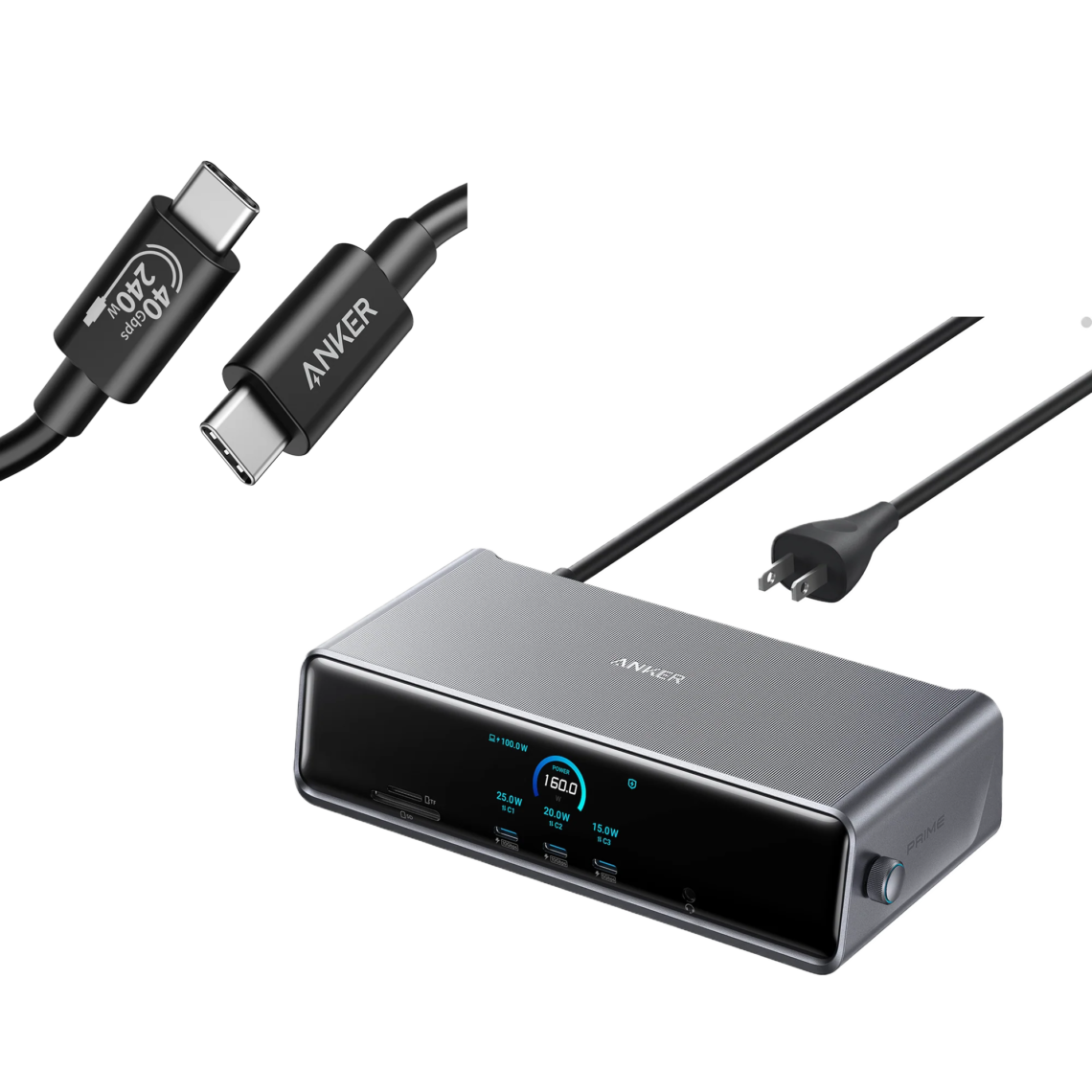
A productive workspace is not defined solely by the computer sitting on the desk. The way a person connects displays, transfers files, accesses external storage, and manages accessories can have just as much influence on the daily working experience. As more professionals move between home offices, shared workspaces, and flexible work environments, the number of devices connected to a computer continues to grow. A laptop that once handled everything independently may now need to support a monitor, keyboard, mouse, external drive, webcam, and other peripherals at the same time.
This growing collection of equipment can create a surprisingly complicated setup. Different accessories may require different ports, cables can become tangled behind the monitor, and switching between workstations can mean reconnecting several devices individually. These small interruptions may appear insignificant, but they can accumulate throughout a busy workday. A better connection strategy helps keep equipment organised and makes it easier to move between different tasks without repeatedly rebuilding the entire workspace.
A USB C docking station can help address these challenges by bringing multiple connections together through one central device. For users with more modest connectivity requirements, a USB hub can provide a simpler way to expand the available ports. Although these accessories serve related purposes, understanding their differences makes it easier to select a solution that matches a particular workstation rather than paying for capabilities that may never be used.
Why Modern Workspaces Need Better Connectivity
Many modern laptops prioritise portability through slim designs and a limited selection of physical connections. This makes them convenient for commuting, meetings, and travel, but it can create difficulties when the same computer needs to operate as the centre of a fully equipped desk.
Consider a graphic designer who works with a laptop and an external display. The same person may also need a drawing tablet, an external storage drive, a keyboard, and a mouse. Connecting every accessory directly to the laptop may become impractical if the available ports are limited. The situation becomes more complicated when one connection is needed for charging or another must support a high-speed data transfer.
Remote professionals face similar challenges. Video meetings require a webcam and microphone, while everyday office work may involve external storage, wired networking, or additional displays. Students can encounter the same problem when connecting their laptops to classroom equipment, external monitors, presentation devices, and storage accessories.
The answer is not necessarily to purchase a separate adapter for every device. A central connection point can reduce the number of cables attached directly to the computer and make the overall arrangement easier to manage. The right accessory depends on how many devices must connect simultaneously, the type of data being transferred, and whether external displays or other advanced features are required.
Understanding What a Docking Station Adds to a Desk
A docking station is designed to expand a computer’s connectivity and, depending on the model, support a more complete desktop environment. Instead of connecting multiple accessories individually whenever the laptop is used at a desk, users can leave compatible peripherals attached to the docking station.
When returning to the workspace, connecting the laptop through the appropriate cable can restore access to several peripherals at once. This is particularly useful for people who regularly move between meetings and focused desk work. It can also simplify shared workstations where different users need to connect their own compatible computers to the same equipment.
Docking stations vary considerably in their capabilities. Some offer multiple USB ports and display connections, while others may include Ethernet, memory card readers, audio connections, and power delivery. More advanced models can support specific multi-monitor configurations or higher display resolutions, provided the computer and connection standard are compatible.
However, the number of ports alone does not determine whether a docking station is suitable. A model with several display outputs may not support every combination of monitors at their maximum resolution and refresh rate. Similarly, a USB-C connector does not automatically guarantee support for video output, high-speed data, or laptop charging. The computer’s specifications and the dock’s technical documentation should be checked together before making a purchase.
When a USB Hub Is the More Practical Choice
Not every user needs a full docking station. Sometimes the main issue is simply that a laptop has too few USB ports for the accessories used throughout the day. A USB hub can address this limitation by expanding one compatible USB connection into several additional ports.
This type of accessory is useful for connecting devices such as a keyboard, mouse, flash drive, compatible external storage device, or other USB peripherals. A compact hub can also be convenient for people who work in different locations because it takes up little space in a laptop bag and is generally easy to connect when needed.
For example, a university student might use a wireless mouse receiver, a USB flash drive, and a wired keyboard during a study session. If the laptop has only a limited number of available ports, a suitable hub can make it easier to use these accessories together. The same benefit applies to writers, administrative professionals, and users who mainly work with a single laptop screen.
The important distinction is that a basic USB hub primarily expands USB connectivity. It does not necessarily provide the broader capabilities associated with a docking station. Video output, Ethernet, laptop charging, and other functions depend on the hub’s design and supported standards. Users should confirm the specifications instead of assuming that every hub offers the same features.
Docking Station vs USB Hub: Choosing According to Your Work
The most useful comparison begins with the tasks a workstation needs to support. A person who mainly connects a mouse and external drive has different requirements from someone who uses two monitors, wired networking, external storage, and a collection of other peripherals.
A USB hub is often sufficient when the main goal is to add more USB ports. It can provide a compact, relatively straightforward solution for everyday accessories without introducing unnecessary complexity. For occasional use, travel, and basic laptop expansion, this may be all that is needed.
A docking station becomes more attractive when the computer must support a broader collection of equipment. Professionals who regularly connect external monitors, charging equipment, networking accessories, and multiple peripherals may benefit from a central connection point. The setup can be particularly convenient when the laptop is frequently disconnected from the desk and taken elsewhere.
Power requirements should also influence the decision. Some docking stations provide power delivery, allowing a compatible laptop to receive power through the same connection used for peripherals. Other products require a separate laptop charger. USB hubs may also have different power arrangements, including bus-powered designs and models that use an external power supply.
Price is another consideration, but the least expensive accessory is not always the most economical choice. A basic hub may be ideal for a simple setup, whereas purchasing several separate adapters to achieve docking-station functionality can add clutter and expense. Comparing the complete set of required features provides a more useful basis for deciding.
Making Multiple Displays Work Reliably
External monitors can significantly change how people organise their work. A larger display makes detailed documents easier to inspect, while a second screen can keep reference material visible beside a primary application. Developers may use one display for code and another for testing, whereas researchers may keep source material open while writing.
A docking station can simplify the physical connections required for a multi-display workspace, but monitor support needs careful verification. The number of available video ports does not always equal the number of independent displays the computer can operate. Laptop hardware, operating-system limitations, graphics capabilities, and the dock’s internal technology can all affect the final configuration.
Display specifications matter as well. Someone using a standard office monitor may have different requirements from a video editor who needs a high-resolution screen with a particular refresh rate. The dock, computer, cable, and monitor must all support the desired combination.
Before purchasing an accessory, users should confirm the laptop’s supported display outputs and the dock’s maximum supported resolutions and refresh rates. They should also determine whether the product relies on a native video-output standard or additional display technology that may require software. Checking these details in advance can prevent frustrating compatibility problems after the equipment arrives.
Organising Cables for a Cleaner and Safer Workspace
Connectivity is not only a technical concern. Poor cable management can make a workspace look untidy, obstruct access to frequently used items, and complicate routine maintenance. When several accessories are connected directly to a laptop, their cables may spread across the desk and become difficult to trace.
A central connection point can help create a more organised arrangement. Users can keep frequently used peripherals connected in one place and route their cables behind a monitor stand or along the rear edge of the desk. Leaving a little extra cable length also makes it easier to move equipment without pulling on connectors.
Cable placement should not compromise ventilation or create trip hazards. Power cables and data cables should be arranged so that they do not become pinched beneath furniture or stretched tightly across walking areas. Devices that require external power should use suitable adapters and be positioned where heat can dissipate properly.
Labelling frequently used cables can be helpful in shared offices and complicated editing setups. A simple label indicating a monitor, external drive, or webcam makes troubleshooting easier when a device stops responding. These small organisational improvements can save time, particularly for users who regularly disconnect and reconnect equipment.
Data Transfer, External Storage, and Everyday Efficiency
External storage remains important for professionals who work with large files, maintain backups, or move documents between computers. Photographers may transfer high-resolution images, video editors may work with large media libraries, and business users may need quick access to project archives.
When connecting storage devices through a hub or docking station, supported data speeds deserve attention. A connector’s physical shape does not tell the entire story because different USB standards can use similar-looking ports while offering different performance levels. The computer, accessory, cable, and external drive all influence the speed of a transfer.
Connecting several devices through one hub can also affect performance when they share the same upstream connection or available bandwidth. For routine documents and basic peripherals, this may not be noticeable. For large files or demanding storage workloads, a higher-performance connection may be more appropriate.
Reliable backup practices are equally important. Expanding the number of available ports makes external storage more convenient, but it does not replace a proper backup strategy. Important files should be backed up regularly, and users should maintain an additional copy in a separate location or suitable cloud service when appropriate.
What to Check Before Buying Connectivity Accessories
A little research can prevent a workstation upgrade from becoming an expensive compatibility experiment. Start by listing the devices that need to connect simultaneously and identifying the functions that matter most. Include monitors, storage devices, input accessories, networking equipment, and laptop charging requirements.
Next, inspect the laptop’s specifications. Confirm which ports it has, whether its USB-C connection supports video output and power delivery, and what display configurations it can handle. These details are especially important when a product’s description uses broad terms such as universal compatibility.
Compare the accessory’s port selection with the actual equipment being used. Count the required USB-A and USB-C connections, check whether HDMI or DisplayPort is necessary, and determine whether wired Ethernet or card reading is important. It is also worth considering whether the device will be used mainly at a permanent desk or carried frequently between locations.
Finally, examine build quality, cable length, heat management, warranty coverage, and manufacturer support. An accessory that works reliably and fits the workspace is more valuable than one that offers a long list of features that are rarely needed. The goal is to make the computer easier to use, not to add complexity for its own sake.
Final Thoughts
A well-organised workstation depends on more than a powerful computer. The ability to connect peripherals efficiently, support external displays, transfer files, and keep cables under control can have a meaningful effect on everyday productivity.
A docking station is generally better suited to users who need a central connection point for a broader desktop setup, while a USB hub is a practical option for expanding basic USB connectivity. Neither is automatically the right choice for everyone. The best solution depends on the computer’s capabilities, the number and type of connected devices, and the way the workspace is used.
By checking compatibility before purchasing and selecting accessories around genuine needs, users can build a cleaner, more flexible workstation that supports their daily tasks without unnecessary equipment or avoidable interruptions.
Frequently Asked Questions
Is a docking station better than a USB hub?
It depends on the intended use. A docking station may offer broader connectivity, such as external display support, Ethernet, and laptop power delivery. A USB hub is often sufficient when only additional USB ports are needed.
Can a USB hub connect two monitors?
Some specialised hubs support display connections, but a basic USB hub generally does not provide independent video outputs. Monitor support depends on the product’s design, the laptop’s capabilities, and the relevant display technology.
Does every USB-C docking station charge a laptop?
No. Laptop charging depends on whether the docking station supports power delivery and provides sufficient power for the computer. The laptop must also support charging through its USB-C port.
Will a docking station work with any laptop?
Not necessarily. Compatibility depends on the laptop’s ports, supported data and video standards, operating system, and the docking station’s requirements. Always check the manufacturer’s compatibility information.
Can I connect an external hard drive to a USB hub?
Yes, if the hub supports the drive’s connection type and provides suitable data performance and power. Some external drives may require a separately powered hub or their own power supply.
Should I buy a powered USB hub?
A powered hub can be useful when several peripherals require more power than the computer’s USB connection can reliably provide. For low-power accessories, a bus-powered hub may be sufficient. The right choice depends on the connected devices and their power requirements.