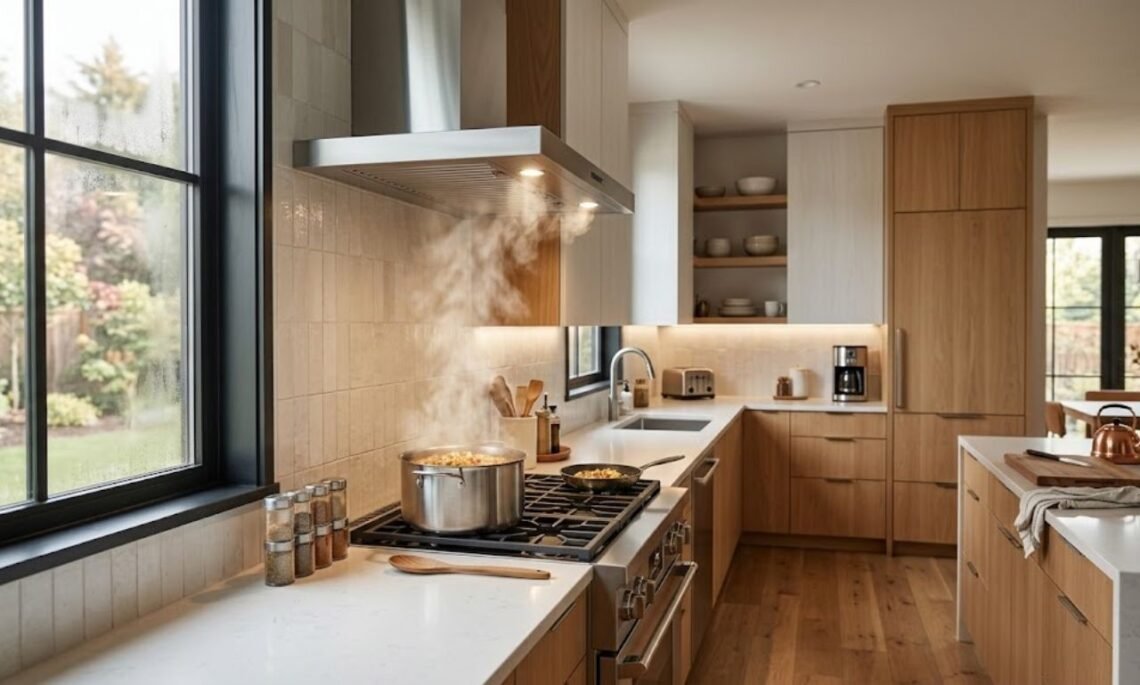
A kitchen can seem perfectly comfortable when it is only used for occasional meals. The air clears quickly, cooking smells disappear, and surfaces stay relatively clean. But once cooking becomes a daily habit, small ventilation weaknesses can become much more obvious. Odors may linger longer, condensation can become more noticeable, and grease may begin settling on cabinets and nearby surfaces.
This does not necessarily mean the kitchen suddenly developed a ventilation problem. More often, increased cooking simply exposes limitations that were difficult to notice before. More frequent meals mean more heat, moisture, grease, odors, and airborne particles entering the room. Understanding how these factors interact can help homeowners identify whether their current ventilation setup is keeping up with their cooking habits.
Why Cooking More Can Reveal a Ventilation Problem
Ventilation requirements are closely connected to how a kitchen is actually used. Someone who cooks twice a week creates a very different indoor environment from someone who prepares several meals every day. Even if both kitchens have the same ventilation equipment, the experience of using them can be quite different.
Frequent cooking increases the amount of time that heat, moisture, odors, and cooking byproducts are released into the air. Frying, searing, boiling, and roasting can produce particularly noticeable effects. When these activities happen repeatedly without enough effective air removal or filtration, their effects become cumulative.
This is why a ventilation system can appear to work well for years and then suddenly seem inadequate when household cooking habits change. The equipment may not have become less effective overnight. Instead, the demands placed on it have increased.
Why the Problem Often Goes Unnoticed at First
Ventilation problems are often gradual rather than dramatic. During occasional cooking, there may be enough time between meals for odors to disappear, moisture to evaporate, and heat to dissipate naturally. Small amounts of grease may also accumulate so slowly that they are barely noticeable.
Frequent cooking changes that pattern. When meals are prepared several times a day, the kitchen has less time to recover between cooking sessions. Moisture from one meal can remain when another cooking session begins, while odors and grease can become increasingly persistent.
The same ventilation system that seemed completely adequate before may therefore feel less effective. This is especially noticeable in kitchens with limited airflow, restricted ductwork, poorly positioned ventilation equipment, or a cooking area that is not well matched to the hood.
Recognizing this pattern is useful because it shifts the question from “Why is my kitchen suddenly getting worse?” to “Has my cooking activity increased beyond what the existing ventilation setup can comfortably handle?”
What Builds Up When a Kitchen Handles More Cooking
Cooking releases more than the visible smoke that sometimes rises from a pan. Different cooking methods introduce a mixture of heat, moisture, odors, grease particles, and other airborne material into the surrounding space.
Grease is particularly important because high-temperature cooking can send tiny oil particles into the air. Some are captured by ventilation equipment, while others can settle on cabinets, walls, appliances, and other nearby surfaces. Over time, this can create the sticky residue commonly associated with heavily used kitchens.
Moisture is another factor. Boiling water, steaming vegetables, simmering sauces, and other wet cooking processes release water vapor. If that moisture is not adequately removed, it can contribute to condensation on cooler surfaces.
Odors can also remain much longer when air is not effectively exhausted or filtered. Heat adds another layer to the problem, particularly when ovens and cooking surfaces operate for extended periods. Together, these effects can make a kitchen feel noticeably less comfortable as cooking frequency increases.
7
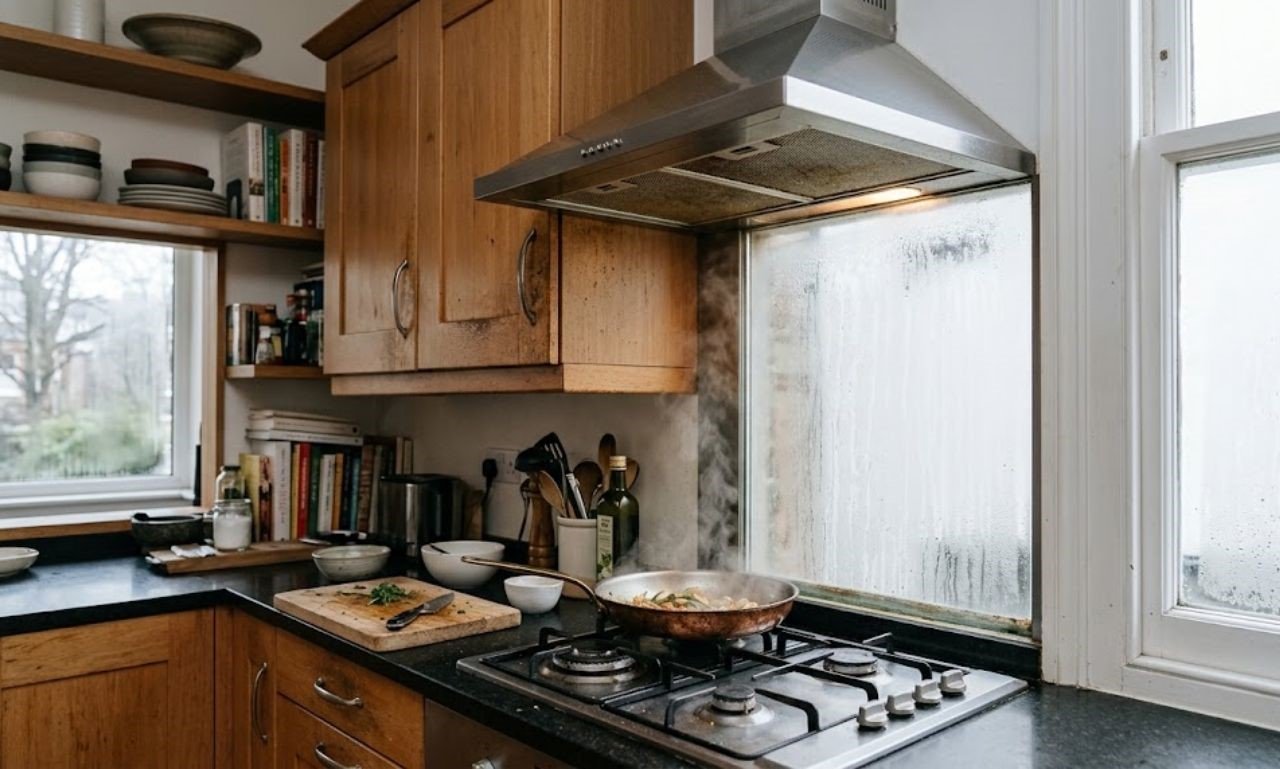
A ventilation problem is not always obvious from the fan itself. Instead, the kitchen may provide several clues that its current system is struggling to keep pace with everyday cooking.
- Cooking odors remain for hours. Persistent smells after cooking may indicate that air is not being removed or filtered effectively enough.
- Grease appears on nearby surfaces. Faster buildup around cabinets, walls, or appliances can indicate that airborne grease is escaping the main capture area.
- Condensation becomes more noticeable. Repeated moisture from cooking can become visible on windows, walls, or other cooler surfaces.
- The kitchen becomes unusually hot. Heat from cooking equipment can accumulate when there is insufficient air movement or exhaust.
- Smoke spreads beyond the cooking area. If visible smoke quickly moves throughout the room, the ventilation system may not be capturing it effectively.
- Surfaces become sticky more quickly. A combination of airborne grease and cooking residue can create noticeable buildup over time.
- The hood sounds powerful but performs poorly. Fan noise alone does not prove effective ventilation. Airflow, capture area, filters, and ducting all influence real-world performance.
None of these signs automatically proves that a ventilation system needs replacement. They are better treated as clues that deserve closer attention.
Why Hood Placement and Kitchen Layout Matter
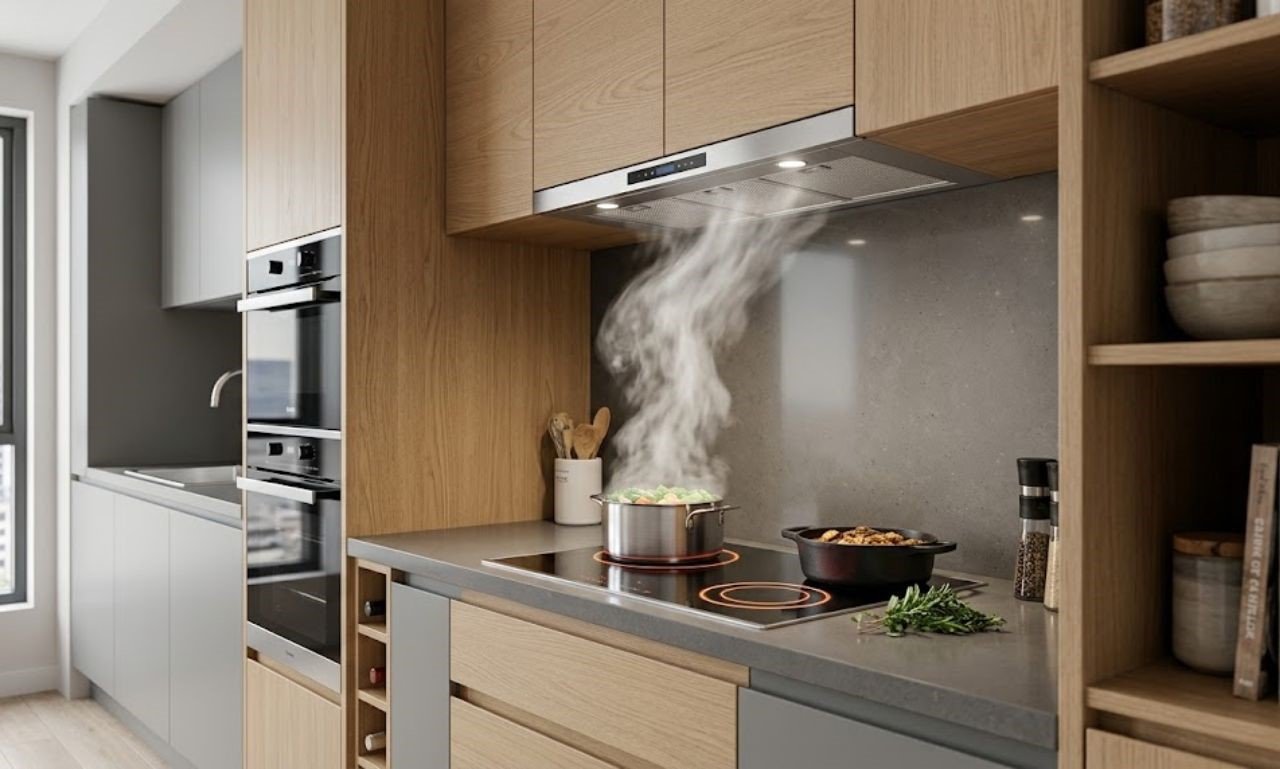
Ventilation performance depends on more than the fan’s stated power. Where the hood sits in relation to the cooking surface, how wide it is, and how air moves through the room can all influence how effectively cooking byproducts are captured.
A hood that is too small for the cooking area may allow smoke and grease to escape around its edges. Position also matters because rising heat and cooking particles need to enter the capture area before they spread throughout the room. Cabinetry can further affect the available space and installation options.
For kitchens with cabinetry positioned directly above the cooking surface, an under cabinet range hood can provide a practical way to integrate ventilation into the existing layout. However, the right configuration still depends on the cooking area, hood dimensions, installation height, and whether the system is ducted or recirculating.
Duct placement also deserves attention. A ventilation system can have a capable fan but still perform below expectations if airflow is restricted by poorly designed or excessively obstructed ductwork. This is why evaluating the entire installation is often more useful than focusing on fan power alone.
Ducted vs. Recirculating Ventilation: What Changes?
Two common approaches to kitchen ventilation are ducted and recirculating systems. They work differently, so their strengths and limitations should be understood before deciding which approach suits a particular kitchen.
A ducted system moves kitchen air through a duct and exhausts it outside. This can be an effective way to remove heat, odors, moisture, and airborne cooking byproducts from the room. Its performance, however, depends heavily on installation. Long or restrictive duct paths, unnecessary bends, and poorly designed outlets can reduce airflow.
A recirculating system works differently. Instead of sending air outside, it passes the air through filters before returning it to the kitchen. This configuration can be useful where external ducting is impractical, but its effectiveness depends on appropriate filtration and regular filter maintenance.
Neither approach should automatically be treated as the best choice for every home. Kitchen layout, installation limitations, cooking habits, and maintenance requirements all matter. The important question is whether the selected system is appropriate for the way the kitchen is actually used.
How Cooking Habits Change the Ventilation You Need
Not every cooking activity places the same demand on ventilation. Light, occasional meal preparation may create relatively modest amounts of heat, moisture, and airborne grease. Frequent frying or high-temperature cooking can create a much greater load in a shorter period.
Boiling and steaming tend to introduce more moisture, while frying and searing can produce more airborne grease and cooking particles. Roasting and baking may keep the kitchen warm for longer because the cooking process can continue for an extended period.
Regular oven use can also change how a kitchen feels, particularly during long baking or roasting sessions. An appliance such as the Ciarra Nosh Oven can be considered as part of the broader cooking setup, where the frequency and duration of appliance use influence how much heat and odor the kitchen needs to manage.
The important point is that ventilation should be considered alongside actual cooking habits rather than based only on how often the kitchen is used in general.
Practical Ways to Improve Kitchen Airflow
Improving kitchen ventilation does not always require replacing the entire system. Small changes in how existing equipment is used and maintained can sometimes make a noticeable difference.
Start by using the ventilation system before or at the beginning of cooking rather than waiting until smoke or odors have already spread. Keeping it running during cooking and for a short period afterward can also give the system more time to remove lingering air contaminants.
Regular maintenance matters as well. Grease filters should be cleaned according to the manufacturer’s instructions, because accumulated residue can interfere with airflow and filtration. Where accessible and appropriate, ductwork should also be checked for obvious restrictions or buildup.
A few practical habits can further support airflow:
- Avoid blocking ventilation openings around the cooking area.
- Use windows or other natural ventilation when appropriate.
- Match cooking methods with the available ventilation capacity.
- Keep filters clean rather than waiting until heavy buildup develops.
- Pay attention to persistent odors or condensation instead of ignoring them.
These steps cannot compensate for every poorly designed system, but they can help an appropriately installed setup perform more consistently.
When Cleaning Isn’t Enough
If filters are clean and normal ventilation habits still fail to control odors, grease, heat, or moisture, the issue may be related to the system itself.
The hood may be poorly positioned, too small for the cooking area, or connected to restrictive ductwork. A recirculating system may also be unsuitable for the household’s cooking pattern, particularly when frequent high-heat cooking creates a substantial amount of heat and odor.
At that point, it makes sense to evaluate the complete ventilation arrangement rather than simply increasing fan speed or cleaning the same components repeatedly.
Conclusion
A kitchen does not necessarily develop a ventilation problem the moment cooking becomes more frequent. More often, increased cooking exposes limitations that were already present but rarely noticeable. More meals mean more opportunities for grease, moisture, odors, heat, and airborne cooking particles to accumulate.
The most useful approach is to look at the whole system: cooking habits, hood placement, airflow, filtration, ducting, and maintenance all contribute to how comfortable the kitchen remains. Recognizing persistent odors, condensation, grease buildup, or excessive heat can help identify problems before they become more difficult to manage.
For readers comparing kitchen appliances and looking for practical ways to create a more comfortable cooking environment, ciarra appliances can also be a useful place to explore relevant kitchen solutions.
1. Why does my kitchen smell more when I cook frequently?
Frequent cooking releases more odors, grease, heat, and moisture. If ventilation cannot remove or filter these byproducts effectively, they can remain in the kitchen longer.
2. What are the signs of poor kitchen ventilation?
Common signs include lingering odors, grease buildup, excessive heat, condensation, and smoke spreading beyond the cooking area.
3. Does cooking frequency affect ventilation needs?
Yes. Frequent frying, roasting, boiling, and baking can create more heat, moisture, odors, and airborne particles, increasing the demand on kitchen ventilation.
4. Is ducted ventilation better than recirculating ventilation?
Neither is universally better. Ducted systems exhaust air outside, while recirculating systems filter and return air. The better option depends on the kitchen layout, installation possibilities, and cooking habits.
5. How can I improve kitchen ventilation without replacing my hood?
Regularly clean filters, use the hood before and during cooking, allow it to run afterward, maintain unobstructed airflow, and use additional natural ventilation when appropriate.
Read more: SimplifyDiggs Com: Complete Guide, Features, Content, Safety, and Trustworthiness