Most strategy games hand you a rulebook and ask you to learn it. You memorize which button builds a barracks, which menu opens diplomacy, and how many turns a research project takes. Pax Historia throws that idea out. It is a browser-based alternate history game where you run a country by writing down what you want to do in plain English, and an artificial intelligence figures out what happens next. There is no fixed campaign and no scripted storyline. If you can describe a plan in words, you can try it.
That simple idea has made Pax Historia one of the most talked about new strategy games of 2026. Players use it to replay the great turning points of history, test wild ideas no normal game would allow, and build whole fictional worlds from scratch.
This guide explains what Pax Historia is, how it works, what it costs, and how to get the most out of it. It also covers the honest limits of the game, because an AI-driven simulation is very different from a traditional strategy title, and knowing where it can mislead you matters as much as knowing what it can do.
What Is Pax Historia?
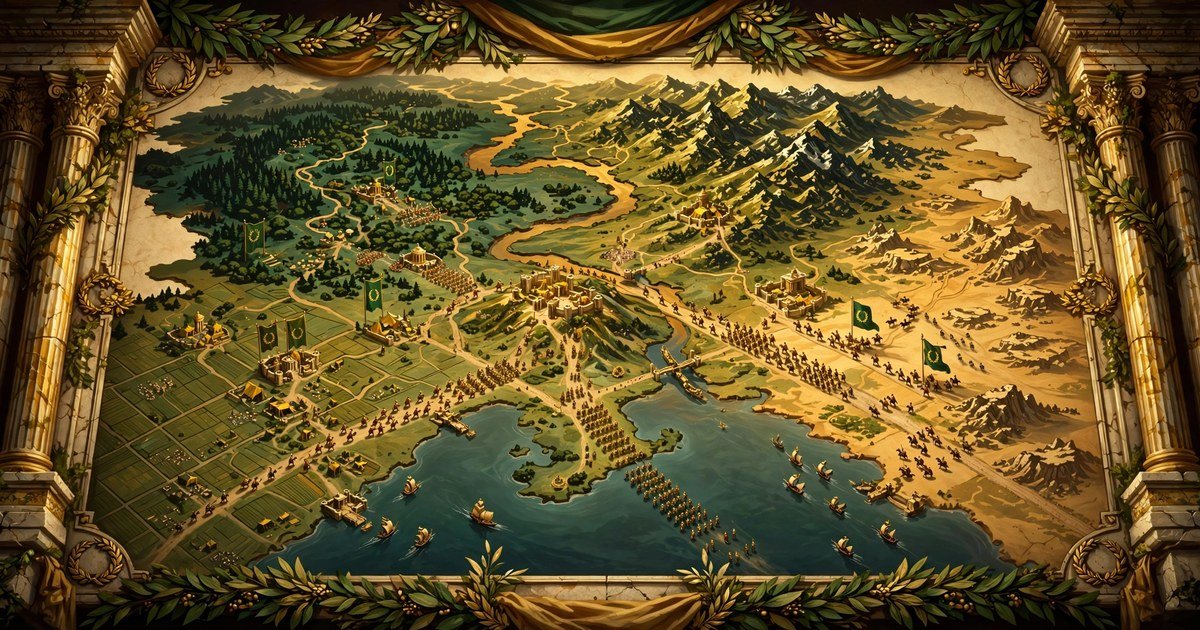
Pax Historia is an alternate history sandbox game that runs entirely in a web browser at paxhistoria.co. You choose a country, pick a moment in time, and then rewrite the course of history from that point forward. The game calls itself the first AI-powered grand strategy platform. In most strategy games, the rules decide what happens. In Pax Historia, a large language model decides what happens, using the scenario, your written orders, and the actions of every other country in the world.
The game was founded by Eli Bullock-Papa and Ryan Zhang, two Virginia Tech computer science graduates based in San Francisco. The company joined Y Combinator’s Winter 2026 batch, and the game launched in alpha on August 18, 2025. Since then it has grown quickly. The team has reported around 35,000 daily players and nearly 20 million rounds played, a reported milestone rather than a live count, but one that explains why the game keeps appearing in conversations about AI and gaming.
At its heart, Pax Historia answers one question: what would you do differently? What if Rome never fell? What if the Soviet Union survived the Cold War? What if Genghis Khan ruled for another generation? You pick a country at a moment like that, and then you act. Every decision is written in your own words. The AI reads it, weighs it against the world it is simulating, and writes back what happened. Other countries respond, events unfold, borders shift, and the timeline you end up with belongs to nobody but you.
There is no way to win Pax Historia in the usual sense. There is no final mission, no victory screen, and no score that tells you that you played correctly. A campaign ends when you decide it ends, or when your country collapses so completely that there is nothing left to run. That open structure turns the game into a creative tool as much as a game, and many players use it to explore ideas, test theories about history, or build settings for stories they want to write.
How Pax Historia Actually Works
Playing Pax Historia is simpler to start than most grand strategy games, because there is almost nothing to learn before your first turn. The game has a core loop with four steps, and you repeat those steps for as long as your campaign lasts. Understanding each step before you begin will save you confusion later, since the freedom the game gives you can feel overwhelming at first.
Pick a Nation and a Moment in Time
Every campaign begins with a choice of world. The simplest way to start is to pick a preset, which is a ready-made starting point that defines the date, the borders, the countries involved, and any special rules for that world. The official preset library covers real historical periods such as the medieval era, the world wars, and modern geopolitics, alongside alternate history, science fiction, and fantasy settings.
Once you have a world, you choose which country or faction to lead. A large empire gives you room to make mistakes, but its problems are bigger and harder to control. A small country forces you to be clever, because you cannot afford a direct fight with your neighbors, yet a single smart alliance can change your fortunes completely. For a first campaign, a mid-sized country in a period you already know is the best choice, because you will be able to tell when the AI writes something that does not make sense.
Write Your Orders in Plain Words
This is the part that makes Pax Historia different from every traditional strategy game. Instead of clicking a button labeled “improve economy” or “declare war,” you type your decision as a sentence. You might write, “Sign a trade agreement with France that lowers tariffs on grain in exchange for access to French ports.” Or, “Send engineers to build a railway from the capital to the main industrial cities, funded by a small tax on luxury goods.”
The quality of your wording matters. Vague orders produce vague results. If you write “make the economy better,” the AI has to guess what you mean, and its guess may not match your intention. Specific orders work better, because they tell the AI what you want, where you want it, and what limits apply. You can submit several actions in one turn, but packing too many unrelated instructions into one turn makes the timeline harder to follow, so keep each turn focused.
Talk to Other Nations
Diplomacy in Pax Historia happens through conversation. Every other country in your world is controlled by the AI, and you can talk to them directly. You can propose a trade deal, ask for military access, try to repair a damaged relationship, or attempt to build an alliance from scratch. Because these conversations happen in ordinary language, they can involve conditions and compromises that a fixed diplomatic menu could never offer.
That freedom comes with a catch. A promise made by an AI nation is not a binding contract in the way a game mechanic would be. The AI can forget an agreement, change its mind, or interpret your words differently from how you meant them. Treat every diplomatic deal as a living relationship that needs attention, not as a box you tick once and forget, and check back on your agreements after each time jump.
Jump Time Forward and Read What Happens
After you have given your orders and finished your diplomacy, you advance time. A time jump can cover as little as one week or as much as a full year. The AI then generates a report of what happened during that period, taking into account your actions, the responses of other nations, and events elsewhere in the world that had nothing to do with you.
Short jumps are useful during a crisis, when you want to watch events closely and react quickly. Longer jumps move a quiet campaign forward faster, but they can produce a large amount of information at once, cost more tokens, and make it harder to see which decision caused which result. A good habit is to change one major policy at a time, jump forward a short distance, and read the results carefully before your next move.
The Presets: Ready-Made Worlds and Community Creations
Presets are the starting points of Pax Historia, and they are also one of its biggest strengths. A preset is more than a map. It defines the starting date, the political borders, the countries and factions, the background events, and the special rules that shape how the simulation behaves. Picking the right preset is half the game, because the world you start in determines what stories are possible.
Historical Presets
The official library includes presets set in real historical periods. You might start just before the First World War and try to prevent it, or begin in the early Cold War and attempt a different diplomatic settlement. You could take charge of a small medieval kingdom and try to survive between larger neighbors, or guide a country through the age of exploration and see whether different choices produce a different colonial map. Because these starting points are grounded in real history, they are the easiest presets to judge. When the AI writes something that contradicts what you know about the period, you will notice it.
Fantasy, Science Fiction, and Original Worlds
Not every preset is historical. The library also includes alternate history worlds, historical fiction, science fiction, and full fantasy settings. In a fantasy preset, historical governments may be replaced by invented factions with their own magic systems and political structures. A science fiction preset might explore a fractured future Earth, a first contact scenario, or an ocean-based civilization. These worlds show the game’s range, because the same AI engine that simulates a trade negotiation between two European powers can also simulate a war between rival wizard kingdoms, as long as the preset defines the rules clearly enough.
Making Your Own Preset
Players can also create their own presets, which is one of the features that sets Pax Historia apart. The preset tools let you edit maps, borders, starting conditions, and simulation rules, then publish the result for other people to play. The community has published more than 4,000 playable worlds, from carefully researched historical scenarios to elaborate fictional universes with detailed rulebooks.
Building a good preset is a creative project in its own right. The best ones start with clear assumptions, because a world with a clear starting point produces events that are easier to interpret. If you want to try it, start small. Define one interesting point of divergence, a handful of major factions, and a few rules about how the world works, then test it yourself before sharing it. A preset that tries to do everything at once usually produces a mess, while a focused preset with a strong idea can keep players engaged for a long time.
What Makes Pax Historia Different From Traditional Strategy Games
If you have played games like Civilization, Europa Universalis, Hearts of Iron, or Crusader Kings, Pax Historia will feel strange at first, and the strangeness comes from what is missing. There are no technology trees to climb, no unit counters to memorize, and no fixed set of diplomatic actions to choose from. The game replaces all of that machinery with language. You describe what you want, and the AI decides what happens.
The biggest difference is freedom. In a traditional grand strategy game, you can only do what the designers thought to include. If there is no button for forming a regional trade union, you cannot form one. In Pax Historia, you can propose a trade union, a cultural exchange program, a secret military pact, or a plan to prevent a war before it starts, and the game will try to simulate it. The AI does not always succeed, and sometimes it misunderstands you completely, but that opens up strategies that no scripted game could ever offer.
The second difference is uncertainty. Traditional strategy games are built on transparent systems. You can see the numbers, calculate the odds, and plan several turns ahead with reasonable confidence. Pax Historia is opaque by design. You cannot see the calculation behind an outcome, because there is no calculation in the usual sense. There is a language model weighing your words against the scenario, and its judgment can vary from one turn to the next. That makes the game less predictable and, for many players, more exciting, but it also means you cannot optimize it the way you would optimize a normal strategy game.
The third difference is the learning curve. A game like Europa Universalis can take dozens of hours to learn, because you need to understand its interface and its many overlapping mechanics. Pax Historia asks for almost nothing upfront. If you can write a clear sentence and you know a little history, you can start playing within minutes. That low barrier is part of why the game has attracted people who would never describe themselves as strategy gamers, including writers, history enthusiasts, and worldbuilders who care more about the story than the mechanics.
None of this makes Pax Historia better than traditional strategy games in every way. It makes it different, and the difference matters. A player who wants tightly balanced combat, visible numbers, and a fair, repeatable challenge will probably prefer a conventional title. A player who wants to ask “what if?” and see where the question leads will find something here that no other game offers.
Pax Historia Pricing: Is It Free?
Pax Historia is free to try, but it is not free to play without limits. The game runs on a token-based system, and understanding how it works before you start will help you avoid surprise costs. The details can change over time, so always check the current terms inside your account.
The Free Allowance
New players receive a small amount of free credit when they create an account. Community documentation from October 2026 described a one-time credit of one dollar for players who sign in with a Google account, plus a renewable daily allowance of up to twenty cents that resets every twenty hours and does not stack. Guest access exists, but it is more restricted than a registered account. These figures are community reported and may have changed, so check your own balance before starting a long session.
The daily allowance is enough to try the game properly. You can run a few turns, explore a preset, and get a real sense of how the simulation feels. What it will not support is heavy play. Running multiple long campaigns in a single day, or making very long time jumps that generate large reports, will use credit faster than the daily refill replaces it.
Tokens and How They Get Used
The tokens in Pax Historia are usage credits, not the individual text tokens counted internally by language models. You spend them when the AI generates events, responses, and reports for your campaign. How much a turn costs depends on several things. The AI model you choose matters, because more capable models cost more per turn. The length of the campaign matters, because a world with many countries and a long history needs more processing. A detailed international crisis with several countries involved will cost more than a short domestic policy turn in a quiet period.
The practical advice is simple. Choose an economical model while you are experimenting, and save the more expensive models for campaigns you care about. Watch your balance, and avoid assuming that one turn always costs the same as the last one. Long time jumps that generate big reports are usually the most expensive thing you do.
Pax Patron and Extra Access
For players who want more, the game offers a subscription option called Pax Patron, which provides access to additional models and extra features. The exact terms can change, so check the current subscription page before signing up. The game also supports bringing your own model access in some setups, where eligible outside AI access can be connected through supported services. That option comes with its own costs from the outside provider, so check compatibility and account security before connecting anything.
Before paying for anything, it is worth playing with the free allowance for a few days. That will tell you how fast you actually use tokens, which models you prefer, and whether the game holds your interest long enough to justify a subscription. There is no rush. The free tier does not expire.
Playing With Friends: Multiplayer in Pax Historia
Multiplayer in Pax Historia is available through the game’s developing live experience, including a beta environment. A host can invite other players into a shared world, where decisions from several people influence the same timeline. Your allies can surprise you, your rivals can outsmart you, and a plan that looked solid can fall apart because another player had a better idea.
Community documentation has described three multiplayer modes, called Realtime, Flex, and Async, with different expectations for when participants act. Realtime means everyone is present and acting together. Flex offers more room for players to act on their own schedule, and Async is designed for slower games where people take turns over a longer period. The exact behavior of each mode can evolve, so check the current options inside the game before starting a shared campaign.
There are two practical things to settle before joining a multiplayer game. The first is cost. Depending on the setup, AI usage charges may be shared among the players or covered by the host, so confirm who pays before a long campaign begins. The second is commitment. A shared game can keep generating events even after some players stop participating, so check whether your country stays active if you step away for a while. Agree on both in advance, the same way you would agree on the rules of any group game before starting.
For most new players, single player is the better place to start. Learn the core loop, get a feel for how the AI responds, and figure out which kinds of campaigns you enjoy. If you enjoy browser games in general, you may also like our guide to Google Block Breaker, another game you can jump into straight from your browser with no download.
Beginner Tips That Make Your First Campaign Better
Your first few turns in Pax Historia will teach you more than any guide can, but a few habits will help you get good results faster. Start small. Pick a familiar historical period, a mid-sized country, and one clear objective, such as securing a trade route or surviving a war. Short time jumps are your friend while you learn, because they let you see cause and effect clearly. Write specific orders that name the policy, the place, and the cost, and change one major thing at a time.
Keep a small campaign notebook outside the game. Note the starting date, your major decisions, your agreements, your territorial changes, and any unresolved crises. AI models can lose track of earlier details during long sessions, and your notes let you catch contradictions, such as an ally who suddenly becomes an enemy for no reason, or a railroad that finishes impossibly fast. When the simulation produces something strange, check it against three questions: could the actor realistically do it, would they have a reason to try, and does it fit what the campaign already established?
Where Pax Historia Falls Short
The game’s weaknesses come from the same technology that makes it special. Generative AI can invent facts, misinterpret your instructions, forget treaties, or produce military and economic outcomes that make no sense. A detailed preset cannot guarantee consistent accounting or genuine historical cause and effect. Model quality also varies, and a more expensive model is not automatically better for every campaign. The game is still in alpha and continues to evolve, so a feature that works one way in the beta environment may behave differently in the main game. Treat Pax Historia as a creative simulation, not as a validated model of how the real world works.
Can Pax Historia Teach You Real History?
Yes, as a companion to real study, but not as a primary source. A counterfactual campaign can prompt useful questions about geography, supply chains, diplomatic incentives, and the consequences of political decisions. Playing a small neutral country, for example, quickly shows why neutrality depends on trade routes, defensive capacity, and the interests of your neighbors. But AI-generated events are fictional outputs that can blend accurate background knowledge with invented details and present both confidently. When an unfamiliar person, treaty, or event appears in your campaign, verify it through a reputable historical reference before repeating it as fact. If you enjoy the learning side of games, our guide to MathPlayZone covers another platform where games and learning meet.
Safety, Privacy, and Age Rules
The official terms of service set a minimum age of 13, or the relevant local age of digital consent, with parental or guardian involvement required for users under 18. The privacy policy states that the platform collects account information, gameplay activity, and user-generated material, and uses service providers, including AI inference providers, to run the service. Published presets and other public contributions may be visible to other players, so avoid putting personal information or sensitive real-world details in your prompts or shared scenarios. It is also worth reviewing the current billing and cancellation terms before paying, since access plans and features can change. For general advice on staying safe online, see our guide on how a VPN can make everyday internet use safer and more flexible.
Pax Historia Compared With Other History Games
If you already play history games, it helps to know where Pax Historia sits. Civilization gives you a polished, balanced contest with a clear victory condition, but its history is a backdrop, not a story you write. Europa Universalis and Hearts of Iron offer deep, transparent systems where every number is visible, yet you can only do what the designers built. NationStates lets you run a country through written decisions, but it is text only, with no map and no AI simulation behind it. Pax Historia trades transparency and balance for freedom. It is the only one of these games where you can propose an idea nobody programmed and watch the world respond. If you enjoy discovering games like this, our guide to Allysplay.com covers another gaming website worth exploring, and our AI video generator guide looks at a different kind of AI creativity tool.
Frequently Asked Questions
What is Pax Historia used for?
Pax Historia is used to play AI-generated historical and fictional strategy scenarios, run nations, negotiate with other powers, and explore alternate timelines that you shape with your own decisions.
Is Pax Historia free to play?
It offers limited free AI usage, including a small starting credit and a daily allowance, while additional turns and certain access options require purchased tokens or a subscription.
Can I play Pax Historia on my phone?
Pax Historia is browser-based, so it can be opened on a phone browser, but the experience may vary depending on the device and screen size. Check the official website for current mobile compatibility.
Does Pax Historia use artificial intelligence?
Yes. Generative AI interprets your decisions, simulates the responses of other nations, and produces events as the campaign moves forward.
Can I create my own scenario in Pax Historia?
Yes. The preset tools support custom worlds, maps, starting conditions, and rules, and creators can share their presets with the community.
Is Pax Historia a Roblox game?
No. Pax Historia is a standalone browser game at paxhistoria.co. It is not part of Roblox, and it does not require a Roblox account or the Roblox app.
Final Words
Pax Historia offers a different way to explore history. Instead of watching a familiar timeline unfold, you propose a change and watch an AI-generated world respond. That freedom is exciting, and it is also the source of the game’s limits. The results are fictional, sometimes inconsistent, and always worth checking against real history. If that trade-off sounds interesting, visit the official Pax Historia website, pick a historical preset you already know well, and test one carefully defined decision. Compare what happens with the real record. The most rewarding part may be the questions you discover along the way.