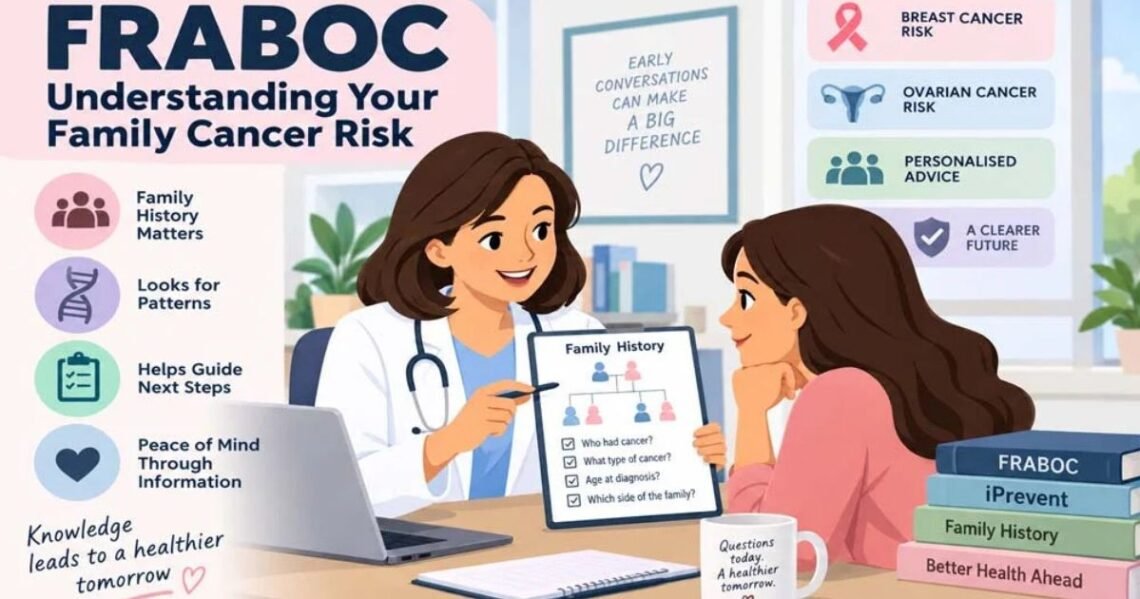
FRABOC is a term associated with an earlier Australian healthcare tool designed to help health professionals assess the risk of breast and ovarian cancer based on family medical history. The name stands for Familial Risk Assessment, Breast and Ovarian Cancer. Although the original tool is no longer available through Cancer Australia, the concept behind it remains relevant to understanding inherited cancer risk and the importance of family health information.
People searching for FRABOC may want to understand its meaning, how it worked, why it was used, and what has replaced it. Others may have encountered the term in an older medical document or an online article and want to know whether it refers to a disease, a diagnostic test, or a current healthcare service.
The distinction is important. FRABOC was a risk assessment resource, not a cancer diagnosis, treatment, or genetic test. Its purpose was to help healthcare professionals understand whether a person’s family history suggested a need for further evaluation.
This guide explains the meaning of FRABOC, its historical role, the relationship between family history and cancer risk, the importance of BRCA1 and BRCA2 genes, and the modern approaches used to assess familial cancer risk. It also answers common questions to help readers understand the subject without confusing historical tools with current medical advice.
What Is FRABOC?
FRABOC is commonly used to refer to FRA-BOC, which stands for Familial Risk Assessment, Breast and Ovarian Cancer. It was an Australian online clinical tool developed to help healthcare professionals assess breast and ovarian cancer risk using information about a patient’s family history.
The tool was intended for health professionals, including general practitioners and nurses. It provided a structured approach to reviewing family cancer patterns and considering whether a person’s family history might indicate an increased risk.
Family history can be an important part of a medical assessment because some cancers are associated with inherited genetic changes. When several close relatives have experienced related cancers, especially at younger ages, a healthcare professional may need to investigate the pattern more carefully.
FRABOC helped organize this type of information. Instead of considering each family diagnosis separately, the assessment focused on the broader pattern of cancer within a family.
However, FRABOC had clear limitations. It could not determine whether a person currently had cancer, guarantee that someone would develop cancer in the future, or independently confirm the presence of an inherited genetic variant.
The original FRA-BOC tool is no longer available through Cancer Australia. Current breast cancer risk assessment resources, including iPrevent, provide more up-to-date approaches to discussing and assessing risk.
What Does FRABOC Stand For?
The abbreviation can be understood through its two main parts:
- FRA: Familial Risk Assessment.
- BOC: Breast and Ovarian Cancer.
- FRA-BOC: Familial Risk Assessment, Breast and Ovarian Cancer.
The word familial refers to information connected with a family. In healthcare, familial risk assessment examines whether a person’s family medical history suggests that their likelihood of developing a particular condition may differ from the general population.
The breast and ovarian cancer component identifies the health conditions that the original tool addressed.
Is FRABOC a Disease or Medical Test?
No. FRABOC was not the name of a disease, a laboratory test, or a cancer treatment.
It was a clinical risk assessment tool. Its role was to support health professionals when reviewing family history and considering whether further assessment might be appropriate.
A risk assessment and a diagnostic test answer different questions. A risk assessment estimates the possibility of developing a condition, while diagnostic testing investigates whether a disease is present. Genetic testing examines specific genetic information when clinically appropriate.
Understanding these differences helps prevent misunderstandings when FRABOC appears in older medical records or online discussions.
Why Was FRABOC Developed?
Family medical history can contain important information, but interpreting it is not always straightforward. Two people may have relatives who experienced breast cancer, yet their overall family histories may suggest different levels of concern.
For example, one person may have a single older relative who developed breast cancer. Another may have several close blood relatives who developed breast or ovarian cancer at relatively young ages. These patterns may require different levels of clinical attention.
FRABOC provided a structured way for health professionals to review such information. Its purpose was to help identify family histories that might warrant closer investigation rather than relying on a simple question about whether cancer had occurred in the family.
The broader purpose was to support informed conversations between healthcare professionals and patients. When family history suggests a potentially elevated risk, a clinician can consider whether additional assessment, specialist advice, or genetic counselling may be appropriate.
FRABOC also illustrates an important principle in preventive healthcare: collecting relevant information early can help professionals make better-informed decisions about an individual’s care.
The Importance of Early Risk Assessment
Risk assessment can help people understand their health circumstances before symptoms develop. This is particularly relevant to conditions in which family history or inherited genetic factors may influence future risk.
An assessment does not mean that a person will develop cancer. Instead, it helps determine whether the available information suggests a reason to consider additional preventive or clinical steps.
Depending on the circumstances, those steps might include reviewing screening recommendations, discussing risk factors, obtaining a more complete family history, or seeking specialist advice.
The appropriate response varies from person to person. Age, personal medical history, family relationships, previous test results, and other relevant factors can all influence the next step.
Why Family History Needs a Structured Approach
People do not always know the full details of their relatives’ medical histories. They may remember that a relative had cancer without knowing which type, the age at diagnosis, or whether the diagnosis was confirmed.
A structured approach encourages more specific questions. It helps distinguish between different cancer types, identify relationships between affected relatives, and recognize patterns that deserve further attention.
This is one of the enduring lessons associated with FRABOC. Family history is more useful when it is detailed, organized, and interpreted in the appropriate clinical context.
How Did the FRABOC Assessment Work?
FRABOC focused on family history rather than functioning as a standalone diagnostic examination. Healthcare professionals could use information about affected relatives to help assess whether a patient’s history suggested an increased likelihood of breast or ovarian cancer.
The quality of an assessment depended partly on the accuracy and completeness of the information provided. Missing diagnoses, incorrect ages, or an incomplete family tree could affect how a family history was understood.
Although the original tool is no longer available, the general principles behind familial cancer risk assessment remain relevant.
Step 1: Collecting Family Medical History
The first step was gathering information about relatives who had experienced breast cancer, ovarian cancer, or other potentially relevant cancers.
Important details could include the relative’s relationship to the patient, the type of cancer, and the age at diagnosis. Information about known genetic test results could also be useful in a modern clinical assessment.
The purpose was to develop a clearer picture of cancer within the family rather than treating each diagnosis as an isolated event.
Step 2: Examining Relationships Between Diagnoses
After collecting the available information, a health professional could consider whether the family history showed a pattern that might indicate increased risk.
For example, multiple close relatives with relevant cancers may be more significant than a single unrelated family diagnosis. The ages at which relatives developed cancer can also affect the interpretation.
However, these observations do not establish that an inherited genetic condition exists. Family patterns must be interpreted carefully, and additional clinical evaluation may be needed.
Step 3: Considering the Level of Risk
The assessment helped clinicians consider whether the available family history suggested a typical level of concern or a possible need for more detailed evaluation.
Risk categories should not be confused with a diagnosis. A person considered to have an increased risk does not necessarily have cancer, and a person without a strong family history can still develop breast or ovarian cancer.
Risk assessment is one part of a broader healthcare process.
Step 4: Discussing Appropriate Next Steps
An assessment is most useful when its findings inform a practical discussion about care.
Depending on the individual’s circumstances, a health professional might recommend routine screening, a more detailed risk assessment, genetic counselling, or referral to a specialist family cancer service.
Not everyone with a relative who had cancer requires genetic testing. The decision depends on the overall history and current clinical guidance.
FRABOC and the Importance of Family Cancer History
Family history remains an important consideration when assessing breast and ovarian cancer risk. Certain inherited genetic variants can increase the likelihood of developing particular cancers, although many people who develop cancer do not have a known inherited predisposition.
The presence of cancer in a family can have several explanations. Relatives may share genetic factors, environmental exposures, lifestyle patterns, or other circumstances. Sometimes, cancers occur in the same family by chance.
This is why one family diagnosis does not automatically indicate an inherited cancer syndrome.
Healthcare professionals consider the wider context, including the number of affected relatives, their relationships, the types of cancer involved, and their ages at diagnosis.
Why the Number of Affected Relatives Matters
When multiple close relatives have experienced related cancers, a clinician may consider whether the pattern suggests an increased likelihood of inherited susceptibility.
For example, a family history involving breast and ovarian cancer across several generations may warrant more attention than an isolated diagnosis with no other relevant family history.
Nevertheless, the number of affected relatives is only one part of the assessment. A single relative with a relevant inherited genetic variant may also be important, depending on the circumstances.
There is no universal rule that determines an individual’s risk from the number of family members who have had cancer.
Why Age at Diagnosis Is Important
The age at which a relative developed cancer can influence how a family history is interpreted. Certain inherited cancer predispositions may be associated with diagnoses at younger ages.
A clinician may therefore ask whether a relative developed cancer earlier than expected, whether several diagnoses occurred within a similar period, or whether particular cancers appear across generations.
These details help establish context, but they do not prove that an inherited condition is present.
Why Both Sides of the Family Matter
A common misunderstanding is that breast and ovarian cancer risk can only be inherited through the mother’s side of the family.
This is incorrect. Relevant inherited genetic variants can be passed down through either parent.
A person’s paternal grandmother, paternal aunt, or other relatives on the father’s side may therefore provide important information about family cancer risk.
When preparing for an assessment, it is helpful to consider both sides of the family rather than focusing exclusively on maternal relatives.
Understanding BRCA1 and BRCA2 Genes
BRCA1 and BRCA2 are genes involved in important processes that help cells maintain and repair DNA. Everyone has these genes, but certain harmful variants can interfere with their normal function and increase the likelihood of developing particular cancers.
Inherited harmful variants in BRCA1 or BRCA2 are associated with increased risks of breast and ovarian cancer. They can also affect the risk of certain other cancers.
The presence of a harmful variant does not mean cancer will definitely develop. It means that the person’s risk may be higher, and the individual may benefit from personalized medical advice.
What Is the Connection Between FRABOC and BRCA Genes?
FRABOC was designed to assess familial breast and ovarian cancer risk using family history. A family history involving certain patterns of cancer can raise questions about whether an inherited genetic predisposition might be present.
However, FRABOC was not a genetic test and could not independently confirm a BRCA1 or BRCA2 variant.
If the family history suggests a possible inherited cancer syndrome, a healthcare professional may discuss genetic counselling and whether testing is appropriate.
Genetic testing should be interpreted in the context of personal and family history. A qualified professional can explain what a result means and whether it changes recommended care.
Does Having a BRCA Variant Mean Cancer Is Inevitable?
No. An inherited harmful BRCA variant can substantially increase cancer risk, but it does not guarantee that cancer will develop.
The level of risk and the appropriate management plan depend on several factors, including the specific variant, personal circumstances, and relevant clinical guidance.
People with a known familial variant may benefit from individualized advice about screening, risk-reduction options, and other preventive measures.
It is important not to make medical decisions based solely on general information about genes found online.
What Were the Risk Categories Associated With FRABOC?
Risk categories are used in healthcare to summarize how a person’s circumstances compare with a reference population or clinical threshold.
The historical FRABOC approach considered familial risk in broad terms, including average or near-average risk, moderately increased risk, and potentially high risk. These categories helped health professionals consider whether a family history might require additional attention.
They should not be treated as a current, independent diagnosis or as a substitute for a modern clinical assessment.
Average or Near-Average Risk
An average-risk classification generally indicates that the information available does not suggest a substantial increase in risk compared with the relevant reference group.
It does not mean that a person has no possibility of developing cancer. Breast and ovarian cancer can occur in people without a known family history or inherited genetic variant.
Routine preventive care and screening recommendations remain important, according to age, location, personal circumstances, and current guidance.
Moderately Increased Risk
A moderately increased risk suggests that certain factors may place a person above the baseline risk level.
Family history can contribute to this assessment, but the significance of that history depends on the complete clinical picture.
A healthcare professional can explain whether additional screening, a more detailed risk evaluation, or other measures are appropriate.
Potentially High Risk
A potentially high-risk assessment indicates that the available information may warrant more detailed clinical attention.
Depending on the family history, this could involve a specialist consultation, genetic counselling, or an individualized discussion of screening and prevention.
High risk does not mean that cancer is already present. It means that the person’s circumstances may justify a more careful evaluation of future risk.
Why Risk Categories Must Be Interpreted Carefully
Risk categories depend on the assessment method, the information supplied, and the clinical guidance in use.
A historical FRABOC category should not automatically be applied to a person today. Modern assessments may incorporate additional personal and medical factors and use different calculation methods.
Anyone with concerns about their family history should seek an assessment based on current clinical guidance.
Why Is FRABOC No Longer Available?
The original FRA-BOC tool is no longer available through Cancer Australia. Healthcare risk assessment has continued to evolve, with newer approaches providing ways to consider a broader range of relevant information.
This change reflects the development of clinical knowledge and risk assessment methods. Family history remains important, but contemporary assessments can also consider other personal and medical factors where appropriate.
The retirement of an older tool does not mean that familial cancer risk assessment is no longer useful. Rather, it means that people should use current resources and professional guidance instead of relying on an outdated online tool.
How Modern Assessment Approaches Have Evolved
Modern cancer risk assessment may incorporate family history alongside other information relevant to the individual.
Depending on the tool and clinical situation, this can include personal medical history, genetic test results, reproductive or hormonal factors, and other recognized risk factors.
More detailed models can help specialists evaluate complex family histories. Their suitability depends on the clinical question and the professional using them.
Importantly, no single assessment method is appropriate for every person or every type of cancer.
Why Historical Medical Tools Still Matter
Older clinical tools can help explain how healthcare professionals previously organized information and made decisions.
Understanding FRABOC can be useful when reading historical medical records, older educational material, or discussions of Australian breast and ovarian cancer risk assessment.
However, historical context should not be mistaken for a recommendation to use an unavailable tool today.
If an older record mentions FRABOC, the most useful next step is to ask a healthcare professional how that historical assessment relates to current recommendations.
FRABOC vs. iPrevent
iPrevent is a more current breast cancer risk assessment resource associated with Australian healthcare. It supports discussions between women and healthcare professionals about breast cancer risk, screening, and prevention.
Although FRABOC and iPrevent are related through their general focus on risk assessment, they should not be treated as interchangeable tools.
FRABOC was an earlier resource focused on familial breast and ovarian cancer risk. iPrevent offers a more contemporary approach to breast cancer risk assessment and can incorporate information beyond family history.
| Feature | FRABOC | iPrevent |
| Full name or identity | Familial Risk Assessment, Breast and Ovarian Cancer | Breast cancer risk assessment resource |
| Historical or current status | Original tool no longer available through Cancer Australia | More current assessment resource |
| Main focus | Familial breast and ovarian cancer risk | Breast cancer risk assessment and prevention discussions |
| Family history | Central component | One of several relevant factors |
| Diagnostic function | Did not diagnose cancer | Does not diagnose cancer |
| Appropriate use | Historical understanding | Assessment and discussion with healthcare professionals |
The main difference is that iPrevent represents a more current resource for breast cancer risk assessment. Its output still needs to be interpreted in the context of an individual’s circumstances and current medical advice.
A person concerned about ovarian cancer risk should not assume that a breast cancer risk tool fully assesses ovarian cancer risk. The appropriate evaluation depends on the specific concern.
What Is CanRisk, and How Does It Relate to FRABOC?
CanRisk is a risk assessment platform designed for use by healthcare professionals. It supports the assessment of breast and ovarian cancer risk using detailed family history and other relevant information.
CanRisk uses risk models associated with BOADICEA. Depending on the information available and the circumstances of the assessment, these models can incorporate family cancer history, genetic information, personal risk factors, and other relevant variables.
This can be useful when a family history is complex and requires a more detailed evaluation than a basic checklist can provide.
How CanRisk Differs From FRABOC
FRABOC was an earlier online tool focused on familial breast and ovarian cancer risk. CanRisk supports more detailed risk assessment using modern models and a wider range of information.
The two should not be treated as identical systems, and their outputs cannot automatically be compared.
CanRisk is intended for use by appropriately qualified professionals. It should not be treated as a simple self-diagnosis calculator or a replacement for genetic counselling.
Should Individuals Use Online Cancer Risk Calculators?
Online health tools can provide educational information, but a calculator cannot always account for the full complexity of a person’s medical history.
Some tools are intended for professionals, while others are designed to support general awareness. Their intended audiences and limitations should be understood before interpreting any result.
If an online result suggests elevated risk, it is sensible to discuss it with a qualified healthcare professional rather than making medical decisions independently.
Read more: Incfidelibus: Meaning, Origin, Latin Roots, and Modern Usage Explained
Who May Benefit From a Modern Familial Cancer Risk Assessment?
A familial cancer risk assessment may be useful for people who have questions about patterns of cancer within their families.
It can also help healthcare professionals determine whether a person may benefit from more detailed evaluation or specialist advice.
Not everyone with a family member who had cancer needs genetic testing or a specialist referral. The decision depends on the specific history and current clinical guidance.
People With Multiple Relatives Affected by Cancer
People with several blood relatives who have experienced relevant cancers may want to discuss whether their family history warrants closer assessment.
The importance of the pattern depends on the relationships between affected relatives, cancer types, ages at diagnosis, and other information.
A clinician can help determine whether the pattern suggests a reason for further evaluation.
People With a Known Inherited Genetic Variant in the Family
If a relative has a confirmed harmful genetic variant associated with cancer risk, other blood relatives may wish to discuss their options with a healthcare professional.
Depending on the circumstances, genetic counselling and targeted testing may be appropriate.
A known variant can provide important information, but the implications differ among individuals and families.
People With a Personal History of Relevant Cancer
Someone who has already experienced breast or ovarian cancer may have questions about inherited risk, the implications for relatives, or whether genetic assessment is appropriate.
Their own diagnosis, age, treatment history, and family history may all be relevant.
A treating clinician or genetics specialist can explain which assessments may be useful.
People Reviewing Older Medical Records
Individuals who encounter FRABOC in an older record may need help understanding what the term meant and whether the assessment has any relevance today.
The record may reflect an earlier risk assessment rather than a current recommendation.
A healthcare professional can help interpret the information and determine whether an updated assessment is appropriate.
How to Prepare for a Family Cancer Risk Assessment
Preparing accurate family history information can make a medical consultation more productive. It may also help a healthcare professional identify details that need clarification.
You do not need to know every medical detail before arranging an appointment. Start with the information you have and identify anything that remains uncertain.
1. List Relatives Who Had Cancer
Write down which blood relatives have had cancer, including relatives on both sides of the family.
Where possible, record the type of cancer and whether the diagnosis is confirmed. Avoid assuming that different cancer types are the same simply because they affected the same organ system.
2. Record Ages at Diagnosis
Try to identify how old each affected relative was when diagnosed.
Age can be relevant to risk assessment, particularly when multiple relatives developed related cancers at younger ages.
If the age is unknown, indicate that it is uncertain rather than guessing.
3. Include Both Maternal and Paternal Relatives
Family history can be inherited through either parent.
Include relevant information about grandparents, parents, siblings, aunts, uncles, and other blood relatives where known. A simple family tree may help organize the details.
4. Ask About Existing Genetic Test Results
If a relative has had genetic testing, ask whether they are comfortable sharing the relevant result with the healthcare professional.
A documented result may be more informative than a general statement that cancer runs in the family.
Do not interpret a genetic report independently. A qualified professional can explain the result and its relevance to other family members.
5. Bring Questions to the Appointment
It can help to write down questions in advance. For example:
- Does my family history suggest that I need a more detailed risk assessment?
- Should I consider genetic counselling?
- Are any screening recommendations different for my circumstances?
- Does a relative’s genetic test result affect my own care?
- What should I do if some family medical information is missing?
These questions help keep the discussion focused on practical decisions rather than uncertain online interpretations.
FRABOC and Cancer Risk Awareness in the USA and India
FRABOC originated in the Australian healthcare context, but the underlying subject is relevant to people in many countries.
Readers in the United States and India may encounter the term through online searches, medical education material, or older discussions about familial cancer risk. However, the original Australian tool should not automatically be treated as an official assessment method in either country.
Healthcare systems differ in screening recommendations, referral pathways, availability of genetic counselling, and access to testing.
What Should Readers in the USA Know?
People in the United States who are concerned about inherited breast or ovarian cancer risk can discuss their family history with a primary care clinician, gynecologist, or other appropriate healthcare professional.
Depending on the circumstances, a clinician may recommend genetic counselling, testing, or an individualized screening plan.
Recommendations should be based on current US clinical guidance and the person’s own medical history rather than a historical FRABOC result.
What Should Readers in India Know?
People in India can also discuss relevant family cancer history with a qualified doctor, gynecologist, oncologist, or genetics professional where available.
Access to genetic services and specialist cancer assessment may vary by location and healthcare facility. A healthcare professional can help identify appropriate options based on the individual’s circumstances.
The central principle remains the same: family history can provide useful information, but it must be interpreted in a clinical context.
Why Local Medical Guidance Matters
An assessment tool developed for one healthcare system may not reflect every country’s current recommendations or available services.
Differences in clinical pathways, resources, and local guidance can affect how risk is assessed and managed.
Readers should therefore use FRABOC as a historical reference and seek current local medical advice for personal healthcare decisions.
Common Misunderstandings About FRABOC
Several misconceptions can arise when people encounter an unfamiliar medical abbreviation online.
Misunderstanding 1: FRABOC Diagnoses Cancer
FRABOC was designed to assess risk based on family history. It was not a diagnostic test and could not establish whether cancer was present.
Misunderstanding 2: A High-Risk Assessment Means Cancer Is Certain
An increased risk is not a guarantee. It indicates that the likelihood of developing a condition may be higher and that further assessment or preventive discussion could be appropriate.
Misunderstanding 3: Only Women With a Family History Need to Think About Breast Cancer
Family history is one factor among several. People without a known family history can still develop breast cancer.
The appropriate screening and prevention approach depends on current guidance and individual circumstances.
Misunderstanding 4: Only the Mother’s Side of the Family Matters
Relevant inherited genetic variants can be passed down through either parent. The paternal side should not be excluded when collecting family history.
Misunderstanding 5: FRABOC Is Still the Current Australian Tool
The original tool is no longer available through Cancer Australia. Current resources and clinical guidance should be used for contemporary assessment.
Misunderstanding 6: Everyone With a Family History Needs Genetic Testing
Genetic testing is not necessary for every person with an affected relative. A healthcare professional can assess whether the family history suggests testing would be useful.
Misunderstanding 7: A Normal Risk Assessment Means There Is No Risk
No risk assessment can guarantee that someone will never develop cancer. Results should be understood as estimates based on the information and methods used.
Frequently Asked Questions About FRABOC
What does FRABOC stand for?
FRABOC commonly refers to FRA-BOC, meaning Familial Risk Assessment, Breast and Ovarian Cancer. It was an Australian clinical tool intended to help healthcare professionals assess cancer risk using family history.
What was the main purpose of FRABOC?
Its main purpose was to help health professionals organize and evaluate family medical history to identify patterns that might indicate increased breast or ovarian cancer risk.
Is FRABOC still available?
The original FRA-BOC tool is no longer available through Cancer Australia. More current resources are used to support breast cancer risk assessment and related clinical discussions.
Is FRABOC a genetic test?
No. FRABOC was a risk assessment tool, not a laboratory test. It did not independently identify BRCA1 or BRCA2 variants or other inherited genetic changes.
Can FRABOC tell someone whether they have cancer?
No. The tool assessed risk based on family history. Diagnosing cancer requires appropriate clinical evaluation and, where indicated, diagnostic testing.
What replaced FRABOC?
There is no need to assume that one tool directly replaced every function of FRABOC. Current resources include iPrevent for breast cancer risk assessment and CanRisk for more detailed professional assessment of breast and ovarian cancer risk.
The appropriate tool depends on the clinical question and the healthcare professional’s assessment.
What is the difference between FRABOC and iPrevent?
FRABOC was an earlier tool focused on familial breast and ovarian cancer risk. iPrevent is a more current resource designed to support breast cancer risk assessment and discussions about prevention and screening.
They are not identical tools and should not be treated as interchangeable.
What is the difference between FRABOC and CanRisk?
FRABOC was a historical familial risk assessment resource. CanRisk uses modern risk models and can incorporate family history, genetic information, and other relevant factors to support professional risk assessment.
CanRisk is intended for use by appropriately qualified professionals.
Does family history always mean inherited cancer risk?
No. Cancer may occur in a family for several reasons, including shared environmental factors, lifestyle influences, inherited susceptibility, or chance. A detailed assessment helps determine whether a pattern raises concern about an inherited predisposition.
Why does my father’s family history matter?
Relevant genetic variants can be inherited through either parent. Cancer diagnoses among paternal relatives can therefore be important when assessing familial cancer risk.
Should I get tested for BRCA1 or BRCA2?
That depends on your personal and family history, any known genetic findings in your family, and current clinical guidance. A healthcare professional or genetic counsellor can help determine whether testing is appropriate.
Can a person develop breast cancer without a family history?
Yes. Many people who develop breast cancer have no known family history of the disease. Family history is an important factor, but it does not account for every case.
Can an online calculator replace a doctor?
No. Online calculators can support education or professional assessment, but they cannot always account for a person’s full medical circumstances. A qualified healthcare professional can interpret results and recommend appropriate next steps.
Why is FRABOC still searched online?
The term may appear in older clinical documents, historical healthcare resources, educational material, and online articles. People may search for it to understand its meaning or determine whether it is still used.
Is FRABOC relevant outside Australia?
The original tool was associated with Australian healthcare, but the principles of family cancer risk assessment are relevant internationally. People in other countries should follow their local clinical guidance and use appropriate current services.
Final Thoughts on FRABOC
FRABOC, or FRA-BOC, was an Australian online tool designed to help health professionals assess familial breast and ovarian cancer risk. By organizing information about relatives, cancer types, and ages at diagnosis, it supported a more structured understanding of family medical history.
Although the original tool is no longer available through Cancer Australia, the importance of family history has not disappeared. Modern approaches can assess familial risk using current clinical methods and, where appropriate, additional personal and genetic information.
The most important distinction is that risk assessment is not the same as diagnosis. A family history that raises concern does not mean cancer is inevitable, and the absence of a strong family history does not eliminate risk.
If you encounter FRABOC in an older record or online resource, understand it as a historical clinical tool rather than a current self-assessment test. If you are concerned about breast or ovarian cancer in your family, collect the information you can, include relatives on both sides of the family, and discuss your circumstances with a qualified healthcare professional.
A clear understanding of FRABOC provides useful historical context, while current medical guidance helps ensure that personal health decisions are based on the most appropriate information available.





One comment on “FRABOC: Meaning, History, Purpose, and Modern Breast and Ovarian Cancer Risk Assessment”