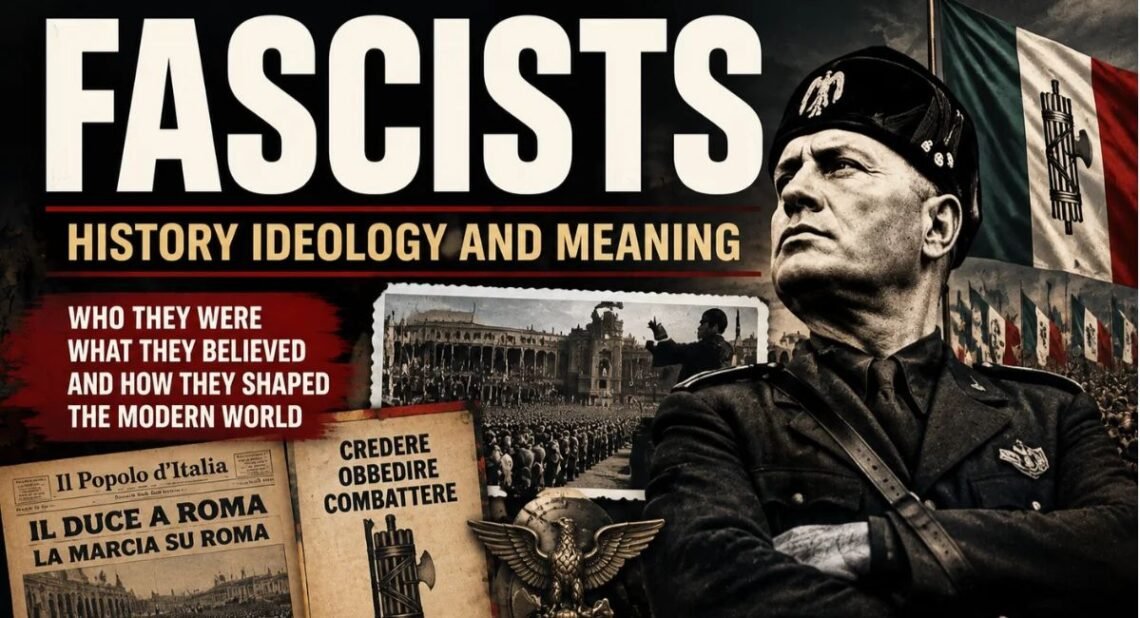
The word Fascisterne is Danish and translates most directly into English as “the fascists.” If you have encountered this term while reading about European history, politics, Denmark, World War II, or fascism, it is important to understand that Fascisterne refers to people, not to the political ideology itself.
In Danish, the distinction is relatively clear. Fascist refers to a fascist person, fascister means fascists, and fascisterne means “the fascists,” referring to a particular or previously identified group. The Danish word for fascism as an ideology is fascisme.
Although the word is grammatically simple, its historical meaning is much broader. Fascisterne can refer to followers of Italian Fascism, fascist movements in different European countries, or groups associated with authoritarian nationalism. In a Danish historical context, it can also appear when discussing the political movements that existed in Denmark before and during the German occupation.
Understanding Fascisterne therefore requires looking at both language and history. The term is connected with one of the most important political developments of the twentieth century, including the rise of Benito Mussolini, the spread of authoritarian movements, the development of Nazi Germany, political violence, propaganda, nationalism, and the destruction of democratic institutions.
This guide explains what Fascisterne means, how the word is formed, where fascism originated, what fascists believed, how fascism differed from Nazism, what happened in Denmark, and why the term remains relevant today.
What Does Fascisterne Mean?
Fascisterne means “the fascists” in English.
The word is the definite plural form of the Danish noun fascist. Danish frequently expresses definiteness through an ending attached to a noun rather than by using a separate word such as “the.”
A simple breakdown is:
- Fascist = a fascist
- Fascisten = the fascist
- Fascister = fascists
- Fascisterne = the fascists
- Fascisme = fascism
- Fascistisk = fascist or fascistic
This distinction is particularly useful for people searching for Fascisterne online because the term can sometimes be mistaken for the name of a political ideology, organization, or historical movement.
It is none of those things by itself.
The word identifies people who are described as fascists. The exact people being discussed depend on the surrounding sentence and historical context.
For example, a Danish sentence discussing Italian politics might use Fascisterne to refer to Mussolini’s followers. A historical discussion about Denmark might use the term for Danish fascists or Nazi sympathizers. A modern political discussion may use the word in a broader or rhetorical sense.
The context determines exactly who the term describes.
Fascisterne vs Fascism
One of the most important distinctions is the difference between Fascisterne and fascism.
Fascism is a political ideology and movement associated with authoritarian government, extreme or ultranationalist ideas, rejection of liberal democracy, political violence, strong leadership, mass mobilization, and an emphasis on national unity over individual political rights.
Fascisterne, on the other hand, refers to the people associated with fascism.
A useful way to remember the difference is:
Fascism is the ideology. Fascists are its supporters. Fascisterne means “the fascists.”
This distinction matters because using the words interchangeably can create historical confusion. A political system can be described as fascist, while the people who support or participate in such a movement can be described as fascists.
The Danish word fascisme describes the ideology, while fascisterne describes a specific group of people associated with it.
Where Did the Word Fascist Come From?
The political use of the word fascist is closely associated with Italy after World War I and the movement led by Benito Mussolini.
The deeper linguistic origin is connected with the Latin word fasces, which referred to a bundle of rods carried by certain officials in ancient Rome. The image represented authority and collective strength. Italian political movements later adopted related symbolism.
Mussolini’s movement used the name Fasci Italiani di Combattimento, founded in Milan in 1919. The movement developed in a period of serious political and social instability after World War I.
Italy was experiencing economic problems, political conflict, labor unrest, fear of socialism and communism, and frustration over the results of the war. Fascists presented themselves as defenders of national strength and order.
The movement grew by combining political organization with propaganda, nationalism, intimidation, and organized violence.
Over time, Mussolini and his supporters transformed their movement from a political organization into a dictatorship.
The word fascist eventually became associated with a much broader family of authoritarian and ultranationalist political movements across Europe.
Who Were the Original Fascisterne?
The earliest political Fascisterne were associated with Italian Fascism.
Benito Mussolini became the central figure of the movement. He had previously been involved in socialist politics but moved toward an aggressively nationalist political position during and after World War I.
In 1919, Mussolini founded the Fasci Italiani di Combattimento. The early movement attracted veterans, nationalists, anti-socialists, and people who believed Italy needed stronger political leadership.
Fascist squads, often called Blackshirts, became an important instrument of political intimidation. They attacked political opponents, labor organizations, socialist groups, and other perceived enemies.
The movement gained influence partly because many people believed traditional political institutions were unable to restore order.
In October 1922, Mussolini became prime minister following the March on Rome. His dictatorship was not created in a single day. Instead, political institutions were progressively weakened.
Opposition parties were suppressed, freedom of the press was restricted, political violence was normalized, and power became increasingly concentrated around Mussolini.
By the mid-1920s, Italy had become a dictatorship.
This history is important when studying Fascisterne because it demonstrates how authoritarian movements can use existing political structures before gradually undermining those same structures.
What Did Fascisterne Believe?
Fascist movements differed from country to country, but several recurring ideas appeared across many of them.
Fascism generally rejected liberal democracy and political pluralism. It emphasized national unity, obedience, discipline, hierarchy, strong leadership, and collective identity.
The individual was often expected to serve the nation rather than place personal rights above the interests defined by the state or movement.
Important characteristics included:
- Extreme or ultranationalist politics
- Strong authoritarian leadership
- Rejection of liberal democratic institutions
- Hostility toward socialism and communism
- Political violence and intimidation
- Mass political mobilization
- Propaganda and political symbolism
- Militarism and glorification of sacrifice
- Strict ideas about national belonging
- Suppression of political opposition
- Restrictions on independent institutions
- Exclusion of groups considered enemies of the nation
Not every fascist movement displayed these characteristics in exactly the same way. Historical context matters.
However, the combination of authoritarian leadership, extreme nationalism, anti-democratic politics, political violence, mass mobilization, and exclusion is central to understanding fascism.
The Nation Above the Individual
A major theme of fascist ideology was the belief that the nation represented a higher collective purpose.
Instead of seeing society primarily as a collection of individuals with independent rights and competing political interests, fascist movements often portrayed the nation as a unified community with one shared destiny.
This concept allowed fascist leaders to argue that political disagreement was not simply disagreement.
Opponents could be portrayed as enemies of the nation.
Once political opposition is presented as betrayal, the normal democratic idea that different citizens can peacefully disagree becomes much harder to maintain.
This was one reason fascist movements placed such importance on unity, loyalty, discipline, and obedience.
Strong Leadership and Political Authority
Fascist movements often centered political power around a dominant leader.
Mussolini became the symbol of Italian Fascism. Adolf Hitler similarly became the central figure of Nazi Germany.
The leader was portrayed as someone capable of expressing the true will of the nation.
This model reduced the importance of democratic institutions. Instead of political authority being divided among elected representatives, courts, legislatures, independent media, and other institutions, authority became concentrated around the leader and the ruling movement.
Leader worship was therefore not simply a personality issue. It was connected to the broader political structure of authoritarian rule.
Political Violence
Violence was another important feature of many historical fascist movements.
Fascist organizations frequently treated political violence as a legitimate means of defeating opponents and establishing authority.
In Italy, fascist squads attacked socialists, trade unionists, political opponents, and other groups.
Violence served more than one purpose. It could physically weaken opposition organizations while also creating fear among the wider population.
When political violence becomes normalized, people may begin to avoid expressing opposition simply because they fear the consequences.
This can help an authoritarian movement expand its influence even before it completely controls the state.
Propaganda and Mass Mobilization
Fascisterne were not dependent only on government force.
Fascist movements also worked to influence public opinion through propaganda, political rallies, symbols, newspapers, radio, films, uniforms, youth organizations, and other forms of mass communication.
The goal was often to create a political identity that extended beyond ordinary elections.
Supporters were encouraged to see themselves as part of a national movement.
Propaganda simplified complicated political problems into emotional messages about strength, national renewal, enemies, loyalty, and collective destiny.
This helped fascist movements mobilize large numbers of people and create a sense of belonging.
Exclusion and the Definition of Enemies
Fascist movements often defined the nation by deciding who belonged and who did not.
Groups could be labeled as internal enemies, foreign influences, political traitors, racial threats, or social outsiders.
The specific targets differed depending on the movement.
Italian Fascism and German Nazism were not identical. Nazi ideology placed racial hierarchy and antisemitism at the center of its worldview. Italian Fascism developed its racial policies differently and introduced antisemitic legislation later.
Nevertheless, both systems used exclusion, repression, authoritarianism, and political violence.
The history demonstrates how dangerous political systems can become when certain groups are portrayed as less deserving of rights or protection.
Fascisterne and Nazism: Are They the Same?
Fascism and Nazism are closely related, but they are not perfectly interchangeable terms.
Nazism, or National Socialism, developed in Germany under Adolf Hitler. It shared several characteristics with fascism, including dictatorship, extreme nationalism, mass political mobilization, propaganda, political violence, militarism, and rejection of democratic government.
However, Nazi ideology placed racial hierarchy and antisemitism at an especially central position.
The Nazi state developed a racial system that classified people according to supposed racial categories and treated Jews and other targeted groups as enemies.
This eventually contributed to the Holocaust and other systematic mass crimes.
Italian Fascism also became increasingly racist and antisemitic, especially after Italy introduced racial laws in 1938 and strengthened its alliance with Nazi Germany.
The distinction is therefore important, but it should not be used to separate Italian Fascism from its own authoritarian and violent record.
Fascisterne in Denmark
The word Fascisterne has a particularly interesting historical connection to Denmark.
Denmark had fascist and Nazi-inspired political organizations during the 1930s. These movements never achieved the level of political power reached by fascists in Italy or Nazis in Germany, but they were part of the broader European political environment of the period.
One of the most important organizations was the Danmarks Nationalsocialistiske Arbejderparti, commonly known as DNSAP.
DNSAP was founded in 1930 and was inspired strongly by German National Socialism.
The organization promoted authoritarian nationalism, antisemitism, anti-democratic ideas, and close ideological connections with Nazism.
Despite these ambitions, DNSAP remained relatively small in electoral terms.
It won no seats in the Danish parliament in the 1935 election and entered parliament in 1939 with three seats.
This limited electoral success is an important part of understanding Danish fascism. The existence of fascist or Nazi-inspired movements did not mean that most Danish citizens supported them.
Denmark also developed measures intended to prevent political violence and paramilitary organization.
Denmark During the German Occupation
Germany occupied Denmark during World War II beginning in April 1940.
The occupation created a complicated political environment involving the Danish government, resistance groups, collaborators, Nazi sympathizers, and ordinary citizens who had different responses to German rule.
Danish fascist and Nazi-oriented organizations existed during this period, but their influence should not be confused with the actions or beliefs of the Danish population as a whole.
The term Fascisterne can therefore appear in historical discussions about collaborators, Nazi sympathizers, political activists, and members of anti-democratic movements.
It is important to distinguish between people who actively supported fascist or Nazi ideology and people who were simply living under occupation.
Historical accuracy requires examining individual actions, political affiliations, and circumstances rather than assigning a broad label to an entire population.
Why Danish Fascism Remained Limited
Several factors help explain why fascist and Nazi-inspired political movements in Denmark remained much smaller than similar movements in Germany and Italy.
Denmark had established democratic institutions and a functioning parliamentary political system.
Political parties already competed for public support, and the country’s political culture did not provide the same conditions for a fascist takeover that existed in some other European countries.
Economic and political concerns still created opportunities for extremist movements, but those movements failed to transform themselves into the dominant political force.
This is a useful reminder that fascist ideology did not automatically produce fascist government everywhere it appeared.
Political institutions, social conditions, public attitudes, and the ability of extremist movements to build support all mattered.
Fascisterne and Democracy
The history of Fascisterne is closely connected to the history of democracy because fascist movements challenged the idea of political pluralism.
Democracy depends on more than holding elections.
It also requires institutions that allow people to disagree without being treated as enemies. It requires lawful political competition, independent institutions, freedom of expression, and protections for groups that may be unpopular.
Historical fascist movements attempted to replace this pluralism with political unity under a dominant movement and leader.
That makes the study of fascism relevant even outside historical discussions.
Understanding how democratic institutions can be weakened helps explain why historians continue to study the rise of fascist movements in the twentieth century.
How Is the Word Fascisterne Used Today?
Today, Fascisterne can still be used in historical and political discussions.
In a historical context, the meaning is usually straightforward. The word can refer to a particular group of people known for supporting fascism.
In modern political debate, however, the word may sometimes be used more loosely.
People may call an individual or political movement “fascist” because they believe it is authoritarian, intolerant, nationalist, repressive, or hostile to democratic opposition.
This broader usage creates a problem.
If every authoritarian, conservative, nationalist, or politically aggressive position is automatically called fascist, the historical meaning of the term becomes less precise.
A careful analysis should therefore look at the overall political pattern rather than one controversial statement.
Questions worth considering include:
- Does the movement reject meaningful democratic competition?
- Does it concentrate political authority around one leader?
- Does it treat opponents as enemies of the nation?
- Does it encourage or tolerate political violence?
- Does it promote extreme national unity over individual rights?
- Does it seek to eliminate independent political institutions?
- Does it use organized mass mobilization and propaganda?
- Does it define certain groups as inherently outside the national community?
- Does it support authoritarian control as a solution to political problems?
No single characteristic automatically proves that a movement is fascist.
Historical labels should be based on evidence and context.
Fascisterne and the Meaning of Political Extremism
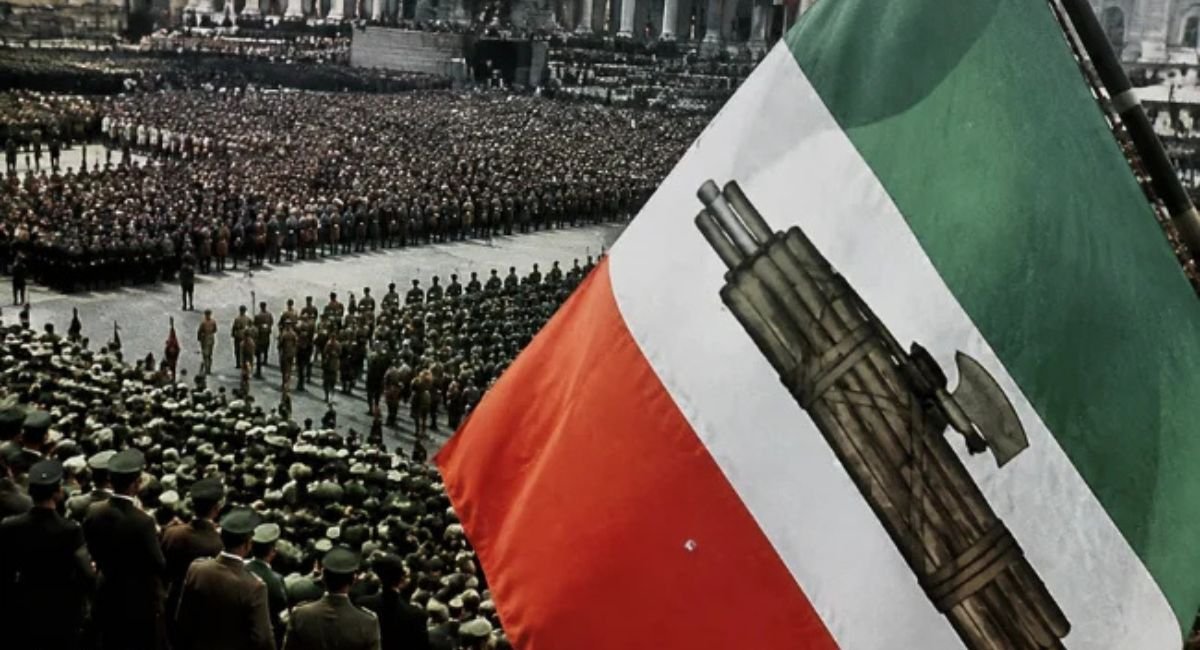
Fascisterne is sometimes discussed together with other forms of political extremism.
However, fascism should not simply be treated as a synonym for extremism.
Political extremism can describe positions far outside the political mainstream, while fascism refers to a particular political tradition with recognizable ideological and historical characteristics.
Similarly, authoritarianism and fascism overlap but are not identical.
A military dictatorship, for example, may suppress political opposition without being fascist.
A personalist dictatorship may revolve around one ruler without having a mass fascist movement.
A nationalist political party may promote strong national identity without rejecting democracy.
These distinctions are important because political terminology becomes less useful when every form of authoritarian behavior receives the same label.
Fascism, Nationalism, and Patriotism
Another important distinction is between fascism, nationalism, and patriotism.
Patriotism generally refers to attachment, affection, or loyalty toward one’s country.
Nationalism is a broader political concept that can take many different forms. Some forms of nationalism can exist within democratic political systems.
Fascism goes further by combining extreme national identity with authoritarian politics, anti-democratic attitudes, political mobilization, hierarchy, exclusion, and often political violence.
Therefore, simply supporting one’s country does not make someone fascist.
Likewise, believing that national interests are important does not automatically mean that someone supports fascism.
The historical pattern matters.
Why Fascisterne Still Matters in History
Studying Fascisterne is not only about learning a Danish word.
The term provides a starting point for understanding one of the major political developments of modern European history.
The rise of fascist movements shows how economic uncertainty, political instability, social fear, nationalism, propaganda, and institutional weakness can create opportunities for authoritarian movements.
It also demonstrates that democratic decline does not necessarily happen overnight.
In historical examples, institutions were weakened step by step. Political opponents were intimidated. Independent voices were restricted. Propaganda changed public perceptions. Emergency measures were used to expand state power.
This gradual process is one reason the history remains important.
The lesson is not that every modern political disagreement is equivalent to the 1930s. The lesson is that democratic institutions require protection and that political violence, dehumanization, and attacks on institutional independence can have serious consequences.
How to Understand Fascisterne When You See It in a Danish Text
If you encounter the word Fascisterne in a Danish article, book, post, or historical document, begin with the sentence surrounding it.
Ask who the word refers to.
It could mean:
- Italian Fascists
- German Nazis, depending on the historical context
- Danish fascists
- Members of a particular political organization
- Supporters of an authoritarian movement
- A group being described or criticized in a political argument
The word itself does not identify one specific organization.
The surrounding text provides the necessary context.
You should also distinguish between historical and modern usage.
A historian may use Fascisterne as a descriptive term for a documented political group. A modern political speaker may use “fascist” as an accusation.
Those two uses require different levels of interpretation.
Common Confusion About Fascisterne
One common mistake is to assume that Fascisterne is the Danish name for fascism.
It is not.
The ideology is fascisme.
Another mistake is assuming that Fascisterne refers to one specific party.
It does not necessarily do so.
The word is a plural noun that can describe any particular group identified as fascists, depending on context.
Another common mistake is treating every fascist movement as identical.
Italian Fascism, German Nazism, and other European movements shared important characteristics, but they also differed in ideology, organization, racial policies, political circumstances, and historical development.
Understanding these differences makes historical discussion more accurate.
Frequently Asked Questions About Fascisterne
What does Fascisterne mean in English?
Fascisterne means “the fascists” in English. It is the definite plural form of the Danish word fascist.
Is Fascisterne the same as fascism?
No. Fascisterne refers to people described as fascists, while fascism is the political ideology or movement they support.
What is the Danish word for fascism?
The Danish word for fascism is fascisme.
What is the singular form of Fascisterne?
The basic singular form is fascist, meaning “a fascist.” The definite singular form is fascisten, meaning “the fascist.”
What is the difference between fascist and fascister?
Fascist refers to one fascist person, while fascister is the indefinite plural meaning “fascists.”
What is the difference between fascister and fascisterne?
Fascister means “fascists,” while fascisterne means “the fascists,” referring to a specific or identifiable group.
Were all fascists Nazis?
No. Nazism was a German movement with its own distinctive racial and antisemitic ideology. It is generally understood as a particularly radical form of fascism, but fascism existed in other forms as well.
Was Mussolini a fascist?
Yes. Benito Mussolini was the central leader of Italian Fascism and ruled Italy as a dictator from the 1920s until 1943.
Did Denmark have fascists?
Yes. Denmark had fascist and Nazi-inspired political organizations during the 1930s and the period surrounding World War II. The most important Danish Nazi organization was DNSAP.
Was DNSAP the same as Italian Fascism?
Not exactly. DNSAP was strongly influenced by German National Socialism and was more directly connected to Nazi ideology than to Italian Fascism.
Did Danish fascists become politically dominant?
No. Danish fascist and Nazi-inspired movements remained relatively small compared with the dominant fascist movements in Italy and Germany.
Why is Fascisterne connected with World War II?
Fascist and Nazi movements played major roles in European politics before and during World War II. Denmark was occupied by Germany, and Danish fascist and Nazi organizations existed during this period.
Does fascism still exist today?
Groups and movements described as neo-fascist or fascist continue to exist in some parts of the world. However, the term should be used carefully and based on identifiable political characteristics rather than as a general insult.
Is nationalism always fascist?
No. Nationalism can take many forms, including forms that operate within democratic political systems. Fascism involves a much broader combination of authoritarianism, extreme nationalism, anti-democratic politics, exclusion, political violence, and mass mobilization.
Is authoritarianism the same as fascism?
No. Fascism is a particular political ideology and movement. Authoritarianism is a broader category of political rule characterized by limited political freedoms and concentrated power.
Why is it important to understand the word Fascisterne correctly?
Understanding the word correctly prevents confusion between people, ideology, and historical organizations. It also makes it easier to interpret Danish historical and political writing accurately.
Final Thoughts on Fascisterne
Fascisterne means “the fascists” in Danish. It is the definite plural form of fascist and refers to people associated with fascism rather than to the ideology itself.
The word opens the door to a much larger historical subject.
Fascist movements emerged in a period of intense political and social instability in early twentieth-century Europe. Italian Fascism under Benito Mussolini became the first major example, while Nazi Germany developed a related but distinct form of authoritarian and racial politics under Adolf Hitler.
Fascist movements generally emphasized national unity, strong leadership, political discipline, mass mobilization, propaganda, opposition to liberal democracy, and the suppression or exclusion of perceived enemies.
Denmark also experienced fascist and Nazi-inspired political activity, although these movements remained far less politically successful than their counterparts in Italy and Germany.
The most important point is that Fascisterne is a word describing people, not a synonym for fascism itself. Understanding that distinction makes it easier to read Danish language, interpret European history, and discuss fascism with greater accuracy.
The history of Fascisterne remains significant because it shows how political movements can exploit fear, instability, propaganda, and social division. It also demonstrates why democratic institutions, political pluralism, freedom of expression, and the peaceful transfer of political power are important.
Whether you encounter Fascisterne in a Danish sentence, a historical discussion, or a political debate, the best approach is to examine the context carefully. Identify who is being described, what political ideas they supported, what actions they took, and what historical period is being discussed.
That approach provides a much clearer understanding of both the Danish word Fascisterne and the complicated history behind it.
Read more: Snapjotz Com: What the Website Is, What It Offers, and Whether It Is Worth Visiting





One comment on “Fascisterne: Meaning, History, Fascism, and Its Danish Context”