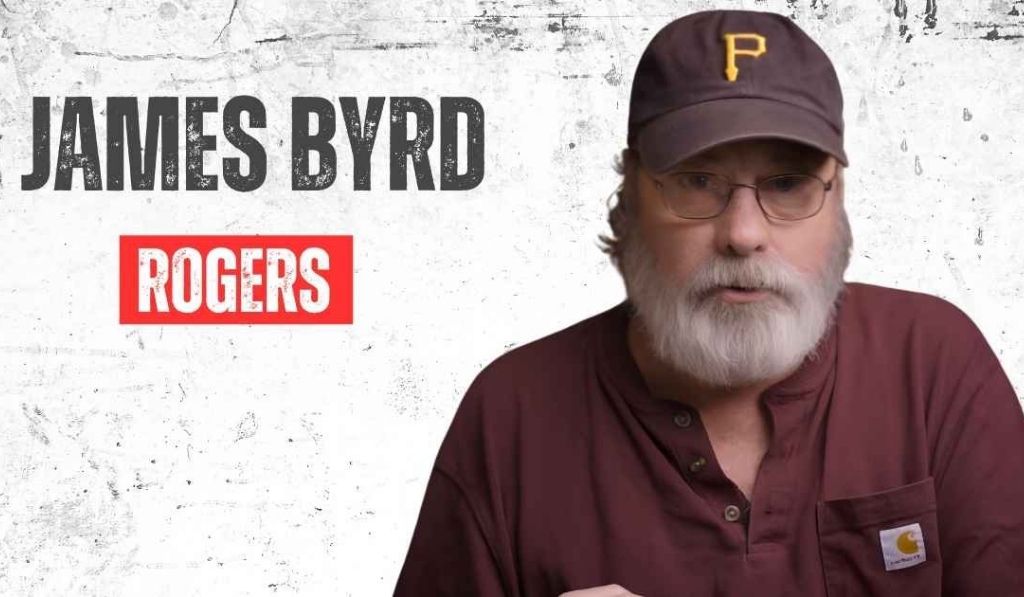
James Byrd Rogers is the eldest son of Fred Rogers, the man millions knew as Mister Rogers. Born in 1959, he grew up inside a Pittsburgh household built around gentleness and honesty, then spent most of his adult life avoiding the cameras that followed his father. This article covers his childhood, his years of distance from Fred, his brief return for a hit documentary, and what is actually known, and unknown, about his life today.
Quick facts about James Byrd Rogers
| Detail | Information |
| Full name | James Byrd Rogers |
| Also known as | Jim Rogers |
| Born | 1959, United States |
| Age (2026) | 66 or 67 |
| Father | Fred Rogers, television host and Presbyterian minister |
| Mother | Joanne Rogers (born Sara Joanne Byrd), concert pianist |
| Sibling | John Rogers (born 1961) |
| Hometown | Pittsburgh, Pennsylvania |
| Alma mater | Rollins College, Winter Park, Florida |
| Known for | Being Fred Rogers’ son; appearing in Won’t You Be My Neighbor? (2018) |
| Public profile | Private citizen since 2018 |
| Net worth, current job, family details | Not publicly disclosed |
Who is James Byrd Rogers
James was Fred and Joanne Rogers’ first child, and Fred named him after his own father, James Rogers. The family settled in Pittsburgh, where Fred was building the show that would become Mister Rogers’ Neighborhood. James grew up watching that show take shape from the inside, long before the rest of the country ever saw it.
His mother, Joanne Rogers, was a trained pianist who performed in a two-piano concert duo for much of her career. She met Fred while they were both students at Rollins College in Florida. The couple married in 1952, and their partnership lasted until Fred’s death in 2003.
A younger brother, John, arrived in 1961. The two boys grew up two years apart, both occasionally stepping in front of their father’s cameras, both eventually choosing lives far from television.
Most search interest in James comes from a single fact: he is one of only two people alive who grew up calling Fred Rogers “Dad” rather than “Mister Rogers.” That distinction matters because so much of the public conversation about Fred Rogers, including a hit documentary and a major studio film, treats him as a symbol first and a father second. James’s story is a way of asking what the man was actually like at home, away from the cardigan and the trolley.
The show that shaped his childhood
Fred Rogers built Mister Rogers’ Neighborhood on a set of ideas he had developed while studying child psychology alongside his television work, chiefly the belief that children needed adults to speak to them honestly instead of talking down to them. The show ran on public television from 1968 to 2001, moving through hundreds of episodes that tackled subjects as varied as divorce, death, and everyday routines like getting a haircut. James was a young boy when the earliest seasons went into production, which means his own childhood ran almost in parallel with the show’s.
Growing up in the Rogers household
Fred Rogers built his show around a simple idea: children need to hear that their feelings are real and that they matter. That idea did not stay on set. People who knew the family have described a home where questions about fear, anger, or sadness were treated as normal conversation, not something to brush aside.
James was around for the earliest, roughest years of the show, when Fred was still working out what Mister Rogers’ Neighborhood would become. Money was tight in those first seasons, and the family’s routines were shaped as much by a small production budget as by any parenting philosophy. That early instability is easy to miss in the polished version of the Rogers story that circulates today.
James and John both made occasional appearances on the program as children. According to IMDb, James appeared in seven episodes of Mister Rogers’ Neighborhood and one episode of the Canadian Misterogers. One well-remembered episode aired in 1971, when father and son sat together and made paper hats on camera. It is one of the few pieces of footage that shows the two of them simply spending time together, away from any lesson plan.
Fred kept his children’s screen time deliberately limited. He wanted the show to reach every child watching, not to turn his own kids into recurring characters, so appearances by James and John stayed occasional rather than regular. That decision looks small on paper, but it meant James grew up mostly off camera, in a house that looked far more ordinary than the fame surrounding his father might suggest.
A few details from those early years stand out:
- The family lived in Pittsburgh, close to the studio where the show was filmed.
- Joanne Rogers kept performing as a pianist throughout James’s childhood, giving the household two working parents rather than one famous one.
- The 1971 paper hat episode remains one of the only widely referenced pieces of footage showing father and son together on camera.
- Both sons attended school and grew up largely outside the entertainment industry, despite their father’s job.
The teenage years and a rocky stretch with his father
Fame did not make James’s teenage years easier. At one point, an old People magazine profile covered his adolescent rebellion in detail, and James later said in a 2018 interview with the Los Angeles Times that he was not happy with how that story had been written. He did not go into specifics about what upset him, only that the coverage did not sit right with him decades later.
As James moved into adulthood, he pulled back from his father’s public identity. Contact between them grew limited for a period. Fred later said that letting James have that distance was hard on him personally, but that he believed it was the right thing to do. Rather than pushing his son toward reconciliation, he gave him room.
That choice reflects the same idea Fred spent his career putting on television: that respecting someone means accepting who they are, not shaping them into who you want them to be. The two men eventually rebuilt their relationship, though few details of how that happened have ever been made public.
It is worth pausing on how unusual that admission from Fred actually was. A man widely known for warmth and patience openly said that giving his son space was painful for him personally. He did not present the strain as something that never happened, and he did not pretend the reconciliation was simple. That honesty about a hard stretch in his own family lines up with the same message he gave children for decades: difficult feelings are worth naming out loud, not hiding behind a calm exterior.
For James, the years of distance appear to have been less about rejecting his father and more about needing to answer a question every child of a famous parent eventually faces: who am I outside of this name? College, a change of location, and time away from Pittsburgh gave him room to work that out on his own terms.
Rollins College and a different kind of path
James followed his father to Rollins College, the small liberal arts school in Winter Park, Florida, where Fred had studied music composition decades earlier. For James, it was a chance to step outside Pittsburgh and outside his father’s shadow at the same time.
He did not go on to a career in television or public life. Where his father built a decades-long relationship with the American public, James built a life that stayed almost entirely out of view. Beyond his time at Rollins, there is little verified information about his career, and most of what circulates online about his current job or income is speculation rather than confirmed fact.
That gap in the public record is not an accident. James has never given interviews about his profession, and no reliable outlet has confirmed where he lives or what he does for work today. Readers searching for a detailed career biography will not find one, because he has never let that part of his life become public.
Rollins College itself is a small school, and Fred’s connection to it ran deep. It is where he met Joanne, where he studied music composition before television ever entered the picture, and where the school later established programs in his honor. For James, walking those same halls decades after his father was likely as much about family history as it was about academics. It gave him a version of the Rogers name that had nothing to do with television.
What is documented about his education and early adulthood:
- He attended Rollins College in Winter Park, Florida, the same school his parents attended.
- He did not pursue a broadcasting or entertainment career after graduating.
- He moved away from constant public association with his father’s identity during this period.
- He has never publicly named an employer, industry, or job title tied to his adult life.
His brother John, and two very different responses to fame
John Rogers took a path that mirrored James’s in some ways. He also appeared briefly on the family show as a child, four episodes according to IMDb, plus one Canadian episode, and he also chose privacy as an adult. In the 2018 documentary about their father, John described the pressure of growing up with a parent so many people revered, saying it was tough having what he called “the second Christ as my dad.”
That line captures something both brothers dealt with. To the public, Fred Rogers represented moral clarity for millions of parents and children, far beyond the role of a television host. For his own sons, living up to that image, or simply living beside it, was a weight neither one asked for.
Where the brothers differ is in how visible their adult lives have become. John has, at times, spoken publicly about his father’s legacy and appeared at related events. James has kept a much tighter boundary, limiting his public statements almost entirely to the single documentary project both brothers took part in.
A side-by-side look at how the two sons have handled public attention:
| James Byrd Rogers | John Rogers | |
| Birth year | 1959 | 1961 |
| Childhood appearances | Seven episodes, plus one Canadian episode | Four episodes, plus one Canadian episode |
| 2018 documentary | Appeared in Won’t You Be My Neighbor? | Appeared in Won’t You Be My Neighbor? |
| Public statements since | Almost none | Occasional public comments on his father’s legacy |
| Current public profile | Fully private | Semi-private |
Neither brother has tried to build a public identity around being Fred Rogers’ son. The difference is one of degree, not direction. Both men grew up understanding that their father belonged, in some sense, to the whole country, and both chose to keep the rest of their lives for themselves.
Won’t You Be My Neighbor and the return to public view
For nearly three decades after his childhood television appearances, James stayed away from cameras. That changed in 2018, when director Morgan Neville released Won’t You Be My Neighbor?, a documentary built from interviews with Joanne Rogers, both sons, and members of the original production crew.
The film became the highest-grossing biographical documentary released up to that point, earning more than $22 million at the box office, and it holds a 97 percent approval rating on Rotten Tomatoes. It later won the Independent Spirit Award for Best Documentary Feature. For a project about a children’s television host who had been off the air since 2001, those numbers were unexpected.
James’s interview segments gave the film some of its most personal moments. Speaking about the project, he said he thought his father would probably have wondered what all the attention was about if he had lived to see it, but that Fred might also have taken a quiet moment to consider the work he had done. It was a small, careful comment, very much in keeping with a man who has spent most of his life avoiding the spotlight his father lived in.
A year later, A Beautiful Day in the Neighborhood brought Tom Hanks to theaters playing Fred Rogers opposite Matthew Rhys. That film was not built around James or John directly, but it pushed public interest in the whole Rogers family back into search trends, including renewed curiosity about what Fred’s sons were doing as grown men.
The two films arrived close enough together that many viewers experienced them as a matched pair, one documentary and one dramatization, both trying to answer the same question from different angles: was the man on television the same man at home? James’s brief, careful comments in Won’t You Be My Neighbor? are among the few pieces of firsthand testimony that actually answer that question, which is part of why his interview segments have stayed memorable years later.
Why his interview stood out
Documentary interviews with adult children of famous parents often lean one of two ways, either defensive or openly critical. James’s comments did neither. He spoke about his father with a kind of dry, understated affection, acknowledging the strangeness of the fame without tearing it down and without pretending it was simple. That tone matched the reserved way he has handled every other public moment in his life, on camera for a purpose, then gone again.
Life after the cameras left again
Once press for the documentary wrapped, James went back to the life he had built before it. There were no follow-up interviews, no press tour appearances, no social media presence to speak of. He simply returned to private life, the same choice he had made decades earlier as a young adult stepping away from his father’s public identity.
Fred Rogers died on February 27, 2003, from stomach cancer, at age 74. Joanne Rogers lived until January 2021, when she died at 92, having spent nearly two decades after Fred’s death giving interviews and public appearances that helped preserve his legacy. Her death drew renewed attention to both sons as her surviving family, but neither James nor John used the moment to step further into public life.
Fred Rogers’ actual body of work, which ran for hundreds of episodes on public television and reshaped how American children’s programming approached emotional honesty, remains <a href=”https://en.wikipedia.org/wiki/Mister_Rogers%27_Neighborhood”>one of the most studied children’s series in television history</a>. James grew up watching that project take shape at the kitchen table, long before it became the cultural touchstone it is now, and that early, unfiltered view of his father’s work is something no biography of the show itself can fully capture.
What comes next for James Byrd Rogers is genuinely unknown. He has given no indication of writing a memoir, sitting for another documentary, or stepping into any kind of public role tied to his father’s name. Based on the pattern of the last several decades, privacy is likely to remain the defining choice of his life, not a temporary phase.
Final thoughts
There is something honest about how little James Byrd Rogers has let the public know about him. He did not try to build a career off his father’s name, and he did not spend his life explaining or defending his choice to stay private. He showed up once, for a documentary that clearly meant something to him, said a few careful words about his father, and then went home.
That restraint says more about him than a tell-all interview ever could. Growing up as the son of a man who taught an entire generation about self-worth and emotional honesty, James seems to have taken one lesson to heart above the rest: you get to decide how much of yourself belongs to other people. For him, the answer has mostly been very little, and that choice deserves respect rather than more digging.
Frequently asked questions
Who is James Byrd Rogers?
He is the eldest son of Fred Rogers, the television host known as Mister Rogers, and Joanne Rogers, a concert pianist. Born in 1959, he grew up in Pittsburgh and has spent most of his adult life away from public attention.
How old is James Byrd Rogers in 2026?
He was born in 1959, which makes him 66 or 67 years old in 2026. His exact birth month has never been made public, so an exact age cannot be confirmed.
Did James Byrd Rogers appear on Mister Rogers’ Neighborhood?
Yes. He appeared in seven episodes of the show as a child, plus one episode of the Canadian version, Misterogers, according to IMDb records. One of the more memorable appearances came in a 1971 episode where he and his father made paper hats together on camera.
What did James Byrd Rogers say about his father in the 2018 documentary?
Won’t You Be My Neighbor?, James reflected on his father’s lasting impact, saying he thought Fred would have questioned all the attention but might also have quietly reflected on the work he had done. His comments were brief but personal, offering a rare glimpse into their relationship.
Is James Byrd Rogers married or does he have children?
There is no reliable, publicly confirmed information about his current marital status or family. Several unverified online profiles make claims about a wife or children, but none of these details come from a credible, named source, so they should be treated with caution.
Why did James Byrd Rogers stay out of the public eye?
He chose privacy as a young adult, a period when his relationship with his father grew distant for a stretch before the two reconciled. He has kept that same boundary ever since, appearing publicly only once, for the 2018 documentary about his father’s life and work.
What happened to James Byrd Rogers’ brother, John?
John Rogers, born in 1961, also grew up appearing occasionally on the family show and later chose a private adult life. He took part in the same 2018 documentary as James, where he described the pressure of growing up with a father so widely admired.
Read more: Elizabeth Huberdeau: The Untold Story of John Cena’s Former Wife, Career, Net Worth, and Life Today