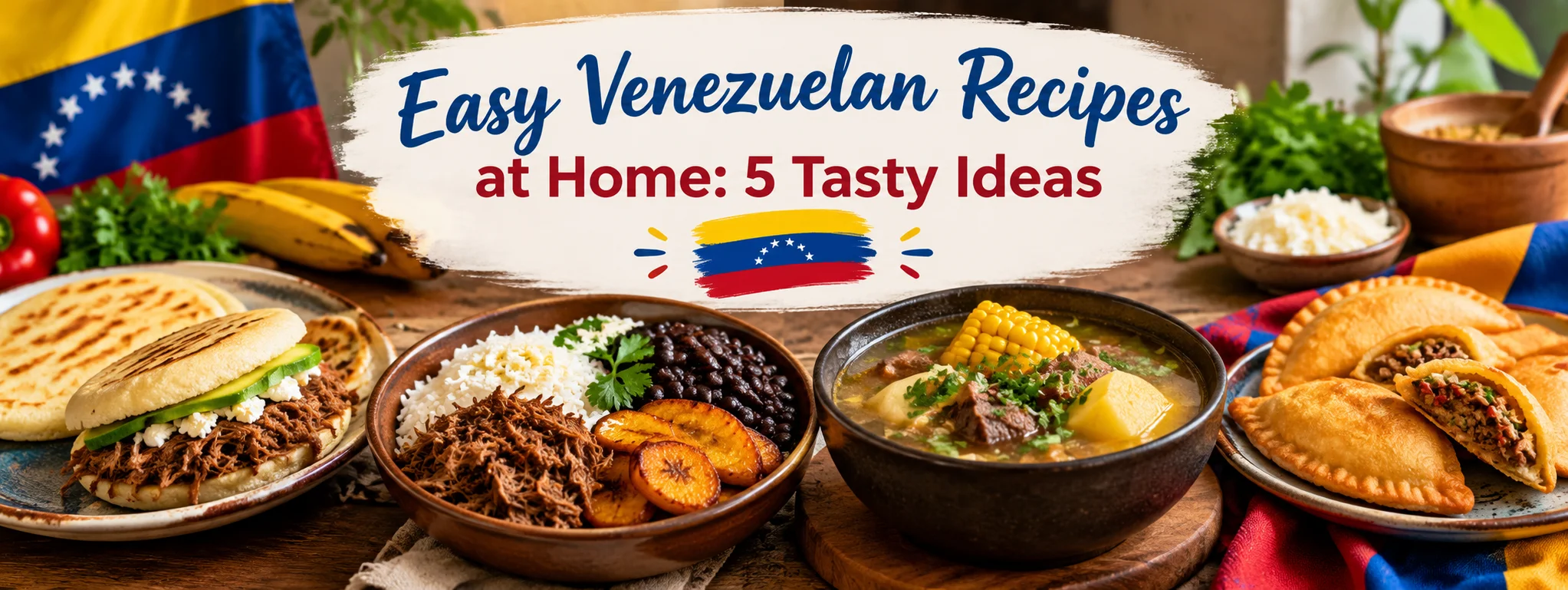
Venezuelan food is full of comforting flavors, golden corn cakes, crispy snacks, tender meats, creamy beans, sweet plantains, and delicious homemade sauces. The best part is that you do not need to be an experienced cook or have an expensive kitchen to enjoy these dishes. With a few everyday ingredients and simple cooking techniques, you can prepare easy Venezuelan recipes at home for breakfast, lunch, dinner, or a family gathering.
Whether you live in the United States, India, or another part of the world, Venezuelan cooking can fit easily into your kitchen. Many recipes use familiar ingredients such as corn flour, rice, eggs, cheese, chicken, tomatoes, beans, and bananas or plantains. Specialty ingredients can also be replaced with practical alternatives when necessary.
This guide covers 12 approachable Venezuelan recipes, including traditional arepas, sweet corn cachapas, cheese-filled tequeños, Venezuelan empanadas, black beans, and refreshing papelón con limón. You will discover the ingredients, step-by-step instructions, preparation tips, and easy substitutions for each dish.
If you are new to Venezuelan cuisine, start with arepas or huevos pericos. Both recipes are simple, satisfying, and excellent introductions to the country’s home cooking traditions.
What Is Venezuelan Food?
Venezuelan cuisine reflects a mixture of Indigenous, African, European, and regional Latin American influences. Corn, rice, beans, plantains, beef, chicken, cheese, and fresh vegetables appear in many traditional meals. Home cooks combine these ingredients in different ways to create food that is filling, flavorful, and suitable for everyday eating.
Corn is particularly important. Precooked corn flour is used to prepare arepas and many Venezuelan empanadas, while fresh corn forms the base of cachapas. Plantains provide another signature ingredient, appearing as sweet caramelized slices or savory crispy sides.
Venezuelan food is not necessarily very spicy. Garlic, onions, tomatoes, peppers, cilantro, and herbs often provide much of its flavor. Hot sauce can be added separately for people who enjoy extra heat.
Popular Venezuelan dishes include:
- Arepas: Round corn cakes that can be split and filled with cheese, chicken, beef, eggs, or beans.
- Cachapas: Sweet corn pancakes usually served with soft white cheese.
- Tequeños: Cheese-filled pastry sticks fried until golden.
- Pabellón criollo: A traditional meal featuring shredded beef, black beans, rice, and fried sweet plantains.
- Empanadas: Corn dough turnovers filled with cheese, chicken, beef, or other ingredients.
- Tajadas: Sweet plantain slices fried until tender and caramelized.
Many of these foods can be prepared with basic cookware and ingredients available at ordinary supermarkets.
Essential Ingredients for Easy Venezuelan Recipes at Home
You do not need to buy every specialty ingredient before trying Venezuelan cooking. Start with a small collection of versatile ingredients that can be used in several recipes.
| Ingredient | Common Uses | Practical Substitute |
| Precooked corn flour | Arepas and Venezuelan empanadas | Look for flour specifically labeled for arepas |
| Fresh or frozen corn | Cachapas | Well-drained canned corn |
| Black beans | Side dishes and arepa fillings | Canned black beans |
| Plantains | Tajadas and traditional plates | Ripe plantains are best for sweet dishes |
| White cheese | Arepas, cachapas, and tequeños | Low-moisture mozzarella or queso fresco |
| Rice | Main meals and side dishes | Any suitable long-grain rice |
| Eggs | Breakfast and fillings | No exact substitute for traditional perico |
| Tomatoes and onions | Egg dishes, beans, and sauces | Fresh or suitable canned tomatoes |
| Avocado | Arepa fillings and sauces | No exact substitute |
| Cilantro | Sauces and seasoning | Parsley can provide a different but pleasant flavor |
| Chicken or beef | Main dishes and fillings | Cooked shredded turkey or additional beans |
| Lime or lemon | Drinks and sauces | Either works for a fresh citrus flavor |
One ingredient deserves special attention: precooked corn flour is not the same as ordinary cornmeal, wheat flour, or masa harina. Authentic arepa dough depends on precooked corn flour, often sold as masarepa. Regular cornmeal generally produces a different texture and is not a direct replacement.
1. Venezuelan Arepas
Arepas are one of the best easy Venezuelan recipes at home because they require only a few ingredients. These round corn cakes have a lightly crisp exterior and a soft interior. They can be served plain with butter or opened and filled with your favorite ingredients.
Preparation time: 10 minutes
Cooking time: 15 to 20 minutes
Servings: 4 medium arepas
Ingredients
- 2 cups precooked white or yellow corn flour for arepas
- 2 to 2½ cups warm water
- 1 teaspoon salt
- 1 tablespoon vegetable oil or butter for cooking
Instructions
- Pour the warm water into a large mixing bowl and dissolve the salt.
- Gradually add the precooked corn flour while mixing with your fingers or a spoon.
- Knead the mixture until it becomes a soft, smooth dough without dry lumps.
- Allow the dough to rest for about five minutes so the flour absorbs the water.
- Divide it into four equal portions and shape each portion into a ball.
- Flatten each ball into a round disc approximately half an inch thick. Smooth the edges to prevent cracks.
- Heat a lightly oiled skillet over medium heat.
- Cook the arepas for approximately five to seven minutes on each side until a golden crust develops.
- For thicker arepas, lower the heat and cover the pan briefly so the centers cook thoroughly.
- Let them rest for a minute before slicing them open and adding your preferred filling.
Best Arepa Filling Ideas
You can customize arepas according to your taste and available ingredients.
- Cheese arepas: Fill with mozzarella, queso fresco, or another mild white cheese.
- Chicken arepas: Combine shredded chicken with avocado, cilantro, and a little mayonnaise.
- Egg arepas: Add scrambled eggs with tomatoes and onions.
- Black bean arepas: Fill with seasoned black beans and crumbled cheese.
- Beef arepas: Use leftover shredded beef with a small amount of tomato sauce.
Tips for Perfect Arepas
If the dough cracks around the edges, add water one tablespoon at a time and knead again. If it feels sticky, add a little more flour. Avoid making the discs excessively thick because the centers may remain undercooked.
Arepas are ideal for breakfast, packed lunches, or a quick dinner. You can prepare the dough shortly before cooking, making this one of the most convenient Venezuelan dishes for beginners.
2. Huevos Pericos: Venezuelan Scrambled Eggs
Huevos pericos is a popular Venezuelan breakfast made with eggs, tomatoes, onions, and sometimes sweet peppers. It is a simple alternative to ordinary scrambled eggs and tastes especially good inside a freshly cooked arepa.
Preparation time: 5 minutes
Cooking time: 10 minutes
Servings: 2
Ingredients
- 4 large eggs
- 1 medium tomato, finely chopped
- ½ small onion, finely chopped
- ½ sweet bell pepper, finely chopped, optional
- 1 tablespoon butter or vegetable oil
- Salt and black pepper to taste
Instructions
- Crack the eggs into a bowl and beat them with a pinch of salt and black pepper.
- Heat the butter or oil in a nonstick skillet over medium heat.
- Add the onion and bell pepper, if using, and cook for three minutes until softened.
- Add the chopped tomato and cook for another two to three minutes.
- Pour the beaten eggs into the skillet.
- Gently stir with a spatula, allowing the eggs to cook while mixing with the vegetables.
- Reduce the heat when the eggs begin to set.
- Remove the pan from the heat as soon as the eggs are cooked but still tender.
- Serve immediately with warm arepas, toast, or a small portion of rice.
How to Make Huevos Pericos More Flavorful
Fresh tomatoes provide moisture and a slightly sweet flavor. If your tomatoes are very watery, cook them for an extra minute before adding the eggs.
You can also add chopped cilantro, a little grated cheese, or cooked chicken for a more filling breakfast. For a mild traditional flavor, avoid adding too much chili. Venezuelan cooking often relies on aromatic vegetables rather than intense heat.
3. Cachapas: Sweet Venezuelan Corn Pancakes
Cachapas are soft, golden corn pancakes made with sweet corn. They are commonly folded around cheese and served warm. Their naturally sweet flavor makes them different from savory arepas.
Preparation time: 10 minutes
Cooking time: 15 to 20 minutes
Servings: 4 small cachapas
Ingredients
- 3 cups fresh, frozen, or drained canned sweet corn
- 2 large eggs
- 2 tablespoons melted butter
- 2 to 3 tablespoons precooked corn flour
- 1 tablespoon sugar, optional
- ½ teaspoon salt
- 1 cup sliced mozzarella or mild white cheese
- A little butter for the skillet
Instructions
- If using frozen corn, thaw it completely. If using canned corn, drain it well.
- Place the corn, eggs, melted butter, corn flour, sugar, and salt in a blender.
- Pulse until the mixture becomes a thick batter. Leave a little corn texture instead of blending it completely smooth.
- Let the batter rest for five minutes.
- Heat a nonstick skillet over medium-low heat and lightly grease it with butter.
- Pour approximately half a cup of batter into the skillet.
- Spread it gently into a small, thick pancake.
- Cook for three to five minutes until the bottom becomes golden and the top begins to set.
- Carefully flip and cook for another two to four minutes.
- Place cheese on one half of the pancake and fold the other half over it.
- Allow the cheese to soften before serving.
What Cheese Works Best for Cachapas?
Traditional cachapas are often served with a soft white cheese, such as queso de mano. If it is unavailable, mozzarella or a mild cheese that melts well is a practical choice.
Avoid adding too much liquid to the batter. A thick mixture is easier to flip and produces pancakes that hold their shape.
Cachapas are delicious for breakfast, brunch, or a light evening meal. Serve them immediately while the outside is warm and the cheese is soft.
4. Venezuelan Cheese Tequeños
Tequeños are crispy pastry sticks filled with cheese. They are popular as party snacks, appetizers, and celebration foods. Although homemade dough takes a little preparation, the recipe is manageable for beginners.
Preparation time: 25 minutes
Cooking time: 15 minutes
Servings: 12 tequeños
Ingredients
- 2 cups all-purpose flour
- 2 tablespoons softened butter
- 1 egg
- ½ teaspoon salt
- Approximately ½ cup water, added gradually
- 12 sticks of firm mozzarella or another suitable white cheese
- Vegetable oil for frying
Instructions
- Mix the flour and salt in a bowl.
- Add the butter and rub it into the flour until the mixture resembles coarse crumbs.
- Add the egg and gradually mix in enough water to form a smooth, firm dough.
- Knead for several minutes until the dough becomes elastic.
- Cover and rest it for 15 minutes.
- Roll the dough into a thin sheet on a lightly floured surface.
- Cut it into long strips approximately one inch wide.
- Take a cheese stick and wrap a strip of dough around it, slightly overlapping each layer.
- Press the ends firmly to seal the cheese inside.
- Heat vegetable oil in a deep, heavy pan.
- Fry a few tequeños at a time until the pastry is golden and crisp.
- Remove them with a slotted spoon and drain on paper towels.
- Allow them to cool slightly before serving.
Tips for Crispy Tequeños
Seal the cheese completely inside the dough. Any exposed section may allow the cheese to leak into the hot oil.
Keep the oil at a steady frying temperature. Oil that is too cool can make the pastry greasy, while excessively hot oil can brown the outside before the dough cooks through.
Serve tequeños with guasacaca, a fresh avocado-based sauce, or your favorite dipping sauce.
For a convenient variation, use ready-made pastry dough if its texture is suitable for wrapping and frying. Homemade dough offers a more traditional result, but shortcuts can make the recipe easier on busy days.
5. Venezuelan Empanadas
Venezuelan empanadas are corn dough turnovers filled with savory ingredients. They usually have a crisp exterior and a flavorful filling. Cheese, shredded chicken, and seasoned beef are all popular choices.
Preparation time: 20 minutes
Cooking time: 20 minutes
Servings: 6 small empanadas
Ingredients
- 2 cups precooked corn flour suitable for empanadas
- Approximately 2 cups warm water
- ½ teaspoon salt
- 1 cup cooked shredded chicken, cooked ground beef, or grated cheese
- Vegetable oil for frying
Instructions
- Mix the warm water and salt in a large bowl.
- Gradually add the corn flour, stirring until a soft dough forms.
- Knead briefly until the dough is smooth and easy to shape.
- Let it rest for five minutes.
- Divide the dough into six equal balls.
- Place a ball between two sheets of food-safe plastic or parchment paper.
- Press or roll it into a thin, round disc.
- Place a small amount of filling on one half, leaving room around the edges.
- Fold the other half over the filling to form a half-moon shape.
- Press the edges firmly together and smooth any cracks.
- Heat oil in a deep pan over medium heat.
- Fry the empanadas in small batches until golden and cooked through.
- Drain on paper towels and serve warm.
Choosing the Best Filling
For chicken empanadas, mix shredded chicken with sautéed onions and a little tomato. For beef empanadas, use cooked ground beef seasoned with garlic, onion, cumin, and black pepper.
Cheese empanadas are an excellent meat-free option. Use cheese that holds together reasonably well when heated.
Do not overfill the dough, as excess filling makes sealing difficult. If the edges crack, smooth them with slightly damp fingers before frying.
6. Tajadas: Sweet Fried Plantains
Tajadas are ripe plantain slices cooked until tender and caramelized. They are one of the simplest Venezuelan side dishes and complement beans, rice, eggs, grilled meat, and cheese.
Preparation time: 5 minutes
Cooking time: 10 minutes
Servings: 2 to 3
Ingredients
- 2 ripe plantains
- 2 to 3 tablespoons vegetable oil
- A small pinch of salt, optional
Instructions
- Peel the plantains and remove the ends.
- Slice them diagonally into pieces about a quarter-inch thick.
- Heat the oil in a skillet over medium heat.
- Arrange the plantain slices in a single layer.
- Cook for approximately two to three minutes on each side.
- Turn them when the undersides become golden brown.
- Continue cooking until the slices are tender and caramelized.
- Transfer to a plate lined with paper towels.
- Add a small pinch of salt if desired and serve warm.
How to Choose Ripe Plantains
Look for plantains with yellow skins covered in dark brown or black spots. The darker the skin, the sweeter the flesh generally becomes.
Green plantains are firmer and less sweet. They are better suited to savory preparations such as tostones.
For a lighter version, brush the slices with a little oil and bake them at 400°F (200°C), turning once, until tender and browned. Baking takes longer than frying but reduces the amount of oil needed.
7. Caraotas Negras: Venezuelan Black Beans
Black beans are an important part of Venezuelan home cooking. They are served as a side dish, combined with rice, or used as a filling for arepas. This simplified version uses canned beans for convenience.
Preparation time: 10 minutes
Cooking time: 20 to 25 minutes
Servings: 4
Ingredients
- 2 cans black beans, approximately 15 ounces each, drained and rinsed
- 1 small onion, finely chopped
- 2 garlic cloves, minced
- 1 small tomato, chopped
- 1 tablespoon vegetable oil
- ½ teaspoon ground cumin
- ½ cup water or vegetable broth
- Salt and black pepper to taste
- Fresh cilantro, optional
Instructions
- Heat the oil in a saucepan over medium heat.
- Add the onion and cook for three to four minutes until soft.
- Stir in the garlic and cook for approximately 30 seconds.
- Add the chopped tomato and ground cumin.
- Cook for another three minutes until the tomato softens.
- Add the black beans and water or broth.
- Stir gently and bring the mixture to a low simmer.
- Cook uncovered for 15 to 20 minutes, stirring occasionally.
- Mash a small portion of the beans against the side of the pan to thicken the liquid.
- Season with salt and black pepper.
- Add chopped cilantro if desired and serve warm.
Serving Suggestions
Serve these beans with white rice and tajadas for a simple Venezuelan-inspired plate. You can also spoon them into arepas and add cheese for a satisfying vegetarian meal.
If you prefer dried beans, soak them according to their package instructions and cook them until tender before following the seasoning steps. Canned beans are especially useful when you want dinner ready without a long preparation period.
8. Reina Pepiada Arepas
Reina pepiada is a famous Venezuelan arepa filling made with shredded chicken and avocado. It creates a creamy, fresh mixture that works beautifully inside warm corn cakes.
Preparation time: 15 minutes
Cooking time: 10 minutes if the chicken is already cooked
Servings: 4 filled arepas
Ingredients
- 2 cups cooked shredded chicken
- 1 ripe avocado
- 2 tablespoons mayonnaise
- 2 tablespoons finely chopped onion
- 1 tablespoon chopped cilantro
- 1 teaspoon lime juice
- Salt and black pepper to taste
- 4 cooked arepas
Instructions
- Place the cooked shredded chicken in a mixing bowl.
- Mash the avocado in a separate bowl until mostly smooth.
- Add the mayonnaise, lime juice, onion, and cilantro.
- Mix the avocado dressing until evenly combined.
- Fold in the shredded chicken.
- Season with salt and black pepper.
- Taste and add a little more lime juice if you want extra freshness.
- Slice open the warm arepas, leaving one edge attached.
- Spoon the chicken and avocado mixture into each arepa.
- Serve immediately.
Easy Variations
For a lighter filling, reduce the mayonnaise and use more avocado. You can also add finely chopped celery for crunch.
If you do not eat chicken, replace it with mashed chickpeas or cooked black beans. The result will be different from the traditional filling but still provides a creamy and satisfying sandwich-style meal.
Because avocado browns when exposed to air, prepare the filling shortly before serving. Refrigerate leftovers promptly in a covered container.
9. Pabellón Criollo: A Venezuelan-Inspired Main Meal
Pabellón criollo is widely recognized as Venezuela’s national dish. Its traditional components are shredded beef, black beans, white rice, and fried sweet plantains. Preparing every component from scratch takes time, but a simplified version is manageable with pre-cooked rice and leftover beef.
Preparation time: 20 minutes
Cooking time: 30 to 45 minutes when using cooked beef
Servings: 4
Ingredients
For the beef:
- 2 cups cooked shredded beef
- 1 small onion, chopped
- 2 garlic cloves, minced
- 1 tomato, chopped
- 1 tablespoon vegetable oil
- ½ teaspoon ground cumin
- ½ cup beef broth or water
- Salt and black pepper to taste
For serving:
- 3 cups cooked white rice
- 2 cups prepared black beans
- 2 ripe plantains
- Vegetable oil for cooking the plantains
Instructions
- Heat the oil in a skillet over medium heat.
- Add the chopped onion and cook until soft.
- Stir in the garlic and cook briefly.
- Add the tomato and cumin, then cook until the tomato begins to break down.
- Add the shredded beef and broth.
- Stir well, cover partially, and simmer for 15 to 20 minutes.
- Check the mixture and add a little broth if it becomes too dry.
- Meanwhile, heat a separate skillet with a small amount of oil.
- Slice the plantains diagonally and fry until golden and tender on both sides.
- Reheat the cooked rice and black beans in separate pans or microwave-safe containers.
- Divide the rice, beans, beef, and plantains among four plates.
- Serve while everything is hot.
Making Pabellón Criollo Easier
Cooked leftover beef is the biggest time-saving ingredient in this recipe. You can prepare the beans in advance and refrigerate them until needed.
For a meat-free alternative, use seasoned mushrooms or additional black beans instead of beef. This changes the traditional dish, but it preserves the contrast between savory beans, rice, and sweet plantains.
10. Guasacaca: Fresh Venezuelan Avocado Sauce
Guasacaca is a vibrant Venezuelan sauce made with ingredients such as avocado, cilantro, onion, garlic, vinegar, and oil. Recipes vary, and some versions are smoother while others retain a little texture.
It pairs well with grilled meat, arepas, tequeños, empanadas, and roasted vegetables.
Preparation time: 10 minutes
Cooking time: None
Servings: Approximately 1 cup
Ingredients
- 1 ripe avocado
- ½ green bell pepper, chopped
- ¼ small onion, chopped
- 1 garlic clove
- ½ cup fresh cilantro
- 1 to 2 tablespoons white vinegar or lime juice
- 2 tablespoons olive oil
- 2 to 4 tablespoons water, as needed
- Salt and black pepper to taste
Instructions
- Cut the avocado in half, remove the pit, and scoop the flesh into a blender.
- Add the bell pepper, onion, garlic, and cilantro.
- Pour in the vinegar or lime juice and olive oil.
- Blend until the ingredients are combined.
- Add water a tablespoon at a time until the sauce reaches your preferred consistency.
- Season with salt and black pepper.
- Taste and adjust the acidity if necessary.
- Transfer to a serving bowl and refrigerate until ready to serve.
Tips for Better Guasacaca
For a chunky sauce, pulse the ingredients briefly instead of blending continuously. For a smoother dip, blend longer and add a little more water.
If you enjoy a brighter flavor, increase the lime juice slightly. For a milder taste, reduce the garlic.
Keep the sauce covered in the refrigerator and prepare it close to serving time for the freshest color and flavor.
11. Perico and Cheese Breakfast Arepas
If you need a complete breakfast rather than a single dish, combine arepas with Venezuelan-style scrambled eggs and cheese. This simple meal brings together several classic ingredients without requiring complicated preparation.
Preparation time: 10 minutes
Cooking time: 20 minutes
Servings: 2
Ingredients
- 2 medium cooked arepas
- 3 eggs
- 1 small tomato, chopped
- 2 tablespoons chopped onion
- ½ cup grated mozzarella or crumbled white cheese
- 1 teaspoon butter or oil
- Salt and black pepper to taste
Instructions
- Heat the butter in a nonstick skillet.
- Add the onion and cook until softened.
- Stir in the tomato and cook for two minutes.
- Beat the eggs with salt and pepper.
- Pour the eggs into the pan and stir gently until cooked.
- Warm the arepas in another skillet if necessary.
- Slice them open and add a little cheese.
- Spoon the scrambled egg mixture inside.
- Serve immediately with fresh fruit or a small side salad.
Why This Breakfast Works
The corn cakes provide a crisp exterior and soft center, while the eggs add tenderness and the cheese contributes a creamy, savory flavor.
For additional variety, include avocado slices, cooked mushrooms, or leftover shredded chicken. If you prefer a dairy-free meal, leave out the cheese or choose a suitable plant-based alternative.
12. Papelón con Limón: Venezuelan Sugarcane and Lime Drink
Papelón con limón is a refreshing traditional Venezuelan drink made with papelón, a solid unrefined cane sugar, and fresh lime juice. It is sweet, citrusy, and especially enjoyable when served cold.
If papelón is unavailable, panela, piloncillo, or dark unrefined cane sugar can provide a practical alternative.
Preparation time: 10 minutes
Cooling time: 20 to 30 minutes
Servings: 4 glasses
Ingredients
- 4 cups water
- ½ cup grated papelón or panela, adjusted to taste
- ¼ cup fresh lime juice
- Ice cubes, optional
- Lime slices for serving, optional
Instructions
- Pour two cups of water into a small saucepan.
- Add the grated papelón or panela.
- Heat gently while stirring until the sugar dissolves.
- Remove from the heat and allow the mixture to cool.
- Pour the sweetened liquid into a jug.
- Add the remaining two cups of water.
- Stir in the lime juice.
- Taste and adjust the sweetness or acidity.
- Refrigerate until cold.
- Serve over ice with lime slices if desired.
How to Adjust the Flavor
For a less sweet drink, use less papelón and add more water. For a sharper citrus taste, increase the lime juice gradually.
Do not add lime juice to an excessively hot mixture if you want to preserve its fresh flavor. Allowing the sweetened water to cool first produces a more refreshing drink.
How to Plan a Simple Venezuelan Meal at Home
You do not need to cook all 12 recipes in one day. Choosing two or three dishes that complement each other is usually enough to create a satisfying meal.
Here are three practical combinations.
Quick Venezuelan Breakfast
Prepare arepas, huevos pericos, and cheese. Cook the arepas first, then prepare the eggs while the corn cakes finish cooking.
This combination works well on weekends or whenever you want a filling breakfast made from simple ingredients.
Easy Family Lunch
Serve rice, black beans, tajadas, and seasoned shredded chicken. Prepare the beans and rice ahead of time, then fry the plantains shortly before serving.
For a more traditional presentation, arrange each component separately on the plate.
Snack or Party Menu
Make tequeños, cheese empanadas, and guasacaca. You can prepare the dough and fillings ahead of time, then fry the snacks closer to serving.
Keep the sauce refrigerated until needed, and serve the fried food while it is warm and crisp.
Read more: Why a Light Material Bucket Is Rated by Volume and Not by Weight
How to Find Venezuelan Ingredients in the USA and India
Finding ingredients is often the biggest challenge when trying a new cuisine. Fortunately, many Venezuelan recipes can be prepared with a combination of specialty products and familiar supermarket ingredients.
Shopping for Ingredients in the USA
In the United States, Latin American grocery stores are useful places to look for precooked corn flour, plantains, queso fresco, and other regional ingredients. Some larger supermarkets also carry these products in international food aisles.
When buying corn flour for arepas, check the packaging carefully. Look for precooked corn flour specifically intended for arepas rather than ordinary cornmeal or masa harina.
Fresh or frozen corn, eggs, rice, chicken, tomatoes, onions, and black beans are widely available and can form the basis of several recipes.
Shopping for Ingredients in India
In India, ordinary supermarkets and online grocery services can help you find ingredients such as rice, eggs, onions, tomatoes, chicken, garlic, cilantro, and cheese.
Plantains may be available through local produce markets, although the variety and sweetness can differ. If you cannot find precooked arepa flour, look for a specialty Latin American food retailer before attempting to substitute another type of flour.
For cachapas, frozen or canned sweet corn is often a practical option. Mozzarella can replace some traditional melting cheeses, while lemon juice can be used when lime is unavailable.
The key is to preserve the essential characteristics of the recipe. A substitution may make the dish easier to prepare, but it will not always produce exactly the same flavor or texture as the traditional version.
Common Mistakes to Avoid When Cooking Venezuelan Food
Even simple recipes can be disappointing when small details are overlooked. These tips can help you get better results.
Using the Wrong Flour for Arepas
Ordinary wheat flour and regular cornmeal do not behave like precooked corn flour. Using the wrong product can result in dough that is difficult to shape and has an unsuitable texture.
Choose precooked corn flour designed for arepas whenever possible.
Making Arepa Dough Too Dry
Dry dough develops cracks when shaped or cooked. Add water gradually until the dough feels soft and holds together without sticking excessively to your hands.
Letting the dough rest also helps the flour absorb moisture.
Cooking Over Excessively High Heat
High heat can brown the outside of an arepa before its center is cooked. Cook over medium heat and lower the temperature when necessary.
For thick arepas, a covered skillet or a short finishing period in the oven can help the center cook through.
Adding Too Much Liquid to Cachapas
Watery batter spreads too easily and can break when flipped. Drain canned corn thoroughly and add the flour gradually until the batter is thick enough to hold its shape.
Using Unripe Plantains for Sweet Tajadas
Green plantains have a firmer texture and less sweetness. For caramelized tajadas, choose plantains with yellow skins and plenty of dark spots.
Overfilling Empanadas
Excess filling prevents the edges from sealing properly. Use a moderate amount and press the edges together firmly before frying.
Preparing Every Component at the Last Minute
Traditional meals often contain several components. Prepare beans, cooked meat, sauces, and rice ahead of time when practical. Cook crispy plantains and fried snacks close to serving so their texture remains appealing.
How to Store and Reheat Venezuelan Food
Proper storage helps preserve flavor and reduces food waste.
- Arepas: Refrigerate cooled arepas in an airtight container for up to three days. Reheat in a skillet or oven until hot.
- Cachapas: Refrigerate leftovers in a covered container and reheat gently in a skillet.
- Cooked beans: Refrigerate promptly and use within three to four days, or freeze in suitable portions.
- Cooked chicken and beef: Store in airtight containers in the refrigerator and generally use within three to four days.
- Guasacaca: Refrigerate in a tightly covered container and use as soon as possible for the freshest flavor and color.
- Tequeños and empanadas: Refrigerate cooked leftovers promptly and reheat in an oven or air fryer to help restore crispness.
- Papelón con limón: Keep refrigerated in a covered jug and use within a few days.
For food safety, refrigerate perishable food within two hours, or within one hour when the temperature is above 90°F (32°C). Reheat leftovers to an internal temperature of 165°F (74°C). Do not leave cooked meat, eggs, cheese-filled snacks, or prepared sauces at room temperature for extended periods.
Frequently Asked Questions About Easy Venezuelan Recipes at Home
What Are the Easiest Venezuelan Recipes for Beginners?
Arepas, huevos pericos, tajadas, and guasacaca are excellent starting points. Arepas require only precooked corn flour, water, and salt. Huevos pericos uses familiar breakfast ingredients, while tajadas and guasacaca involve relatively straightforward preparation.
What Is the Most Famous Venezuelan Food?
Arepas are among the most recognizable Venezuelan foods and are eaten in many different forms. Pabellón criollo is widely regarded as Venezuela’s national dish and traditionally includes shredded beef, black beans, white rice, and fried sweet plantains.
Can I Make Venezuelan Food Without Specialty Ingredients?
Yes. Many dishes use common ingredients such as eggs, rice, tomatoes, onions, beans, chicken, and cheese. However, certain ingredients are harder to replace precisely. Precooked corn flour is particularly important for authentic arepas and Venezuelan-style corn dough.
What Is the Difference Between Arepas and Cachapas?
Arepas are made from precooked corn flour and have a relatively neutral, savory flavor. Cachapas are made primarily from sweet corn and have a sweeter taste. Arepas are often sliced open and stuffed, while cachapas are commonly folded around cheese.
Is Venezuelan Food Spicy?
Most traditional Venezuelan dishes are not extremely spicy. Their flavor often comes from garlic, onion, tomato, cilantro, peppers, and other seasonings. You can add hot sauce or chili to individual servings if you prefer more heat.
What Can I Use Instead of Venezuelan White Cheese?
Mozzarella is a practical alternative for many cooked recipes because it melts well. Queso fresco or another mild white cheese may work better when a recipe calls for a crumbly texture. The best substitute depends on whether the cheese needs to melt, hold its shape, or provide a salty finish.
Can I Make Venezuelan Recipes Vegetarian?
Absolutely. Arepas can be filled with cheese, eggs, avocado, or black beans. Cachapas are easy to prepare without meat, and black beans can be served with rice and plantains for a satisfying meal. Check the ingredients in prepared sauces and cheese products if you follow a strict vegetarian diet.
Can I Prepare Venezuelan Food Ahead of Time?
Yes. Cooked beans, shredded meat, and some sauces can be prepared in advance and refrigerated. You can also prepare arepa dough shortly before cooking. For the best texture, cook fried snacks and plantains near serving time.
What Should I Serve With Venezuelan Arepas?
Popular options include shredded chicken, cheese, scrambled eggs, black beans, avocado, and shredded beef. You can also serve arepas alongside rice, plantains, salad, or a fresh avocado sauce.
Are Venezuelan Recipes Suitable for Families?
Many Venezuelan recipes are family-friendly because their ingredients are familiar and their seasonings can be adjusted. Arepas are particularly convenient because everyone can choose a different filling. Serve spicy sauces separately when cooking for people with different preferences.
How Can I Make Venezuelan Recipes Healthier?
Use moderate amounts of oil, grill or bake ingredients when suitable, include vegetables, and balance meals with beans or other protein sources. Baking plantains instead of frying them can reduce added oil. For sauces, adjust the quantity of mayonnaise or oil according to your preferences.
What Is a Good First Venezuelan Dinner to Make at Home?
A simple plate of rice, black beans, tajadas, and shredded chicken is a good first dinner. It introduces several common Venezuelan ingredients without requiring advanced techniques. If you prefer something quicker, make arepas and fill them with cheese, eggs, or avocado.
Final Thoughts
Preparing easy Venezuelan recipes at home is a practical way to discover a cuisine built around comforting ingredients and versatile cooking techniques. From golden arepas and sweet cachapas to crispy tequeños, flavorful black beans, and caramelized plantains, there are plenty of dishes to explore without needing professional cooking skills.
Start with one or two recipes, learn how the ingredients behave, and gradually build your collection of favorite dishes. Precooked corn flour, rice, beans, eggs, cheese, and plantains can be used in several different meals, making them useful ingredients to keep on hand.
Whether you are preparing a quick breakfast, a filling family dinner, or snacks for guests, Venezuelan food offers plenty of room for customization. With simple instructions, sensible substitutions, and a little practice, you can enjoy the flavors of Venezuela in your own kitchen.
One thought on “Easy Venezuelan Recipes at Home: 12 Delicious Traditional Dishes Anyone Can Make”