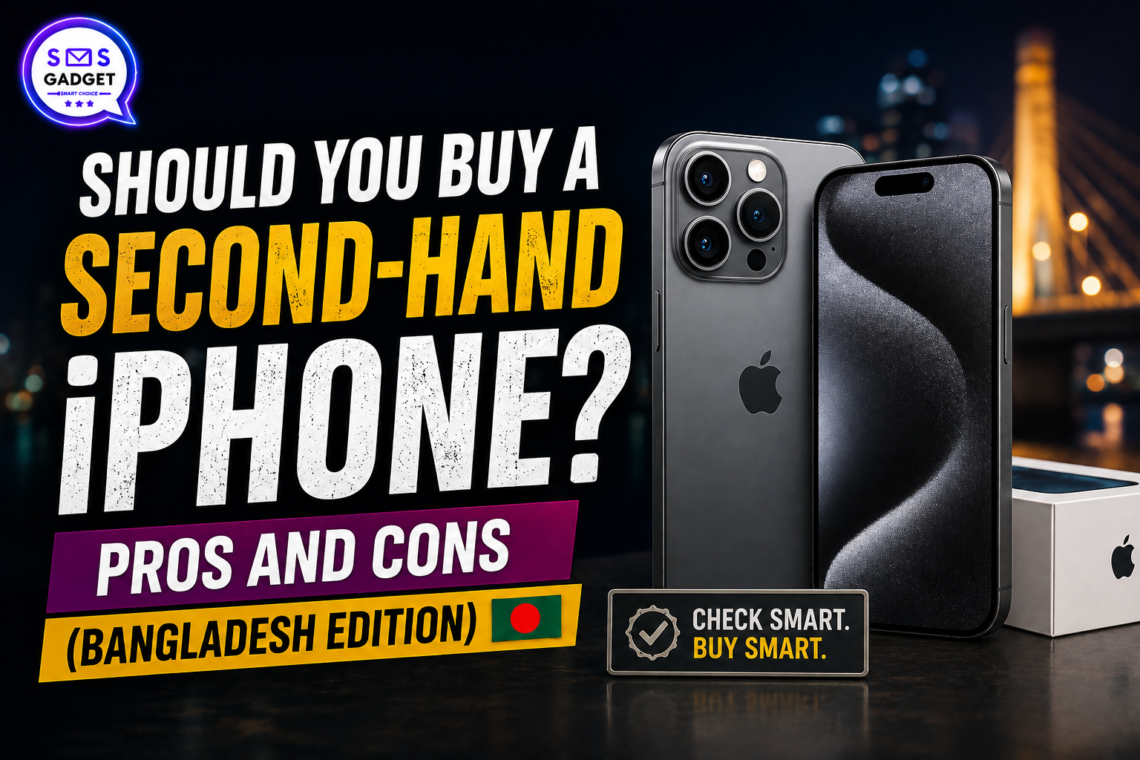
Should You Buy a Second-Hand iPhone? Pros and Cons (Bangladesh Edition)
A used iPhone can be a genuinely great value or a costly mistake, and the difference usually comes down to a handful of factors most buyers never think to check. This guide weighs both sides honestly, without leaning toward either one, so the final decision comes from real information rather than a sales pitch in either direction.
Pros vs Cons at a Glance |
|
|---|---|
| Pros | Cons |
| 30–50% cheaper than new | No original manufacturer warranty |
| iPhones age well in daily performance | Battery health already partially used |
| Pro-tier features at mid-range price | Possible hidden repair history |
| More sustainable, less e-waste | Shorter remaining software update lifespan |
The Case For Buying Second-Hand
Real Cost Savings
Used iPhones typically sell for 30–50% less than the same model new, which is a meaningful gap for most budgets. Comparing used listings against the current iPhone Price in Bangladesh for the new equivalent makes that gap easy to see at a glance.
iPhones Age Well
Apple’s hardware and software optimization mean an iPhone from a few years back still performs smoothly for everyday use, unlike many aging Android devices that slow down noticeably sooner.
Access to Pro-Tier Features at a Mid-Range Price
Buying a used Pro-tier model often costs about the same as a brand-new standard model, while delivering a noticeably better camera system and display.
A More Sustainable Choice
Choosing used also means one less new device manufactured and one less old device heading to e-waste, a small but genuine environmental upside.
The Case Against Buying Second-Hand
No Original Warranty
Once the original coverage period ends, a used iPhone typically comes with no manufacturer warranty at all, leaving the buyer relying entirely on the seller’s honesty and reputation.
Battery Health Is Already Partially Used Up
Every charge cycle counts against a battery’s total lifespan, so a used unit inevitably starts from a lower baseline than a new one straight out of the box.
Higher Risk of Hidden Repair History
A used phone may have already been opened for a repair, sometimes with non-original parts fitted, without the seller necessarily disclosing it upfront.
Software Update Lifespan Is Shorter Than Expected
This is the detail most buyers overlook completely. Apple generally supports iPhones with major software updates for somewhere around six to eight years from release, with a minimum five-year commitment now documented for iPhone 15 and newer. That means an already three-year-old used phone might only have three to four years of major updates left — a meaningfully shorter runway than buying new. On top of that, Apple Intelligence features currently require an iPhone 15 Pro, Pro Max, or newer — so a used standard iPhone 15 or anything older simply won’t ever get access to these AI capabilities, regardless of future software updates.
Bangladesh-Specific Risks to Weigh In
Documentation and Paper Trail
A used phone can still fall short here even if it’s completely genuine Apple hardware — a missing invoice, an unclear purchase history, or no proof of original ownership are all separate concerns from authenticity itself, and worth checking independently.
Activation Lock and Stolen-Phone Risk
This risk runs noticeably higher in the peer-to-peer market compared to buying through an established seller, simply because there’s far less accountability behind an individual listing.
Limited Return Culture
Outside a handful of certified sellers, a proper return window or exchange policy is still uncommon in the local used-phone market, so getting this in writing upfront matters more than it might elsewhere.
When Buying Second-Hand Makes Sense?
Budget-Conscious Buyers Who Don’t Need the Newest Features
Anyone who doesn’t need Apple Intelligence or the latest camera system gets excellent value from a well-chosen used model.
Students/First-Time iPhone Buyers Testing the Ecosystem
A used phone is a lower-commitment way to try the iOS ecosystem before investing in a brand-new flagship.
Buying From Certified Sellers Offering Warranty/Return Windows
A certified seller offering even a short warranty or return window removes most of the risk that makes used purchases nerve-wracking elsewhere.
When You Should Lean New Instead?
If AI Features or Years of Future Updates Matter
Anyone who wants Apple Intelligence or the longest possible software runway is better served buying new or very recent.
If There’s No Easy Way to Verify the Phone Before Paying
Without a straightforward way to check IMEI, battery health, and Activation Lock status, the risk of a used purchase climbs quickly.
If Warranty and After-Sales Support Matter More Than Price
For anyone who values peace of mind over the lowest possible price, new, bought through a dependable Best iPhone Shop like SMS Gadget remains the simpler choice.
If You Do Buy Used — A Quick Pre-Purchase Checklist
- IMEI verified and purchase documentation checked
- Battery health at 85% or above
- Activation Lock confirmed off
- Physical inspection completed
- Invoice or return window requested from the seller
The “How to Check If Your iPhone Is Original” guide covers the full step-by-step walkthrough for anyone wanting to go deeper on any of these points.
Frequently Asked Questions
Is it safe to buy a second-hand iPhone in Bangladesh?
Yes, as long as IMEI, purchase documentation, and Activation Lock are all checked first, buying from a certified seller reduces most of the remaining risk.
How much cheaper is a used iPhone compared to new?
Typically 30–50% less than the same model new, depending on condition, age, and storage tier.
Do used iPhones get the same software updates as new ones?
Yes, updates follow the model, not the purchase history, but an older model naturally has fewer years of support left, and Apple Intelligence remains limited to iPhone 15 Pro and newer regardless.
What’s the biggest risk of buying used in Bangladesh specifically?
Missing documentation and stolen-phone risk in the peer-to-peer market tend to be the two biggest local-specific concerns.
Conclusion
Secondhand is a smart choice for the right buyer under the right conditions, not a compromise or a fallback option. Weighing genuine savings against a shorter software runway and buying from an accountable seller covers most of what actually matters here. For anyone moving forward with a used purchase, the “How to Check If Original,” “Official vs Unofficial,” and “Warranty” guides in this series fill in every remaining detail.