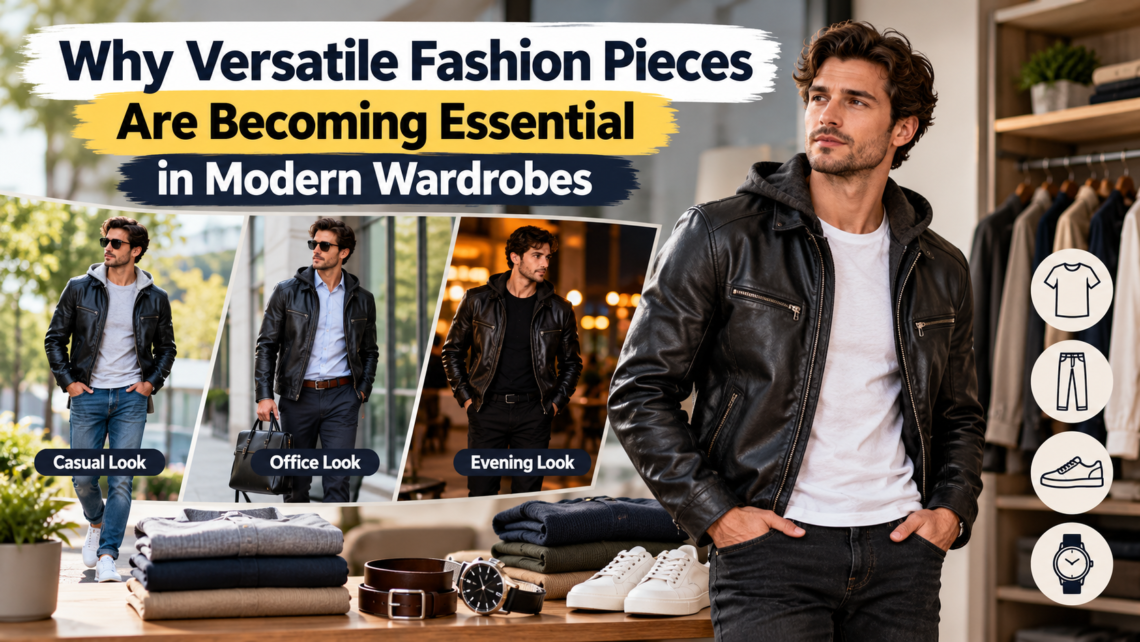
Versatility used to be one factor among several when buying clothes. Now, for a growing number of men, it’s closer to a requirement. Closets have gotten smaller, budgets have gotten tighter, and the time available to plan an outfit for every specific occasion has shrunk right along with everything else. A piece that only works in one narrow setting is a harder purchase to justify than it used to be, regardless of how good it looks in that one context.
This isn’t purely a style preference; there are practical, largely economic reasons behind the shift. This guide looks at what’s actually driving the push toward versatility, which categories are feeling it most, and how to prioritize it without ending up with a wardrobe that feels flat or interchangeable.
The Practical Forces Pushing Wardrobes Toward Versatility
A few concrete, everyday pressures explain most of this shift.
Smaller Living Spaces, Smaller Closets
Apartment sizes have trended smaller in many cities, and closet space has shrunk along with it. A large wardrobe full of single-purpose items simply doesn’t fit the way it once did, which pushes people toward fewer pieces that can each cover more ground.
Tighter Budgets and the Cost-Per-Wear Math
Rising costs across most categories of spending have made people more deliberate about clothing purchases specifically. A piece that only gets worn once or twice a year is a harder sell financially than one that earns its price back through regular use, and that math increasingly favors versatile pieces over occasion-specific ones.
Less Time to Shop and Plan Outfits
Busier, less predictable schedules leave less time to shop for or plan a specific outfit around a specific event. A wardrobe built around versatile pieces removes a lot of that planning, since most items already work together regardless of what the day actually looks like.
What Makes a Piece Genuinely Versatile (Not Just Marketed That Way)
Not everything labeled “versatile” actually earns the term. A genuinely versatile piece works across at least a few different settings without requiring an unusual pairing to make it work, and it combines easily with multiple things already in a person’s closet rather than just one specific outfit. Anything short of that is closer to single-purpose clothing with broader marketing language attached.
The Categories Feeling This Shift the Most
Some parts of a wardrobe respond to this pressure more visibly than others.
Outerwear as the Clearest Example
Jackets illustrate this shift about as clearly as any category can. A jacket gets worn across a huge range of settings within a typical week, which makes its versatility carry more practical weight than almost any other single item. A hooded leather jacket fits this pattern well: it works over casual basics for an errand day, holds up in a relaxed office setting, and still looks deliberate for an evening out, all from one piece rather than three separate jackets covering the same range.
The Resale and Longevity Angle
Versatile pieces also tend to hold their value better on the resale market, since a well-made jacket or pair of boots that works across multiple settings appeals to a broader range of buyers than a highly specific, trend-tied item. This isn’t the primary reason most people prioritize versatility, but it does reinforce the practical case: a piece bought for broad, ongoing use tends to remain useful, and valuable, longer than one bought for a single narrow purpose.
How to Prioritize Versatility When Shopping
A few habits make it easier to buy with versatility genuinely in mind, rather than settling for the marketing claim:
- Ask how many distinct settings a piece would realistically work in, rather than accepting a vague “goes with everything” claim at face value.
- Favor neutral, adaptable colors for core pieces, saving bolder choices for smaller, lower-cost items.
- Prioritize construction quality on higher-use categories like outerwear, since these pieces get worn often enough that build quality directly affects long-term value.
- Look to retailers that specialize in a single category rather than everything at once. The Leather Coats is a useful example for outerwear specifically, since a focused retailer tends to put more thought into fit and construction than a general store trying to cover every category at once.
Where Versatility Has Limits
Prioritizing versatility doesn’t mean every single item needs to serve multiple purposes. Some pieces, genuinely formal attire for rare events, specialized gear for a specific activity, still make sense as single-purpose purchases when the occasion or need is real and recurring enough to justify it. The shift toward versatility is about making it the default consideration, not an absolute rule applied to every purchase without exception.
FAQ
FAQ 1: Why has versatility become more important in men’s fashion recently? Smaller living spaces, tighter budgets, and busier schedules have all made single-purpose clothing a harder purchase to justify, pushing more people toward fewer, more adaptable pieces.
FAQ 2: Does prioritizing versatility mean giving up on more unique or expressive pieces?
No. Versatility works well as the foundation of a wardrobe, with smaller, lower-cost items still allowing room for bolder or more expressive choices.
FAQ 3: Which category benefits most from a versatility-focused approach? Outerwear tends to benefit the most, since jackets are worn across a wide range of settings within a typical week, making their versatility especially valuable.
FAQ 4: Do versatile clothing pieces hold their resale value better?
Generally yes, since broadly useful items tend to appeal to a wider range of buyers than highly specific, trend-tied pieces.
FAQ 5: Is it ever fine to buy something for just one occasion?
Yes, particularly for genuinely rare or specific needs, like formal event attire. The push toward versatility is about making it the default priority, not eliminating single-purpose purchases entirely.
Final Thought
Versatility has moved from a nice-to-have to something closer to a practical necessity, driven less by style preference and more by real constraints on space, budget, and time. Prioritizing pieces that genuinely work across multiple settings, especially in high-use categories like outerwear, tends to result in a wardrobe that holds up better both in daily use and over the long run.



One comment on “Why Versatile Fashion Pieces Are Becoming Essential in Modern Wardrobes”