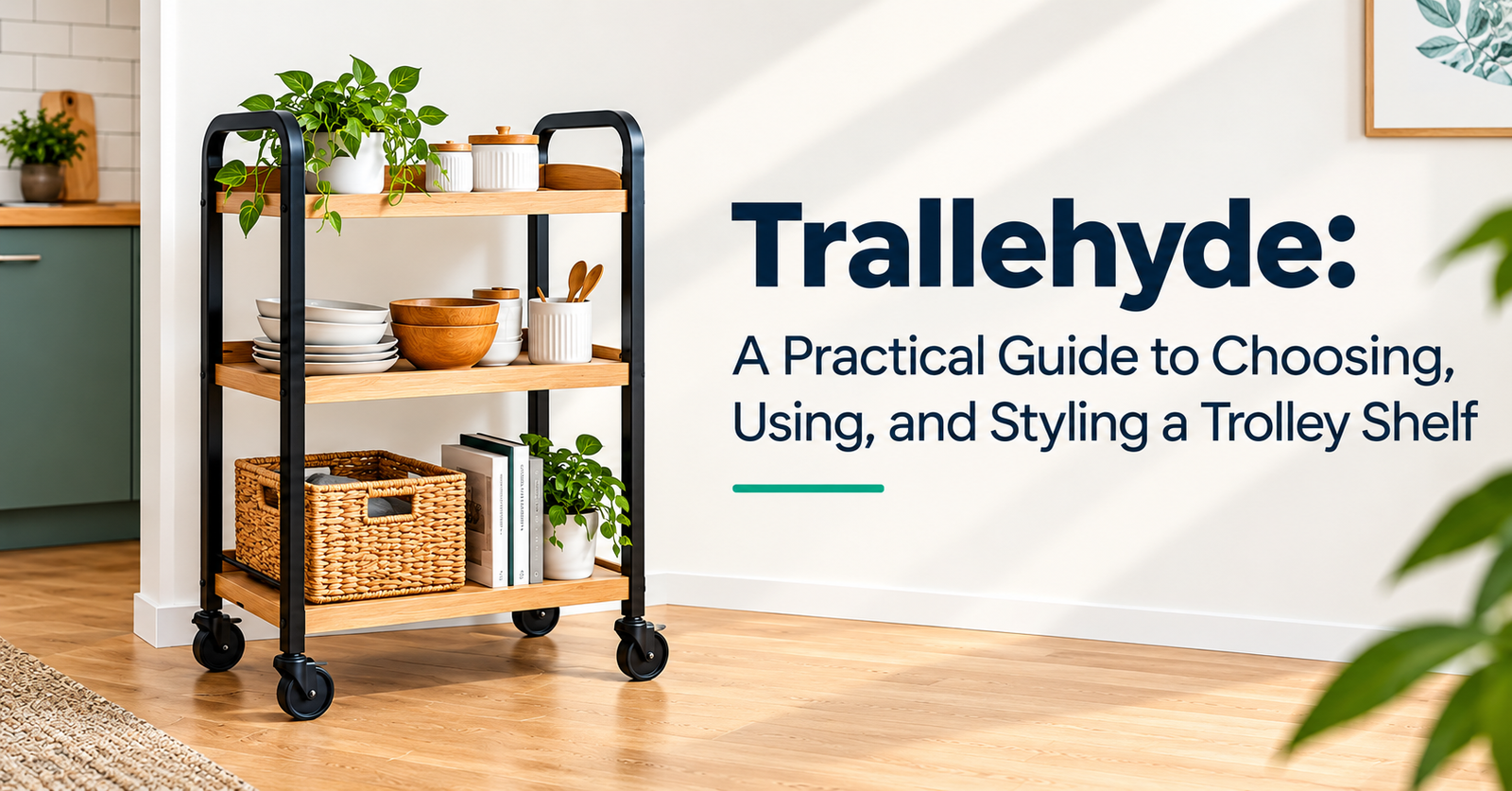
Trallehylde is a Danish term associated with trolley shelving, shelf components, and practical storage solutions. It is commonly used in discussions about mobile shelves that help people organize household essentials, office supplies, kitchen equipment, and other everyday items. Depending on the product and context, the term may refer to a shelf designed for a trolley or a complete shelving unit with wheels.
Modern living spaces require furniture that combines functionality, flexibility, and attractive design. A trallehylde can support these needs by providing additional storage without requiring permanent installation. It can fit into a kitchen, bathroom, bedroom, home office, workshop, or living room, making it a versatile option for different environments.
Understanding the meaning of trallehylde is useful for anyone researching storage furniture, exploring Danish terminology, or looking for practical ways to organize a limited space. However, choosing the right shelving solution involves more than appearance. Material quality, dimensions, weight capacity, wheel design, stability, and maintenance requirements all affect how well a unit performs.
This comprehensive guide explains what trallehylde means, how trolley shelving works, which types are available, where they can be used, and what to consider before choosing a suitable option.
What Is Trallehylde?
Trallehylde is a Danish compound term associated with a trolley shelf or shelving arrangement. The word can be understood through two related ideas: a trolley or wheeled structure and a shelf used to hold objects.
In practical use, a trallehylde may describe an individual shelf designed for a trolley, a replacement shelf, or a mobile storage unit containing multiple levels. Its precise meaning depends on the product description and the context in which the word appears.
The main purpose of this type of shelving is to create accessible storage while allowing items to be organized in a compact area. When the structure includes wheels, users can move the storage unit from one location to another instead of carrying its contents separately.
For example, a mobile shelf in a kitchen can hold spices, utensils, and cooking accessories. The same general type of furniture can be used in an office to organize documents or in a bathroom to keep towels and personal care products together.
Trallehylde is therefore best understood as a term related to practical shelving rather than the name of one specific product, manufacturer, or universally standardized furniture design.
Understanding the Danish Term
The Danish language combines words to create compound terms that describe objects, functions, and everyday activities. Trallehylde follows this general pattern by bringing together terminology associated with a trolley and a shelf.
The word is particularly relevant when researching Scandinavian storage furniture or Danish product descriptions. However, its precise interpretation should be checked against the surrounding text, product photographs, and specifications.
A listing for a complete trolley may use the term differently from a listing for a replacement shelf. This distinction matters when shopping online because a buyer could otherwise mistake a component for an entire storage unit.
What Does Trallehylde Mean in English?
In English, trallehylde can be interpreted as trolley shelf, trolley shelving, or a shelf associated with a mobile storage trolley, depending on the context.
These translations communicate the general idea, but they are not necessarily interchangeable in every product listing.
A trolley shelf usually refers to one horizontal surface that supports objects. Trolley shelving can describe the complete arrangement of shelves, while a mobile shelving trolley normally means a full unit equipped with wheels.
Understanding these differences makes it easier to identify the correct product and compare suitable storage options.
How Does a Trallehylde Work?
A trallehylde works by providing one or more surfaces on which objects can be placed in an organized arrangement. If the shelving unit includes wheels, the entire structure can be repositioned as needed.
Most mobile shelving designs consist of a supporting frame, shelf platforms, connecting joints, and casters. Depending on the model, the frame may be made from metal, wood, plastic, or a combination of materials.
The shelves create separate storage levels. Smaller and frequently used objects can be placed where they are easiest to reach, while heavier items are generally better positioned on lower shelves, provided the unit’s specifications allow them.
Wheels make the structure more flexible. A trolley can be moved closer to a work surface, positioned beside a desk, or stored in a corner when it is not needed. Models with locking casters can remain stationary during use.
Not every trallehylde has the same construction. Some are lightweight decorative units, while others are designed for more demanding storage tasks. Buyers should always check the intended use and stated load capacity rather than assuming that all trolley shelves offer the same performance.
Main Types of Trallehylde
Trallehylde-related storage solutions are available in different forms. The best design depends on the room, the objects being stored, and whether mobility is essential.
1. Kitchen Trallehylde
A kitchen trolley shelf provides extra storage for cooking ingredients, utensils, small appliances, mugs, and other frequently used supplies.
It can be especially helpful in apartments and homes where cabinet space or countertop area is limited. Instead of permanently installing another cabinet, a compact trolley can create a flexible storage station.
Some people use kitchen shelving trolleys as coffee stations, tea organizers, snack carts, or temporary serving units. Others use them to keep frequently used cooking supplies close to the preparation area.
When choosing a kitchen model, consider the material’s resistance to moisture, spills, and regular cleaning. Shelves should be stable enough for their intended contents, and the wheels should move smoothly across the kitchen floor.
Heavy appliances should only be placed on shelves that are rated to support them. A trolley should not be moved while it carries unstable equipment, hot liquids, or objects that could fall during movement.
2. Bathroom Trallehylde
Bathrooms often contain numerous small items, including towels, skincare products, toiletries, grooming accessories, and cleaning supplies.
A bathroom shelving trolley can group these objects together while keeping the surrounding surfaces less cluttered. A narrow model may fit beside a vanity, near a washing machine, or in another available corner.
Materials are especially important in this environment. Stainless steel, suitable coated metal, and moisture-resistant plastic may work well, depending on their construction and intended use.
Wooden shelves can also be suitable when specifically designed for humid conditions, but untreated wood may deteriorate if repeatedly exposed to water.
For a practical bathroom arrangement, place frequently used items on accessible shelves and store smaller products in baskets. Check the wheel design and keep the unit on a stable, level surface.
3. Office and Study Trallehylde
A mobile shelving unit can help organize a home office, study room, or shared workspace.
It may hold notebooks, folders, stationery, chargers, printer paper, reference materials, and other accessories that would otherwise occupy the desk.
Separate shelves make it easier to group items according to their purpose. For example, the top level may contain daily essentials, while lower levels hold paper supplies and reference books.
Mobility is useful when a room serves several purposes. A trolley can be positioned beside a desk during working hours and moved aside when the area is needed for another activity.
For office use, consider stability, shelf dimensions, and the weight of books or equipment. If the unit will carry electronics, ensure that cables can be managed safely and that the shelves provide adequate support.
4. Living Room Trallehylde
In a living room, trolley shelving can combine practical storage with decorative appeal.
A suitable design may hold books, magazines, indoor plants, decorative objects, board games, or beverage accessories. The furniture can also provide a small display area without requiring another permanent cabinet.
Wooden finishes often complement warm interiors, while metal frames may suit contemporary or industrial-inspired spaces. Neutral colors can help a trolley blend into the existing furniture.
The most effective arrangement balances storage with visual simplicity. Too many objects can make even an attractive shelf appear cluttered.
Leave enough open space between decorative items, group smaller belongings together, and ensure that heavier objects are placed where the structure can support them safely.
5. Bedroom Trallehylde
Bedroom storage can become difficult when wardrobes, bedside tables, and drawers do not provide enough room.
A compact trolley shelf offers an additional place for books, accessories, folded clothing, personal care products, or other everyday belongings.
It can be positioned beside a dressing table or in an available corner. If the bedroom is used as a study or work area, the same trolley can hold notebooks and office supplies.
A lightweight design may be suitable for general household items, while a stronger model may be needed for heavier belongings.
Before purchasing, measure the available floor space and consider whether the trolley will obstruct wardrobe doors, drawers, or walking paths.
6. Workshop and Garage Trallehylde
Workshops and garages require storage solutions that can handle tools, containers, repair supplies, and other equipment.
A sturdy trolley shelving unit may help organize frequently used materials and reduce the need to carry individual items repeatedly between work areas.
Metal construction can be appropriate for demanding applications, but the frame, shelf thickness, joints, and wheels must all match the expected load.
Workshop flooring also affects mobility. Small decorative casters may perform poorly on rough concrete, uneven surfaces, or thresholds.
Keep heavy tools on lower shelves, distribute the load evenly, and avoid moving the trolley if its contents could shift. Sharp tools, chemicals, and other potentially hazardous materials should be stored securely.
7. Laundry and Utility Room Trallehylde
Laundry rooms benefit from storage that keeps detergents, fabric care products, cloths, baskets, and cleaning accessories organized.
A trolley can make these supplies easier to access while freeing up space around the washing machine or utility sink.
Plastic and appropriately protected metal may be practical choices, depending on exposure to water and cleaning chemicals.
Look for shelves that can be wiped clean and a design that fits the available space. If detergent bottles are stored on the trolley, make sure their combined weight stays within the specified limits.
Materials Used in Trallehylde Designs
Material selection affects durability, appearance, cleaning requirements, and suitability for different environments.
Metal Shelving
Metal trolley shelves are commonly selected for their structured appearance and potential strength.
Steel frames can provide reliable support when properly designed, and coated finishes may improve resistance to everyday wear. These models can work well in kitchens, offices, storage rooms, and workshops.
However, metal products differ considerably in quality. A protective coating can become damaged, and exposed metal may corrode under unsuitable conditions.
Check the manufacturer’s care instructions and avoid assuming that every metal trolley is suitable for damp environments.
Stainless Steel Shelving
Stainless steel can be useful in kitchens, bathrooms, and other spaces where moisture resistance is important.
Its suitability depends on the steel grade, manufacturing quality, and environmental conditions. Stainless steel is not automatically immune to staining or corrosion in every situation.
For buyers who prioritize easy cleaning and a clean, professional appearance, it may be a practical option.
Wooden Shelving
Wood offers a natural appearance that works well in bedrooms, living rooms, and home offices.
Solid wood can provide an attractive surface, while engineered wood may offer a more economical alternative with a range of finishes.
The main consideration is moisture exposure. Water can damage some wooden surfaces, weaken joints, or cause swelling.
Choose a finish appropriate for the intended room and wipe away spills promptly.
Plastic Shelving
Plastic trolley shelves are often lightweight, easy to clean, and convenient for everyday household storage.
They may be appropriate for toiletries, laundry products, small accessories, and lightweight supplies.
However, plastic strength varies by design. Some products may bend under excessive weight or become damaged by heat and certain chemicals.
Check the stated load limits and intended temperature conditions before use.
Material Comparison
| Material | Main advantage | Suitable applications | Main consideration |
| Steel | Strong structural support when properly designed | Workshops, offices, kitchens | Check coating and load limits |
| Stainless steel | Useful moisture resistance | Kitchens and bathrooms | Grade and quality matter |
| Solid wood | Natural appearance | Bedrooms and living rooms | Protect against excessive moisture |
| Engineered wood | Variety of finishes and price points | Home offices and decorative storage | Avoid prolonged water exposure |
| Plastic | Lightweight and easy to clean | Laundry rooms and household storage | Check strength and heat limits |
There is no single best material for every trallehylde. The right option depends on the intended environment, the expected load, and the level of maintenance you are willing to provide.
Important Features to Check Before Buying a Trallehylde
A trolley shelf should fit its surroundings and perform reliably during normal use. Evaluating a few practical details before buying can help prevent common mistakes.
Size and Dimensions
Measure the area where the trolley will be used.
Check its width, depth, and height, and leave enough clearance to move it without hitting furniture or walls. A narrow design may work well in a small bathroom, while a wider unit may offer more useful storage in a garage or utility room.
Consider the dimensions of the objects you intend to store. Tall bottles, large books, and small appliances may require different amounts of shelf clearance.
Do not choose a product based on its photographs alone. Confirm the listed dimensions and compare them with the available space.
Number of Shelves
The number of levels determines how storage can be divided.
Two-shelf models may be sufficient for a small coffee station or a few household supplies. Three or more levels may offer better organization for stationery, toiletries, or assorted accessories.
More shelves do not always mean better storage. If the spacing is too small, larger objects may not fit comfortably.
Choose a configuration that accommodates your belongings without forcing you to stack items unsafely.
Weight Capacity
Weight capacity is one of the most important specifications.
Check both the total capacity of the trolley and the maximum load permitted on each shelf, if these values are provided.
A unit that can support a particular total weight may still have a lower limit for an individual shelf. Placing too much weight on one level can cause bending, instability, or damage to the structure.
Distribute belongings evenly and keep heavier objects low whenever possible.
Wheel Quality
Wheel design affects how easily a trolley can move and how well it remains in position.
Smooth-rolling casters can help on suitable floors, while locking wheels reduce unwanted movement when the unit is stationary.
Consider the type of flooring in your home or workplace. Carpet, tile, wood, concrete, and uneven surfaces may require different wheel designs.
Inspect the wheels periodically for dust, hair, loose fittings, and other debris that can interfere with movement.
Stability and Construction
A reliable trolley should have secure connections, a balanced frame, and shelves that remain properly positioned during normal use.
Look for signs of weak joints, sharp edges, uneven legs, or poorly fitted casters.
A tall and narrow trolley may be more vulnerable to tipping if heavy objects are placed near the top. Select a design that suits the expected load and keep frequently used items within easy reach.
Assembly Requirements
Some shelving units arrive ready to use, while others require assembly.
Before buying, review the assembly requirements and confirm whether the necessary fittings are included.
Clear instructions can make assembly easier, but every connection still needs to be secured correctly. Loose bolts, misaligned frames, and improperly attached wheels may compromise stability.
After assembly, check the unit before loading it.
Price and Long-Term Value
The cheapest trallehylde is not necessarily the best value.
A low-cost model may be perfectly suitable for lightweight household items. However, frequent use or heavier storage requirements may justify a stronger frame, better wheels, and more durable shelves.
Compare products based on their construction, capacity, dimensions, maintenance needs, and warranty conditions.
A sensible purchase is one that meets your requirements without paying for features you will rarely use.
Benefits of Using a Trallehylde
Trolley shelving offers several practical benefits when selected and used appropriately.
Better Organization
Separate shelves provide dedicated spaces for different categories of belongings.
This can reduce the time spent searching for everyday items and make it easier to return things to their proper locations.
Organized storage can also make small rooms feel more manageable.
Flexible Placement
A mobile unit can be moved to another suitable location when requirements change.
For example, a trolley may serve as a coffee station in the morning and provide extra serving space during a gathering. In an office, it can move between workstations when needed.
This flexibility is particularly useful in rooms with multiple functions.
Efficient Use of Space
Compact shelving can create additional storage without requiring a large cabinet.
It may fit into a corner, beside a desk, or near a utility area. Some designs can be repositioned when more floor space is required.
However, the trolley still occupies floor space while in use, so its dimensions must match the room.
Convenient Access
Frequently used items can remain close to the activity for which they are needed.
A kitchen trolley can hold cooking supplies, while a bathroom model can keep toiletries accessible.
This arrangement can reduce unnecessary movement and simplify everyday tasks.
Decorative Versatility
Modern shelving comes in a variety of materials, finishes, and designs.
A carefully selected trolley can complement an interior while providing functional storage.
The result depends on choosing a design that fits the room rather than treating the trolley as an isolated decorative object.
Creative Ways to Use a Trallehylde at Home
A practical storage trolley can serve several purposes beyond basic organization.
Create a Coffee and Tea Station
Use a suitable shelf trolley to organize mugs, coffee, tea bags, sweeteners, and other beverage accessories.
Place heavier equipment only on a shelf rated to support it. Keep hot appliances stable and manage electrical cables carefully.
Never move a trolley while it carries hot drinks or operating equipment.
Organize Personal Care Products
A bathroom or bedroom trolley can group skincare products, hair accessories, grooming supplies, and everyday essentials.
Small containers can help separate items by category.
Avoid overloading the top shelf, and store products according to their safety instructions.
Build a Portable Office Supply Station
Keep notebooks, pens, paper, chargers, and reference materials together.
A mobile office trolley can be particularly helpful when working from a shared room or moving between different desks.
Use folders or baskets to prevent smaller objects from becoming scattered during movement.
Display Indoor Plants
A decorative trolley can hold small plant pots and gardening accessories.
Select a stable model and consider the combined weight of the pots, soil, and water.
Use suitable trays to protect the shelves from moisture, and make sure the plants receive appropriate light without obstructing pathways.
Organize Children’s Art Supplies
A trolley may provide a dedicated place for crayons, paper, craft materials, and washable paints.
Separate small items into containers and place potentially hazardous materials out of children’s reach.
A model with locking wheels can help keep the unit stationary during supervised activities.
Improve Entryway Storage
A compact shelving trolley may hold bags, reusable shopping items, shoe-care supplies, or seasonal accessories.
Keep the arrangement simple and avoid placing objects where they obstruct the entrance or create a tripping hazard.
The best design is one that fits the available space without interfering with daily movement.
Read more: ThomsonKids.com: What Is It, How Does It Work, and What Should You Know?
How to Maintain a Trallehylde
Regular maintenance helps keep a trolley shelf clean, stable, and useful.
Clean the Shelves Regularly
Remove dust and spills before they accumulate.
Use a cleaning method suitable for the shelf material. A soft cloth and mild cleaner may be appropriate for many surfaces, but manufacturer instructions should take priority.
Avoid abrasive products that could scratch finishes or damage protective coatings.
Inspect the Frame and Connections
Check the frame, brackets, bolts, and other joints periodically.
Tighten loose fittings according to the manufacturer’s instructions. If a component is bent, cracked, or otherwise damaged, stop using the unit until it has been assessed or repaired appropriately.
Care for the Wheels
Remove debris that prevents the casters from moving smoothly.
Check that wheels remain securely attached and that locking mechanisms function correctly.
Only use lubricants recommended for the product. Incorrect maintenance products may damage components or leave residue on the floor.
Protect Against Moisture
Moisture management is particularly important for wooden and coated metal shelves.
Wipe away standing water and allow wet surfaces to dry. Inspect metal finishes for damage and wooden surfaces for swelling or deterioration.
Use a trolley in wet environments only when its materials and construction are suitable.
Follow Safe Loading Practices
Never exceed the stated capacity.
Place heavier objects on lower shelves, distribute the load evenly, and avoid moving the trolley over obstacles while it is heavily loaded.
Lock the wheels when the unit is stationary and keep the route clear before repositioning it.
These basic habits help reduce avoidable wear and improve everyday safety.
Common Mistakes to Avoid When Choosing a Trallehylde
Even a well-designed storage unit may be unsuitable if it is selected without considering practical needs.
Ignoring measurements: A trolley that looks compact in a photograph may be too wide for a narrow passage. Measure the available space before ordering.
Overlooking weight limits: Shelves designed for toiletries may not support heavy tools or appliances. Check the load rating for the intended use.
Choosing unsuitable materials: A finish designed for dry rooms may deteriorate in a damp bathroom. Match the material to the environment.
Prioritizing appearance over function: Attractive colors and finishes are useful, but they should not replace adequate stability, suitable dimensions, and reliable construction.
Ignoring wheel quality: Poorly suited casters may make a trolley difficult to move or keep stationary. Check the wheel design and locking features.
Overloading upper shelves: Excessive weight near the top can make a tall unit less stable. Arrange the contents carefully and follow the manufacturer’s guidance.
Skipping maintenance: Loose connections, dirty wheels, and damaged surfaces can reduce performance. Inspect the unit periodically and address problems promptly.
Avoiding these mistakes can make the purchase more practical and help the shelving remain useful for longer.
Is a Trallehylde Worth Buying?
A trallehylde can be a worthwhile storage solution for people who need additional organization without installing permanent shelving.
It is especially useful when the same storage unit must serve different purposes, when frequently used items need to remain accessible, or when a room has limited cabinet space.
However, it is not automatically the right choice for every situation.
Fixed wall shelves may be more suitable when floor space is extremely limited. A closed cabinet may offer better protection for items that need to remain concealed. Heavy industrial equipment may require specialized storage designed for its particular load and working environment.
The decision should be based on the task the shelving needs to perform.
Before purchasing, identify the intended use, measure the available area, estimate the weight of the stored items, and compare the construction of suitable models. These steps help determine whether a mobile trolley, a replacement shelf, or another type of shelving is the better option.
Trallehylde for Small Homes and Apartments
Small homes benefit from furniture that provides useful storage without making rooms feel crowded.
A narrow trolley may fit beside a refrigerator, near a washing machine, next to a desk, or in an otherwise underused corner. Because a mobile unit can be repositioned, it offers flexibility when a room serves several purposes.
For example, a compact shelving trolley in a studio apartment may hold kitchen supplies during meal preparation and later move to a designated storage area.
In a small home office, the same principle can help separate work materials from personal belongings.
The important consideration is to choose a size that leaves adequate walking space. A trolley should improve organization rather than obstruct doors, drawers, or frequently used pathways.
Trallehylde in Commercial and Professional Environments
Mobile shelving is also relevant in workplaces where supplies need to be organized and moved between nearby work areas.
Offices may use trolley shelves for documents and equipment. Retail environments may use suitable units for stock organization. Workshops may need more robust designs for tools and materials, while service areas may benefit from mobile storage for frequently used supplies.
Professional applications require particular attention to load limits, durability, stability, and wheel performance.
The unit should be selected for its actual working conditions rather than its appearance alone. Businesses should also establish suitable inspection and maintenance procedures.
Where a trolley is used in a workplace, staff should understand the permitted load, safe movement practices, and any product-specific restrictions.
A household storage trolley should not be assumed suitable for commercial or industrial use without checking its specifications.
Frequently Asked Questions About Trallehylde
What does trallehylde mean?
Trallehylde is a Danish term associated with trolley shelving or a shelf designed for a trolley. Depending on context, it may refer to an individual shelf component or a complete mobile storage arrangement.
Is trallehylde a type of furniture?
It can describe a shelving component or a mobile storage unit used as furniture. The exact meaning depends on the product and the way the term is used in its description.
What is a trallehylde used for?
A trallehylde-related storage unit can organize kitchen supplies, bathroom products, office materials, tools, books, plants, and other household or workplace items.
Can a trallehylde be used in a kitchen?
Yes, provided the selected model is suitable for kitchen conditions. Consider cleaning requirements, moisture resistance, dimensions, stability, and the weight of any appliances or supplies placed on it.
Which material is best for a trallehylde?
The best material depends on the intended use. Metal may suit demanding storage tasks, stainless steel can be useful in moisture-prone environments, wood provides a natural appearance, and plastic can work well for lightweight household items.
Is a trallehylde suitable for a small apartment?
Yes. A compact mobile shelving unit can provide extra storage in a small apartment. Measure the available area and ensure that the trolley does not obstruct walking paths or access to furniture.
Does every trallehylde have wheels?
No. The term may be used for a shelf component associated with a trolley or for a complete mobile shelving arrangement. Check the product description to confirm whether wheels are included.
How much weight can a trallehylde support?
There is no single weight limit for all trallehylde products. Capacity depends on the frame, shelf material, connections, and overall design. Always follow the manufacturer’s specified limits for the complete unit and individual shelves.
How do you keep a trallehylde stable?
Distribute the load evenly, keep heavier objects low, avoid exceeding the specified capacity, and use locking wheels when appropriate. Do not use a damaged or visibly unstable unit.
Can a trallehylde be used in a bathroom?
A suitable model can organize toiletries, towels, and other bathroom essentials. Choose materials designed to handle the expected moisture and keep the shelves clean and dry where possible.
Is a trallehylde easy to assemble?
Assembly requirements vary by product. Some models arrive assembled, while others require fitting the shelves, frame, and wheels. Follow the instructions and check all connections before loading the unit.
How is a trolley shelf different from a fixed shelf?
A fixed shelf generally remains in one location, while a trolley shelf may be part of a movable storage unit. Fixed shelving can save floor space, whereas mobile shelving offers greater flexibility when the unit needs to be repositioned.
How should you choose the right trallehylde?
Start with the intended use, available space, and expected load. Then compare materials, shelf dimensions, wheel quality, stability, cleaning requirements, and assembly instructions. The best option is the one that meets these needs reliably.
Final Thoughts on Trallehylde
Trallehylde is a useful term to understand when researching trolley shelves, mobile shelving, and flexible storage solutions. Its meaning can vary with context, but it generally relates to shelving designed for use with a trolley or mobile storage arrangement.
These storage solutions can help organize homes, offices, kitchens, bathrooms, workshops, and other environments. Their main advantages include accessible storage, flexible placement, efficient organization, and the ability to adapt to changing needs.
Choosing the right model requires careful attention to materials, dimensions, weight capacity, wheel quality, and stability. Maintenance also matters because clean shelves, secure connections, and properly functioning wheels support reliable everyday use.
Rather than choosing a product based on appearance alone, consider how it will fit into your routine and whether it is designed for the items you intend to store. A suitable trallehylde can provide a practical balance of convenience, organization, and design while helping make better use of available space.




One thought on “Trallehylde: Meaning, Types, Benefits, Uses, and How to Choose the Right Shelf”