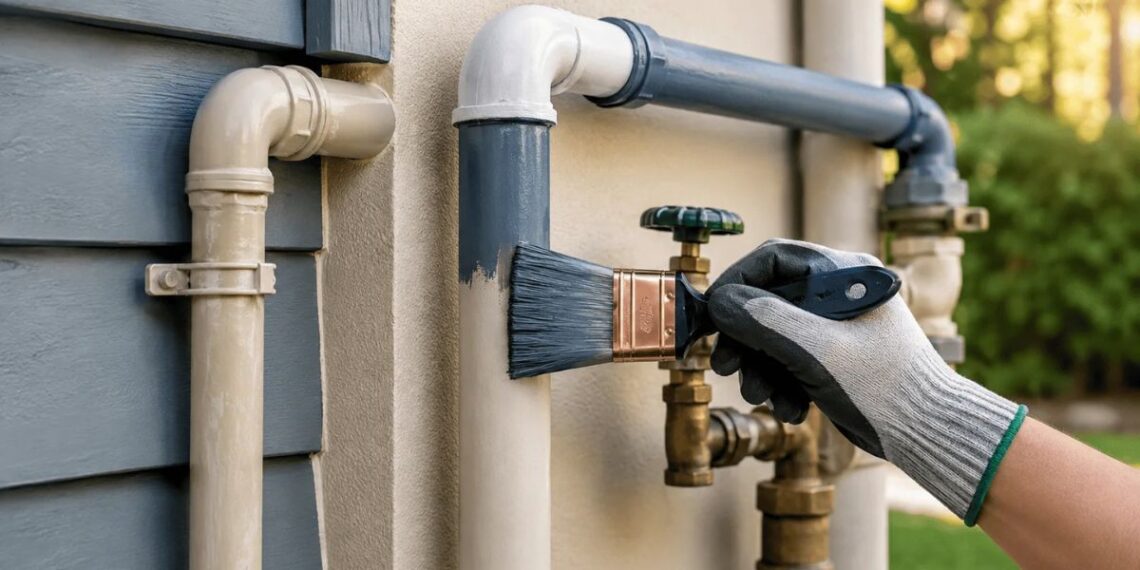
Exposed plumbing pipes can sometimes make a room look unfinished, especially when they are old, stained, or covered with visible oxidation. If replacing or hiding them is not practical, painting can be an affordable way to improve their appearance.
So, can you paint house plumbing pipes? Yes, in most cases you can. However, the right approach depends on the pipe material, its condition, location, and the type of paint you choose.
With proper cleaning, preparation, priming, and application, painted plumbing pipes can become a clean part of your home’s interior instead of an eyesore.
Why Would You Paint Plumbing Pipes?
Painting plumbing pipes can provide both decorative and practical benefits.
Exposed pipes are commonly found in:
- Basements
- Kitchens
- Bathrooms
- Garages
- Utility rooms
- Industrial-style interiors
A fresh coat of paint can help old pipes look cleaner and better match the surrounding walls.
For example, painting pipes the same shade as the wall can make them less noticeable. On the other hand, dark or metallic colors can make exposed pipes an intentional part of an industrial-inspired interior.
Paint can also provide some surface protection for suitable metal pipes by creating a barrier against moisture. However, it should never be considered a solution for leaks, serious rust, or damaged plumbing.
Can Every Type of Plumbing Pipe Be Painted?
Not all plumbing materials should be treated in exactly the same way. Identifying the pipe material before starting is important.
Copper Pipes
Copper pipes can be painted when properly prepared. Clean away dirt, oxidation, and residue first. A metal-compatible primer can then provide a better surface for the paint to adhere to.
PVC Pipes
PVC and other plastic pipes have smooth surfaces, so ordinary paint may not bond properly. Lightly sanding the surface and using a primer designed for plastic can improve adhesion.
Steel and Iron Pipes
Steel and iron pipes are generally suitable for painting after proper preparation. Any loose rust or old paint should be removed before applying a rust-resistant primer and suitable topcoat.
What Paint Is Best for Plumbing Pipes?
Choosing the right product is one of the most important parts of the project.
For metal pipes, homeowners can consider:
- Rust-resistant paint
- Metal primer
- Enamel paint
- Durable oil-based coatings
For plastic plumbing, look for:
- Plastic bonding primer
- Paint formulated for plastic
- Suitable acrylic or spray coatings
If the pipe becomes hot during normal use, such as a hot-water line, choose a coating designed to tolerate the expected temperature.
Ordinary interior wall paint may not provide the durability required for exposed plumbing.
How to Paint House Plumbing Pipes
Painting plumbing pipes does not have to be complicated, but preparation should not be rushed.
1. Inspect the Pipes
Before touching the paint, check the plumbing carefully. Look for leaks, corrosion, cracks, loose fittings, or other visible problems.
Never use paint to conceal a plumbing defect.
2. Clean the Surface
Remove dust, grease, dirt, and other buildup. A clean surface gives primer and paint a much better chance of bonding correctly.
Allow the pipe to dry completely.
3. Remove Loose Rust and Paint
For metal plumbing, use appropriate sandpaper or a wire brush to remove loose rust and flaking paint.
You do not want to apply a new coating over an unstable surface.
4. Apply the Correct Primer
Primer helps create a suitable foundation for the finish coat. This step is particularly useful when dealing with metal or smooth plastic surfaces.
Follow the manufacturer’s instructions for drying time.
5. Apply Thin Coats
Rather than applying one heavy layer, use thin, even coats.
Multiple light coats generally provide a cleaner finish and reduce problems such as:
- Drips
- Uneven coverage
- Cracking
- Long drying times
Allow each coat to dry before adding another.
Should You Paint Pipes Inside Walls?
Normally, there is little reason to paint plumbing that is already hidden inside a wall or ceiling.
Painting is mainly useful for exposed plumbing pipes where appearance is important.
Visible plumbing can actually work well with certain interior styles. Black pipes can complement an industrial design, while copper can provide a warm decorative appearance.
Mistakes to Avoid When Painting Pipes
A few common DIY mistakes can create poor results.
Avoid:
- Painting dirty surfaces
- Skipping primer
- Using unsuitable wall paint
- Painting damaged or leaking pipes
- Applying paint to extremely hot surfaces
- Covering valves or important access points
- Hiding pipe identification markings where they may be needed
Always leave important connections and maintenance areas accessible.
Can Painted Pipes Still Be Maintained?
Yes. Properly painted pipes can still be inspected and maintained.
However, avoid covering areas that need frequent access, including valves, fittings, and service points.
Before painting, consider how a plumber would access the pipe if a repair became necessary. A decorative finish should never make future maintenance more difficult.
Home Design Ideas for Exposed Plumbing
If you are looking for more ways to improve the appearance of your home, Home Comfort Experts provides ideas related to home upgrades and interior improvements.
Their content can be useful for homeowners exploring home designs, improvement ideas, and interior inspiration while planning changes around the house.
Exposed plumbing does not always have to be hidden. With the right finish, it can complement a modern, minimalist, or industrial-style room.
Final Thoughts
So, can you paint house plumbing pipes? Absolutely, provided the pipes are suitable for painting and are in good condition.
The most important steps are identifying the pipe material, cleaning the surface, removing loose rust or old paint, choosing the correct primer and paint, and allowing every coat to dry properly.
When done carefully, painting can give exposed plumbing a cleaner appearance while helping it fit naturally into your home’s overall design. Just remember that paint is a cosmetic improvement, not a replacement for proper plumbing repairs or maintenance.